
Interviews can feel like a high-stakes pop quiz, especially if you are early in your career, returning to work, or switching industries. The good news is that most interviews follow a familiar pattern. Hiring managers often ask a core set of questions to understand whether you can do the work, whether you will work well with others, and whether you will show up consistently. Depending on the role and format, they may also test technical skills, judgment, values, or leadership.
Below, you will find the most common interview questions, what the interviewer is really trying to learn, and answer frameworks with clear examples you can adapt to your experience.

Before you practice: a simple structure that works
If you only remember one thing, remember this: most strong interview answers have a beginning, middle, and end.
- Beginning: Give the context in one or two sentences.
- Middle: Describe what you did, not just what the team did.
- End: Share the result or what you learned, then connect it to the job.
For behavioral questions, use the STAR method: Situation, Task, Action, Result. Keep the “Action” section the longest. That is where your skills show up.
One quick reminder: tailor your examples to the job description. If the posting emphasizes “customer support” and “accuracy,” pick stories that show those strengths instead of your most impressive story overall.
1) “Tell me about yourself.”
What they want to hear
A quick, relevant summary that answers: Who are you professionally, what are your strengths, and why are you here for this role?
Framework
- Present: What you do now (or what you are focused on).
- Past: One or two experiences that show relevant skills.
- Future: Why this role and this company.
Example answer (early career)
I recently graduated with a business degree and have been working part-time in customer service while building stronger skills in Excel and reporting. In my last role, I handled high-volume customer requests, tracked recurring issues, and helped my supervisor update our process so we could respond faster during peak hours. I am excited about this coordinator role because it combines organization, communication, and follow-through, and I am looking for a team where I can grow into more operations work over time.
Example answer (career change)
For the past six years I have worked in retail management, focusing on scheduling, inventory accuracy, and coaching new hires. Over time, I realized the parts of the job I enjoyed most were process improvement and training. I am transitioning into an HR assistant role because I already have experience handling sensitive conversations, documenting issues, and keeping teams organized, and I want to build a long-term career supporting employees and managers.
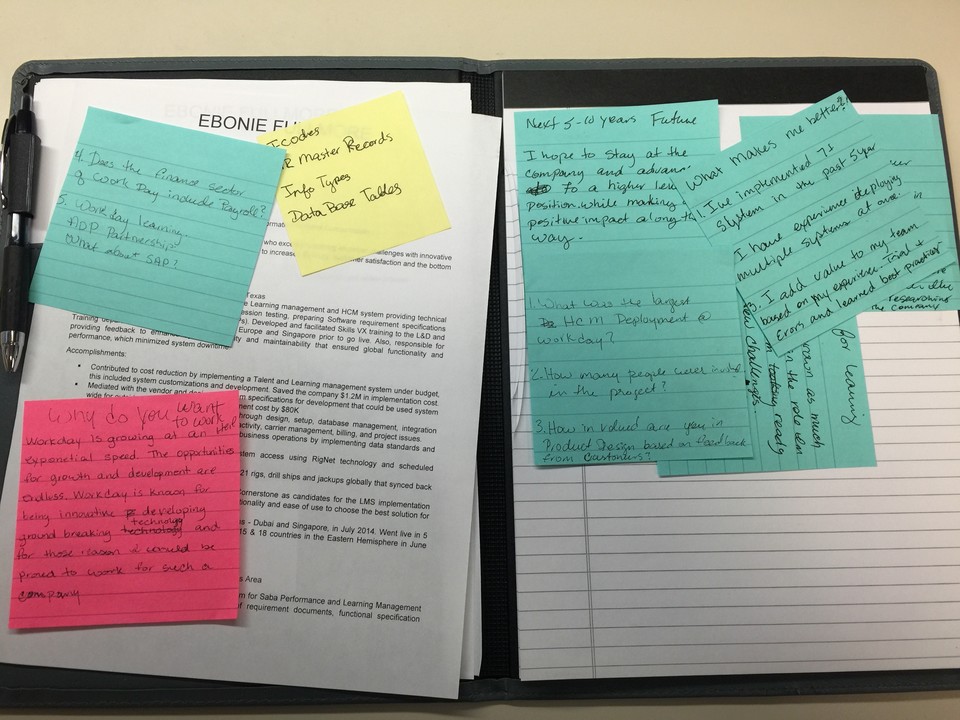
2) “Why do you want to work here?”
What they want to hear
That you chose them on purpose, and that you understand what the role is for.
Framework
- Company: One specific reason you respect their work or approach.
- Role: How the job fits your strengths.
- Bridge: One example of you doing something similar.
Example answer
I like that your company is known for strong training and internal promotion. This role is a great fit because it is hands-on and customer focused, and that is where I have done my best work. In my current job, I am the person newer team members come to with questions, and I enjoy helping people solve problems quickly and calmly. I would love to bring that same energy to your team.
3) “Why should we hire you?”
What they want to hear
A confident, evidence-based summary. This is not the time to be vague. Pick two or three strengths and prove them with short examples.
Framework
- Match: Two key needs from the job description.
- Proof: A quick example for each.
- Close: How you will deliver in the first 60 to 90 days.
Example answer
You should hire me because I bring reliability and clear communication, which are critical for this role. For example, in my last position I was trusted to open and close the store and consistently met scheduling expectations. I also handled customer issues daily and documented patterns so our team could reduce repeat problems. If hired, my goal in the first 60 days would be to learn your systems quickly, meet your performance standards, and be dependable during busy periods.
4) “What are your strengths?”
What they want to hear
Self-awareness plus role relevance. Choose strengths that matter for the job and back them up.
Framework
- Strength: Name it in plain language.
- Evidence: A specific example.
- Benefit: How it helps the team.
Example answer
One of my biggest strengths is staying organized under pressure. In my previous job, I managed competing priorities during peak hours by tracking requests in a simple checklist and confirming deadlines before I started. That helped me avoid missed steps and kept my manager in the loop, which made the entire shift run smoother.
5) “What is your biggest weakness?”
What they want to hear
That you can be honest, take feedback, and improve. Avoid strengths disguised as weaknesses. Avoid anything that is a core requirement for the job.
Framework
- Weakness: A real but manageable area.
- Impact: What it used to cause.
- Fix: What you do now to manage it.
Example answer
I used to hesitate to ask questions because I did not want to bother anyone, and that sometimes slowed me down early in a new role. I have worked on this by keeping a quick list of questions as I learn and then asking them at a planned time, like after the morning rush or during check-ins. It helps me ramp up faster and avoids repeated mistakes.
6) “Tell me about a time you handled a difficult situation.”
What they want to hear
Emotional control, professionalism, and problem solving. They are also listening for how you talk about other people under stress.
Framework (STAR)
- Situation: What happened.
- Task: Your responsibility.
- Action: What you said and did.
- Result: What improved.
Example answer
Situation: A customer was upset because an order was delayed and they felt ignored.
Task: My job was to de-escalate, find the status, and offer a fair solution.
Action: I apologized for the experience, asked a few questions to confirm details, and then contacted the shipping team while the customer was still on the line. I explained the options clearly and offered a replacement shipment and a discount based on our policy.
Result: The customer accepted the solution and later left positive feedback about how quickly the issue was handled. I also shared what happened with my supervisor so we could adjust our update process for future delays.
7) “Tell me about a time you made a mistake.”
What they want to hear
Accountability, learning, and prevention. One mistake does not sink you. Dodging responsibility can.
Framework
- Own it: Briefly state the mistake.
- Fix it: Explain what you did to correct it.
- Prevent it: Share the new process you use.
Example answer
Early in my last role, I entered an appointment time incorrectly, which caused a scheduling conflict. As soon as I noticed, I called the customer, apologized, and worked with my supervisor to fit them into the earliest available slot. After that, I started using a two-step check where I confirm the date and time out loud before I finalize it in the system. I have not had a repeat issue since.
8) “Tell me about a time you worked on a team.”
What they want to hear
That you communicate, follow through, and share credit. Even if you prefer independent work, most jobs involve teamwork.
Framework
- Goal: What the team needed to accomplish.
- Your role: Your specific contribution.
- How you collaborated: Updates, handoffs, support.
- Result: What improved.
Example answer
Our team needed to reduce the number of customer callbacks. I volunteered to track the most common reasons for callbacks over two weeks and shared the patterns during our huddle. Based on that, we updated our standard script and added a quick checklist. The result was fewer repeat calls and less confusion for new team members.
9) “How do you handle stress or pressure?”
What they want to hear
That you stay steady, prioritize, and communicate early. They are not looking for “I never get stressed.”
Framework
- Method: How you prioritize.
- Communication: When you escalate or ask for help.
- Example: One short real situation.
Example answer
I handle pressure by getting clear on what matters most and what the deadline is. If I have multiple urgent tasks, I list them, confirm priority with my manager if needed, and then focus on finishing one at a time instead of bouncing around. For example, during a busy week we had staffing gaps, so I checked in at the start of each shift about top priorities and gave quick progress updates. That kept expectations realistic and helped the team stay coordinated.

10) “Where do you see yourself in five years?”
What they want to hear
That you are motivated and realistic, and that this role fits your direction. Keep it positive and connected to the opportunity in front of you.
Framework
- Direction: Skills you want to build.
- Impact: The kind of problems you want to solve.
- Commitment: Why this role is a good step.
Example answer
In five years, I would like to be in a position where I am trusted with more responsibility and can help train or mentor newer team members. In the near term, I want to build strong fundamentals in this role, learn your systems, and consistently meet performance goals. I see this position as a solid step because it offers real experience and growth opportunities.
11) “Why are you leaving your current job?”
What they want to hear
A calm, professional reason. Do not vent. Do not overshare. Do not criticize specific people.
Framework
- Positive pull: What you are moving toward.
- Neutral truth: A simple, honest reason.
- Future fit: Why this role matches better.
Example answer
I have learned a lot in my current role, especially about customer communication and staying organized. At this point, I am looking for a position with more growth and more consistent scheduling. This role stood out because it offers a clear path to develop new skills while contributing to the team right away.
12) “What are your salary expectations?”
What they want to hear
That you understand your market value and can talk money professionally. Ideally, you share a range after you understand the scope of the role, but many hiring processes will ask you early, sometimes in the first recruiter screen. Be ready either way.
Framework
- Range: Provide a range, not a single number.
- Flexibility: Note that it depends on total compensation and scope.
- Question back: Ask what range they budgeted.
Example answer
Based on my research for roles like this in our area and my experience, I am targeting a range of $X to $Y. I am open depending on the responsibilities and the full benefits package. Can you share the budgeted range for this role?
Tip if you are truly unsure
If you do not have a number yet, it is okay to say: “I would love to learn more about the responsibilities and the total compensation before I give a range. What is the budgeted range for this position?”
Note: Pay can vary by location, level, and shift, and some places require employers to share ranges. Use reputable sources, then sanity check your range against the specific job requirements.
13) “Do you have any questions for us?”
What they want to hear
That you are engaged and thinking like someone who might join the team. Always ask something. Two to four questions is a great target.
Strong questions to ask
- What would success look like in the first 30, 60, and 90 days?
- What are the biggest priorities for this role right now?
- How do you train new hires and measure progress?
- How would you describe the team’s communication style?
- What challenges is the person in this role expected to help solve?
Question to avoid
Anything you could answer in 10 seconds on the company website, like “What do you do here?” Save that time for better questions.
Two more common questions
14) “Tell me about a time you led or owned a project.”
What they want to hear
Ownership, planning, and follow-through. Leadership can mean taking initiative, not just having a title.
Framework (STAR)
- Situation: What needed to change.
- Task: What you owned.
- Action: How you planned, communicated, and executed.
- Result: The outcome, ideally with a simple metric.
Example answer
Situation: New hires were struggling with the register process and we were seeing more voids at peak times.
Task: I was asked to help shorten ramp-up time for new team members.
Action: I wrote a one-page checklist of the most common transactions, then walked two new hires through it during slower hours and collected their questions to tighten the steps.
Result: They became confident faster, and my manager kept the checklist as part of onboarding.
15) “What motivates you?”
What they want to hear
That you are motivated by something that fits the role. They also want to see self-awareness and consistency.
Framework
- Motivator: Name it.
- Why: One sentence on what it looks like day to day.
- Proof: A quick example.
Example answer
I am motivated by clear goals and making things run smoother for other people. In my last job, I noticed the same customer issues kept coming up, so I tracked them and shared patterns with my supervisor. It felt good to fix the root cause instead of solving the same problem repeatedly.
If your interview format is different
Technical interviews
Expect skills checks, work samples, or live problem solving. Ask what tools, topics, or level of depth will be covered, then practice explaining your thinking out loud as you work.
Case interviews
Clarify the goal, restate assumptions, and walk through your approach step by step. Interviewers are often scoring how you structure problems, not just the final answer.
Portfolio or work reviews
Pick two to three projects and be ready to explain the goal, constraints, your decisions, and the outcome. Prepare one lesson learned per project.
Remote interview tips
- Camera and eye line: Put the camera at eye level, and look at the camera when you answer key points.
- Lighting: Face a light source if you can. Avoid a bright window behind you.
- Notes: Keep a short bullet list near your screen, not a full script. It helps you sound natural.
- Audio: If possible, use headphones and test your mic before the call.
Inappropriate questions
Some questions are not appropriate in interviews, like those about age, family status, religion, or medical issues. If one comes up, you can redirect calmly.
- Redirect to the job: “I can share that I am fully able to meet the schedule and travel requirements for this role.”
- Clarify the requirement: “Can you tell me more about the schedule expectations so I can confirm my availability?”
- Keep it brief: Answer only what is needed to address the job requirement, then move on.
Quick tailoring checklist (use this the night before)
- Pull 3 skills from the job posting and match each to a story from your experience.
- Prepare 5 STAR stories you can reuse: teamwork, conflict, mistake, success, pressure.
- Keep your examples simple and easy to follow. Clear beats impressive.
- Practice out loud at least once. Reading silently does not build interview confidence the same way.
- Bring a few numbers if you have them: time saved, customers served, error rate, schedule size, training count. If you do not, describe the result plainly, like “cut errors,” “reduced wait times,” or “helped the team hit the deadline.”
FAQ
How long should my answers be?
Aim for 30 to 60 seconds for straightforward questions, and 1 to 2 minutes for behavioral stories. If you are still talking after two minutes, tighten your context and get to the action faster.
What if I do not have experience?
You do. Use school projects, volunteering, caregiving, military experience, part-time jobs, internships, and personal projects. The interviewer is listening for transferable skills like reliability, communication, and problem solving.
What if I freeze during an interview?
It happens. Try: “That is a great question. Let me take a moment to think.” Then choose a simple example and walk through it using STAR. If you need to, you can simplify STAR in the moment by focusing on Situation, Action, and Result, then add the Task if it helps. You can also ask for clarification: “Do you mean a time with a customer, or with a teammate?”
A final note from a career coach
You do not need perfect answers. You need clear, honest answers that show how you think and how you work. If you practice a few flexible frameworks and choose stories you can tell confidently, you will walk in calmer and sound more like yourself. That is often what makes the difference.