
I grew up in a working-class family where every form felt like a test you could fail. College applications, financial aid, job applications. All of it. And when a job application asks about criminal history, that old pressure comes roaring back because it feels personal, permanent, and easy to get wrong.
Here is the good news. These questions are often narrower than they look, and your goal is simple: answer exactly what is asked, as truthfully and as cleanly as possible, without volunteering extra information that was not requested.
This article focuses only on the written application question. If you need help with what to say out loud in an interview, or what to do if a background report contains an error, those are separate steps.
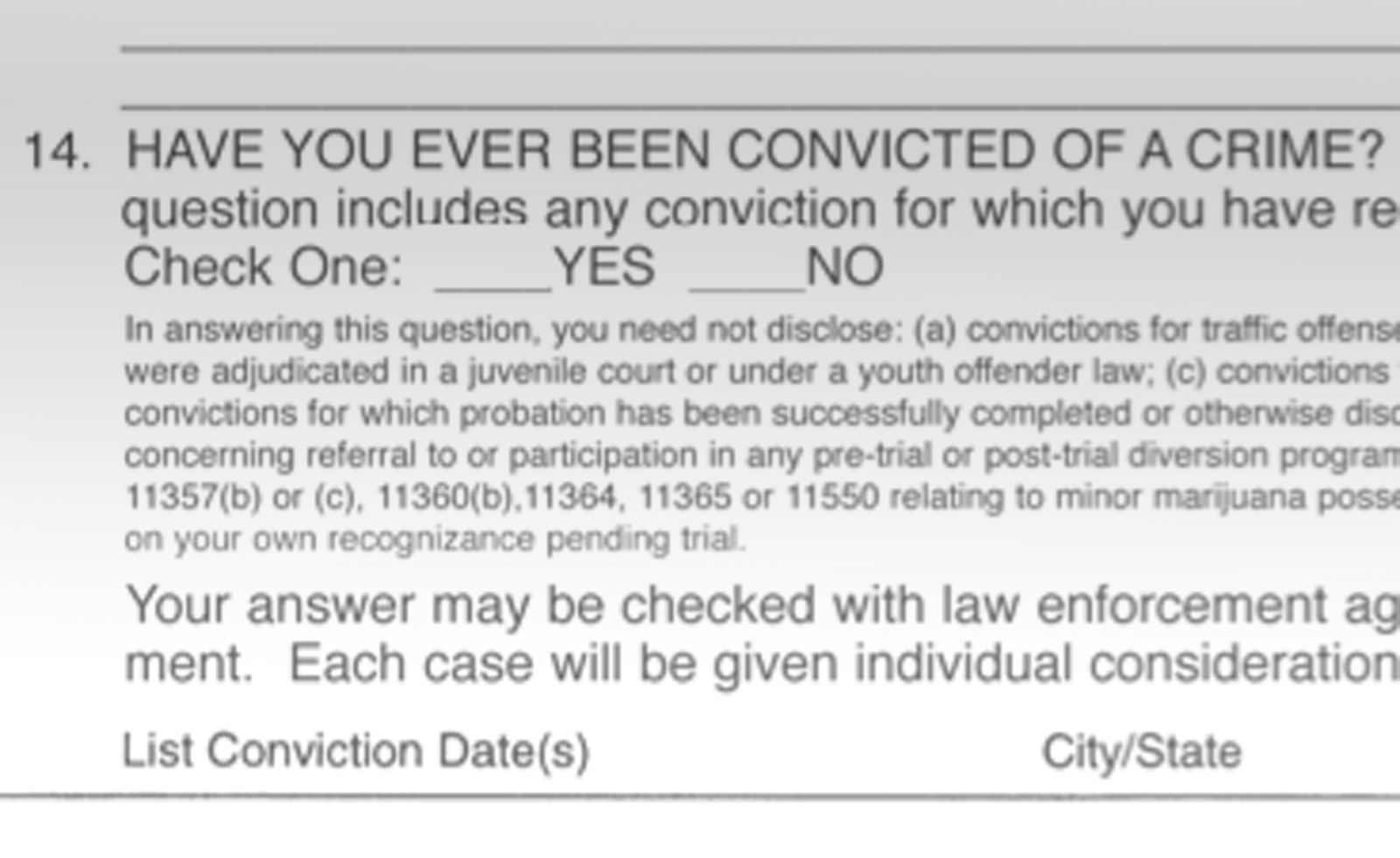
Before you answer, translate the question
Criminal-history questions are not all the same. Employers use different wording, different time windows, and different definitions. Read the question slowly and underline the limits built into it. Also scan the application for a definition of terms like “conviction,” which is sometimes buried in a disclosure or certification section.
Look for these four limits
- What records it asks about (arrests, charges, convictions, pleas, pending cases).
- Which offenses it includes or excludes (felonies only, misdemeanors, certain categories).
- Time period (ever, last 7 years, since age 18).
- Where it applies (any state, federal, military, outside the U.S.).
If you only take one thing from this page, let it be this: answer the question that is printed, not the question you fear they are secretly asking.
A quick note on legality and your rights
Whether an employer is allowed to ask certain criminal-history questions, and whether you are required to answer them, can depend on your state, city, the type of job, and even the employer’s size. Some places restrict questions about arrests that did not lead to conviction, limit how far back an employer can look, or give you the legal right to say “no” to sealed or expunged matters even if asked.
I cannot give legal advice here. If a question feels off, too broad, or out of sync with what you know is allowed where you live, it is worth checking your local rules or getting qualified legal help before you submit.
Common question types and how to answer
Below are the most common ways these questions show up, what they usually mean, and how to respond without overcorrecting or oversharing. Always follow the form’s definitions and instructions first.
1) “Have you ever been convicted of a crime?”
This is usually asking about convictions, not arrests or charges that were dismissed. If you have a conviction that has not been sealed or expunged, the truthful answer is typically “Yes.” If you have never been convicted, the truthful answer is “No,” even if you were arrested long ago and nothing came of it.
What to do on the application:
- If the application is checkbox-only, check the truthful box and move on.
- If there is a text field, give the minimum factual detail requested (more on that below).
2) “Have you been convicted of a felony?”
This is narrower than it looks. If your record is misdemeanor-only, the truthful answer is “No.”
Be careful with reduced charges. If something began as a felony charge but resulted in a misdemeanor conviction, the question is typically about the conviction level, not the original charge. If you are unsure what the final conviction level was, do not guess. See the section on confirming your record.
3) “Have you ever pleaded guilty or no contest?”
This wording is designed to capture cases where the plea leads to a conviction or other outcome the employer treats as reportable. The key is not the plea by itself, but the final disposition and how the application defines “conviction” or “reportable offense.” If you entered a guilty or no contest plea and the result falls within what the question includes, answer “Yes.” If you are not sure what your final disposition is called, confirm it before you submit.
4) “Have you been arrested?”
This is broader and more sensitive because arrests do not always lead to conviction. Some applications still ask it, even though some jurisdictions restrict this type of question.
If the question is lawful and applicable in your jurisdiction and the form requires an answer, answer truthfully as written. If you suspect the question is not allowed where you are, or you are unsure what you can legally disclose (especially for sealed or expunged matters), pause and check local rules or get qualified guidance.
If it asks for details, stick to the facts requested and avoid writing a full explanation on the form.
5) “Do you have any pending criminal charges?”
This is about open cases. If you have a pending matter and the question applies to you, answer “Yes” and provide only the requested information. If your case is closed, dismissed, or resolved, answer based on the exact wording.
6) “In the last X years…” questions
These are time-limited questions, for example: “Have you been convicted of a misdemeanor in the last 5 years?” or “In the past 7 years, have you been convicted of a felony?”
Two practical tips:
- Follow the form’s instructions on which date matters, if it says (conviction date, disposition date, release date, completion date).
- If the form does not specify an anchor date, do not guess. Confirm the relevant dates in your records or ask HR what date they mean before you answer.

Answer what is asked, not more
One of the most common mistakes I see is a person trying to be “extra honest” by disclosing everything, even when the question is limited.
On an application, oversharing can:
- Create a mismatch between what you wrote and what a background report later shows, especially when charge wording or dispositions are different than you remember.
- Expose old or irrelevant information the employer did not ask for.
- Turn a simple “Yes” into a long story that reads emotional or defensive.
A simple rule
If the application gives you checkboxes only, answer with the checkbox only. If it requires details, provide the minimum factual information needed to match the question.
If there is a text box, keep it factual
Some applications include a prompt like “If yes, please explain.” Your goal is to provide enough information to be truthful and consistent, without writing your entire narrative.
What “short and factual” looks like
- Offense type or general category (as requested)
- Month and year (or year only, if that is all you know)
- Jurisdiction (state or county)
- Disposition if asked (convicted, dismissed, pending)
Examples you can adapt
Example: conviction question with a text field
“Yes. Misdemeanor theft conviction, 2019, Franklin County, Ohio.”
Example: pending charge question
“Yes. Pending misdemeanor charge, filed March 2025, Harris County, Texas.”
Example: time-limited felony question (answer is no)
“No. No felony convictions within the last seven years.”
Notice what is missing: apologies, explanations, context, and promises. Those can be appropriate later, but the application is not the place for a full personal statement unless the form specifically requests it.
Do not guess or relabel your history
I understand the instinct to make the form read better. But application answers need to be accurate and consistent with records.
Avoid these common pitfalls:
- Changing the label of an offense to sound softer than it was.
- Leaving out a conviction because it feels old, if the question says “ever.”
- Answering “No” because you hope it will not show up.
- Assuming sealed or expunged means “must be disclosed” or “never exists” in every situation. Rules vary widely, and in some places you are legally allowed to deny sealed or expunged matters even if asked.
If you truly do not know what legally applies in your situation, it is worth getting qualified legal guidance. Career advice can help you communicate clearly, but it cannot replace legal advice about what you are required to disclose.
Confirm what is on your record
If it has been years, or if you had multiple outcomes (dismissals, reductions, diversion programs), it is normal to feel uncertain. Do not rely on memory when a simple verification can prevent a mismatch later.
Ways to verify details
- Your own paperwork from court or your attorney (disposition paperwork is especially useful).
- Online court docket searches if your jurisdiction provides them.
- Clerk of court records requests for copies of case documents.
When you verify, you are looking for the exact wording of the offense, the level (misdemeanor or felony), and the final disposition.
When the question is unclear, clarify
Some applications are poorly written, with vague terms like “crime” or “offense,” or they mash multiple things together: “Have you ever been arrested, charged, or convicted…?”
What you can do
- Re-read for limits (time window, offense type, exceptions).
- Check for definitions elsewhere on the application (some employers define “conviction” on another page or in a disclosure section).
- If the form is online, look for help icons or hover text that clarifies the meaning.
If you are still uncertain and there is a contact person listed (HR, recruiter, hiring manager), you can ask for clarification about what the question means. Keep the request neutral and procedural, and do not provide details of your history in the email unless they ask for it.
Special situations
Diversion or deferred outcomes
Diversion, deferred adjudication, and similar outcomes vary by state and can be confusing. Some applications explicitly include them in the question, others do not. If the application includes language like “including diversion or deferred adjudication,” answer accordingly. If you are unsure how your outcome is classified, confirm the disposition and consider legal guidance.
Juvenile records
Some forms specify “since age 18.” If the question is limited to adulthood, do not disclose juvenile matters on that question. If the question says “ever” and does not exclude juvenile records, do not assume they are excluded.
Military justice
Veterans sometimes wonder whether Article 15s, NJP, or court-martial outcomes count. It depends on the wording of the application. If it asks about “convictions in any jurisdiction,” you may need to include court-martial convictions. If you are unsure, do not guess. Verify your documentation and get qualified guidance.
Jobs with stricter rules
Some roles have special standards and screening rules, including healthcare, childcare, education, finance, government work, and jobs that require a professional license or security clearance. In those settings, the timing and scope of disclosure can be different, and what counts as disqualifying can be role-specific. Follow the application instructions closely, and consider getting qualified guidance if you are unsure what must be disclosed.

Ban the Box and delayed disclosure
In many places, employers do not ask about criminal history until later in the process. If the application does not ask, do not volunteer the information on the application anyway.
Rules vary by state and city, and sometimes by employer size, role, or industry. If you reach a later stage where the employer asks for authorization to run a background check, that is a separate step from the application question. Stay consistent across every step.
Checklist before you submit
- I read the question twice and identified what it includes (conviction, arrest, pending).
- I noticed any time limit (last 5 or 7 or 10 years, since age 18).
- I looked for definitions of “conviction” or “reportable” elsewhere on the form.
- I answered only what was asked, without adding unrelated history.
- If I wrote details, they were short, factual, and consistent with my records.
- I did not guess at dates or charge levels I could not verify.
- I saved a copy or screenshot of what I submitted for my own records.
FAQ
Should I leave the criminal history question blank?
Generally, no. Leaving it blank can read like avoidance and may trigger follow-up or disqualification. If a question truly does not apply or is optional, the form will usually say so.
What if my answer is “Yes” but there is no space to explain?
Answer “Yes.” If the employer wants details, they can request them later. Do not try to cram an explanation into unrelated fields.
What if the form combines arrests, charges, and convictions in one question?
Slow down and treat it like a checklist inside a sentence. Identify each item it asks about (arrest, charge, conviction) and any limits (time window, offense type). Then answer within that scope. If it is unclear what they mean by “conviction” or which date counts for the time window, ask HR for clarification or verify with records before you submit.
What if the application asks for something I do not remember exactly?
Do not guess. Confirm through court paperwork or official records, then answer. If you are on a deadline, provide only what you can verify and be prepared to clarify later if the employer asks.
Is it better to disclose more to look honest?
Honesty matters, but so does accuracy and scope. The most professional approach is to answer exactly what is asked, in the limits requested, using verifiable facts.