
If you’re switching industries, your biggest resume challenge usually isn’t experience. It’s clarity. A hiring manager often only has a few seconds to scan your resume and understand what you can do and why it fits this role, even if your last job title doesn’t look related.
A skills-based resume helps you lead with transferable strengths, not job titles. Done well, it reduces the “I don’t have the exact background” problem and replaces it with, “Here’s proof I can do the work.”

When a skills-based resume works best
A skills-based format is most helpful when your work history is real and solid, but your titles or industry don’t immediately match the role you want.
Great fit situations
- Career change: You’re moving from one field to another (for example, retail management to HR, hospitality to customer success, military to logistics, bedside nursing to telehealth).
- Returning to work: You have a gap due to caregiving, health, relocation, or schooling and want to spotlight current skills first.
- Early career with strong skills: Internships, projects, volunteer work, or military training gave you relevant abilities, even if your paid roles are limited.
- Freelance or mixed experience: You have multiple short contracts and want to group accomplishments by skill area.
When to be cautious
- Very traditional fields or ATS-heavy pipelines: Some employers expect a chronological resume first. A hybrid approach often works better than a fully functional format.
- If you’re trying to hide something: Recruiters can spot a format that looks like it’s avoiding dates or employers. Your goal is to reframe, not conceal.
- Highly regulated roles: If a license, certification, or exact number of years in a specific function is required, make that easy to find near the top.
My coaching rule: If your past experience is relevant but not obvious, go skills-based or hybrid. If it’s obvious, stick with chronological and tighten the bullets.
The structure that gets results
The most effective career change resumes are usually hybrid (also called combination). That means you lead with skills, then include a clean work history section afterward. This keeps humans and applicant tracking systems on the same page.
One quick clarification on terms: a “skills-based resume” is a strategy (lead with relevant skills and proof). It’s often written as a functional resume (skills first, minimal emphasis on dates) or, more commonly, a hybrid resume (skills first, plus a standard chronological experience section).
Recommended section order
- Header (name, phone, email, LinkedIn, location)
- Targeted headline (optional but powerful)
- Summary (3 to 5 lines)
- Core skills (a scannable list)
- Skills highlights (grouped accomplishments by skill category)
- Professional experience (chronological, lighter bullets)
- Education and credentials (degrees, licenses, certs)
- Optional add-ons (projects, volunteer work, military service details, affiliations)

Write a clear career change summary
Your summary is where you do the bridge-building. It should answer three questions fast:
- What role are you targeting?
- What transferable strengths make you credible?
- What proof backs it up?
A simple summary formula
[Target role or function] with [2 to 3 transferable strengths] demonstrated through [proof: outcomes, scope, tools, industries, or credentials].
Examples (adjust to your field)
- Project coordinator pivoting from healthcare administration: “Project coordinator with strengths in cross-functional communication, scheduling, and process improvement. Supported 20+ providers across two clinics, streamlined intake workflows, and tracked performance in Excel and Smartsheet to improve on-time task completion.”
- Military to civilian operations: “Operations professional transitioning from military service, bringing experience in logistics coordination, team leadership, and safety compliance. Managed equipment accountability, trained new team members, and executed time-sensitive missions under strict standards.”
Keep it grounded. If your summary could describe anyone, add specifics: tools, scale, results, and the kind of teams you supported.
Core skills: match the job
Your “Core Skills” section isn’t a personality list. It’s a targeted set of keywords that mirrors the job description.
How to pick the right skills
- Print or copy one job description for the role you want.
- Highlight repeated verbs, tools, and responsibilities (for example: triage, stakeholder management, SQL, patient education, onboarding).
- Choose 10 to 14 skills you can actually back up with examples.
- Use the employer’s language when it’s accurate (ATS systems and humans both benefit).
Formatting tips
- Use columns or separators (like dots or vertical bars) to keep it skimmable.
- Mix hard and soft skills, but prioritize job-specific hard skills.
- Avoid buzzwords with no proof (like “hardworking,” “go-getter,” or “dynamic”).
Skills highlights: make it believable
This is the heart of the resume. Instead of listing jobs first, you group accomplishments under 2 to 4 skill categories that directly match the new role.
How to choose skill categories
Start with the job posting. Pull the top 3 to 5 requirements, then turn them into your categories. If the job emphasizes onboarding, reporting, and stakeholder coordination, those are your categories, as long as you can prove them.
Avoid categories that are too broad (“Leadership”) unless you can make them specific (“Team coaching and performance feedback”). Also, don’t let soft skills take over. “Communication” matters, but it’s stronger as “Client communication and stakeholder updates” with proof underneath.
What to include under each category
- 2 to 4 bullets per category
- Outcome-first writing (what improved, what changed, what you delivered)
- Evidence (numbers, scope, tools, stakeholders, frequency)
Strong category examples
- Customer experience and conflict resolution
- Workflow improvement and documentation
- Training, coaching, and onboarding
- Data tracking and reporting
- Scheduling, coordination, and prioritization
Bullet examples that translate well
- “Reduced average response time by 18% by introducing a shared intake tracker and standard follow-up templates.”
- “Trained and onboarded 12 new staff members, creating checklists that improved readiness within the first two weeks.”
- “Coordinated schedules across 6 team members, balancing coverage needs while maintaining compliance with policy.”
Micro example: vague vs. proof
- Vague: “Responsible for reporting and communication.”
- Stronger: “Tracked weekly KPIs in Excel, shared a one-page status update with 5 stakeholders, and flagged risks early to keep deadlines on track.”
A coaching note: If you can’t write at least two strong bullets under a skill category, it’s not a true strength yet. Swap it for a category you can prove.
Experience section: keep it clean
You still want a traditional “Professional Experience” section. The difference is that your strongest evidence is already in the skills highlights, so the job history becomes more streamlined.
Best practices
- List roles in reverse chronological order.
- Include employer, location (or remote), title, and dates.
- Use 2 to 4 bullets per recent role that reinforce the new direction.
- If your older roles are less relevant, reduce bullets or summarize them.
Handle career change context
- If you took a course or certification: add it under education or a “Credentials” section near the top.
- If your title undersells you: keep the official title, then add a clarifying line in the first bullet (for example, “Promoted to lead scheduling and training for a 10-person front desk team.”).
- If you’re pivoting internally (like bedside to telehealth): highlight adjacent tasks, tools, and outcomes that match the target job.
Translate your past work
Here’s the mindset shift: you’re not trying to convince someone your old job equals the new job. You’re showing that the skills underneath your old job are the same skills the new job needs.
Common translations
- Scheduling and staffing becomes resource planning, coordination, or operations support.
- Training new hires becomes onboarding, enablement, coaching, or facilitation.
- Handling escalations becomes customer success, conflict resolution, retention, or case management.
- Documenting processes becomes SOP creation, compliance support, or knowledge management.
- Tracking metrics becomes reporting, QA, performance dashboards, or continuous improvement.
A quick proof builder
For each skill you claim, write one sentence that includes:
- Action: what you did
- Tool: what you used (software, system, method)
- Scope: how many people, customers, tickets, or locations
- Result: what improved
If you’re missing one piece, that’s your cue to add specificity.
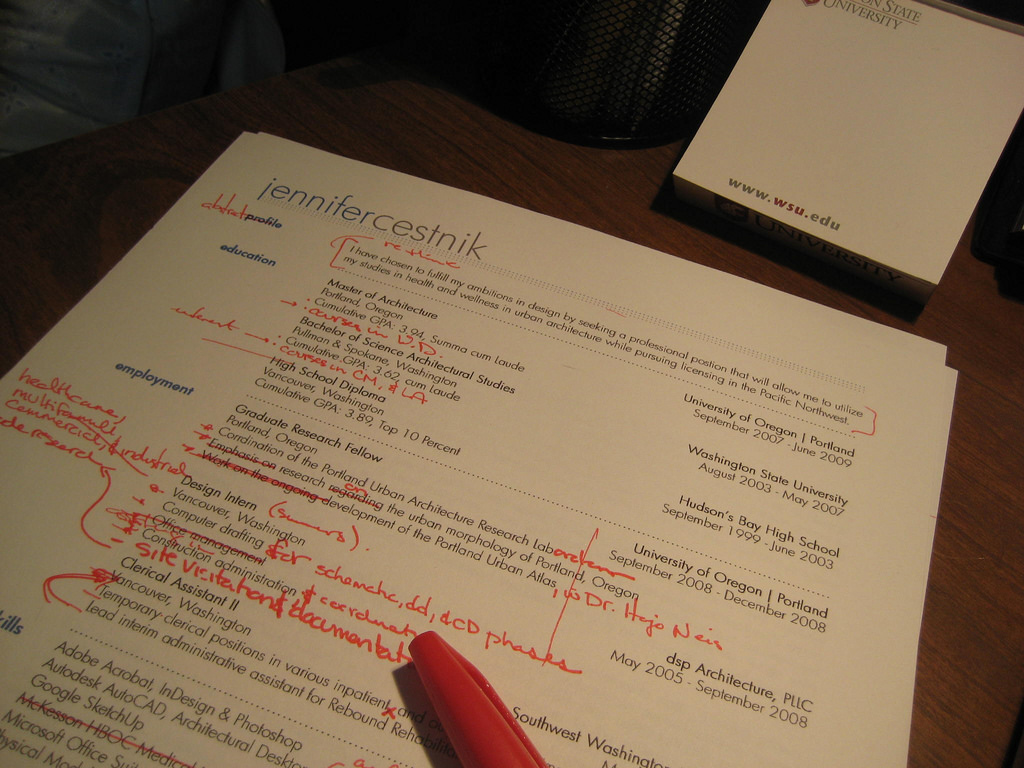
Example outline (copy and customize)
Use this as a starting template. Keep it to one page if you have under 10 years of experience, and two pages if you have extensive relevant experience.
Outline
Name Lastname
City, State | phone | email | LinkedIn URL
Target Headline: [Target Role] | [1 to 2 Specialty Areas]
Summary
3 to 5 lines connecting your past experience to the new role, including proof (tools, scope, outcomes, certifications).
Core Skills
Skill 1 | Skill 2 | Skill 3 | Skill 4 | Skill 5 | Skill 6 | Skill 7 | Skill 8 | Skill 9 | Skill 10
Skills Highlights
- Skill Category A
- Achievement bullet with result, scope, and tools
- Achievement bullet
- Achievement bullet
- Skill Category B
- Achievement bullet
- Achievement bullet
- Skill Category C
- Achievement bullet
- Achievement bullet
Professional Experience
Job Title, Company, City, State (or Remote) | Dates
2 to 4 relevant bullets
Education and Credentials
Degree, School
Certification, Issuer, Year (or In Progress)
Optional
Projects | Volunteer work | Military service | Professional affiliations
Before you apply: checklist
- Target is clear: Your summary says what role you want, not just what you’ve done.
- Keywords match: Your core skills reflect the job description’s language (honestly).
- Proof is visible: At least 6 to 10 bullets include outcomes, scope, or metrics.
- Skills are grouped: Your strongest transferable strengths appear before work history.
- Work history is still included: Employers, titles, and dates are easy to find.
- Formatting is simple: Clean headings, consistent dates, minimal tables or text boxes that can be harder for some ATS tools to parse.
- One version per target role: You’re not using the same resume for wildly different jobs.
- Old-field jargon is limited: Keep context, remove terminology that doesn’t translate.
- File name is professional: Firstname_Lastname_TargetRole_Resume.pdf
If you want one extra edge, pair your skills-based resume with a tight cover letter that explains your “why this pivot” story in 4 to 6 sentences. The resume proves you can do the work. The cover letter explains why you’re making the change now.
Also make sure your LinkedIn headline and “About” section match the same target direction. For career changers, consistency across resume and LinkedIn builds trust fast.
FAQ
Will a skills-based resume break ATS?
It can, if the formatting is heavily designed or if you remove the chronological work history. The safest approach is a hybrid: skills first, then a standard experience section with dates and employers. Simple formatting lowers the risk with some ATS systems.
How many skill categories should I include?
Usually 2 to 4. Enough to align with the role, not so many that each category feels thin.
What if I don’t have numbers for my bullets?
Use scope instead: number of customers supported, size of team, volume per day, number of locations, types of stakeholders, or frequency. “Supported 3 managers across 2 sites” is still proof.
Should I put “Career Change” on my resume?
Not as a headline. Focus on the target role and your qualifications. Let your summary and skills highlights do the connecting.