
Job fairs can feel like speed dating with higher stakes. You have a few minutes to make a real impression, often in a noisy room, while juggling nerves and a stack of resumes.
Good news: standing out is not about being the loudest person in the line. It is about being prepared, specific, and easy to help. Below are 10 practical strategies I have used while coaching job seekers across fields into next-step conversations after job fairs, both in-person and virtual. Results vary by industry, timing, and hiring volume, but these moves reliably increase your odds of getting remembered.
Quick note: The examples below are easy to adapt, whether you are in healthcare, tech, retail, operations, education, or something else.
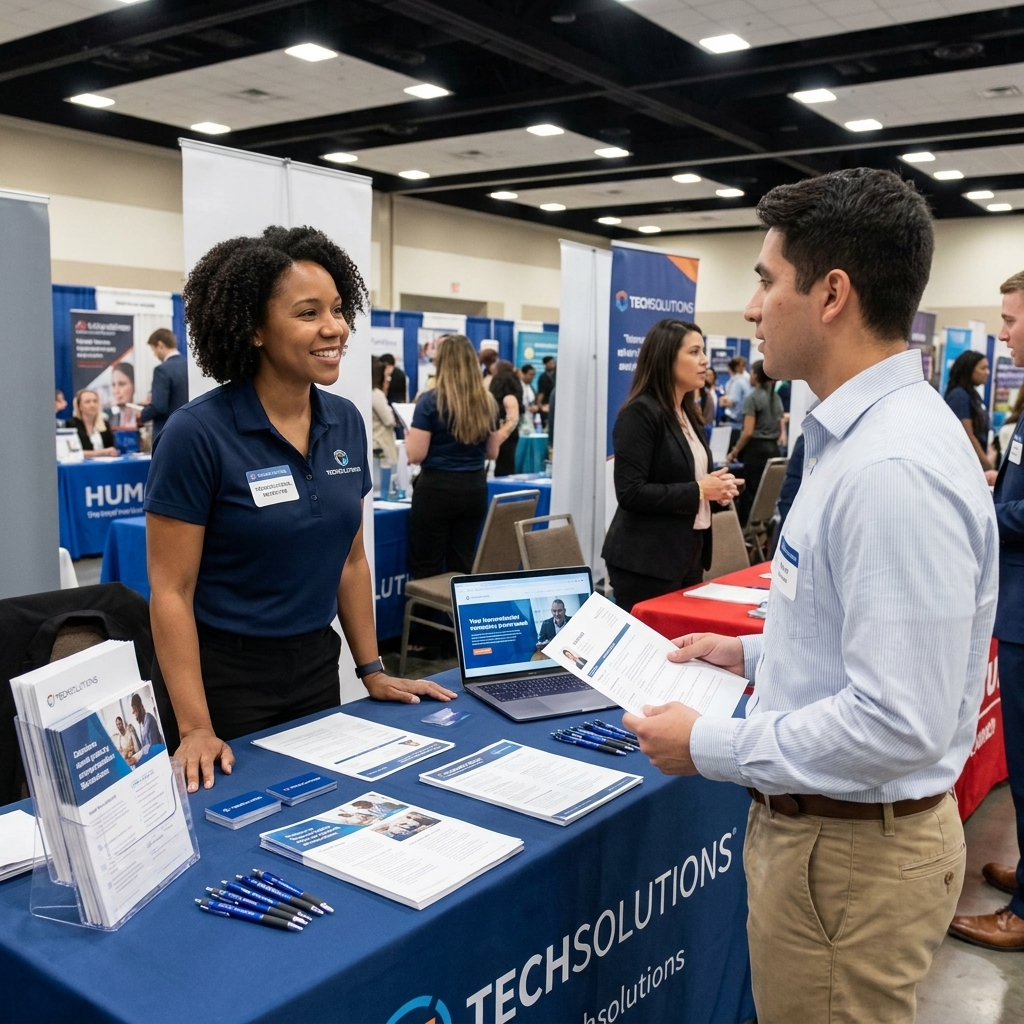
1) Pick a clear goal
Most people show up thinking the goal is “get hired.” At a fair, your real goal is usually one of these:
- Get a recruiter to remember you (and look for your application later).
- Get clarity on which roles you actually qualify for.
- Get a next step like a referral link, requisition ID, hiring manager name, or screening call.
Before you go, write one sentence that defines success, like: “I want two recruiter emails and one screening call scheduled.” That focus changes how you use your time.
2) Research like they do
“I’m open to anything” is not a strategy. Recruiters listen for alignment and readiness. Do a fast, targeted prep on 5 to 10 employers, not 40.
What to research in 20 minutes per employer
- Roles they are actively hiring for (look for keywords you can mirror).
- Basic mission and business model (healthcare system vs. staffing agency matters).
- Requirements that are deal-breakers (license, clearance, shift, location, work authorization).
- One recent update (new clinic, product launch, expansion, contract win).
Then write a short note for each target employer: “I’m interested in X role because Y, and I noticed Z about your team.” That is memorable without being over the top.
3) Build a natural pitch
A strong pitch is not your life story. It is a clear “who I am + what I do + where I’m headed + proof.” Aim for 20 to 30 seconds.
A simple pitch formula
- Present: “I’m a [role/student/veteran] with experience in [1 to 2 areas].”
- Strength: “I’m known for [skill] and [skill] that show up in [result].”
- Target: “I’m targeting [specific roles] in [location/remote] starting [timeline].”
- Bridge question: “Can I ask what success looks like in your [role/team]?”
Example (nursing)
“Hi, I’m Jordan. I’m a BSN graduate with clinical experience in med-surg and telemetry. I’m known for staying calm during high-volume shifts and communicating clearly with patients and families. I’m targeting new grad RN roles on nights in the next 60 days. Can I ask what your orientation and precepting model looks like?”
Example (remote tech)
“Hi, I’m Sam. I’m a help desk specialist with two years of experience supporting Windows environments and ticketing systems like ServiceNow. I’m strongest in customer communication and documentation, and I consistently hit SLA targets. I’m looking for a remote support or junior sysadmin role. What traits help someone thrive on your remote team?”
4) Bring the right materials
Career fairs are fast. Make it easy for someone to say yes to the next step.
- Resumes: Bring 10 to 20 copies on clean paper for in-person events.
- Tailored versions: Bring one resume per target role family (example: one for “customer support” and one for “data analyst”), each with a headline and skills section that match the role.
- Business cards (optional): A simple card with name, phone, email, LinkedIn, and portfolio if relevant.
- QR code (smart): A QR code that links to your LinkedIn or a one-page portfolio can help in loud, crowded settings.
- Virtual fair files: Rename documents clearly, like “MiaChen_DataAnalyst_Resume.pdf.”
If you are a veteran, include a civilian-friendly resume version even if you also bring a federal-style resume for government employers.
Reality check: Some booths cannot accept resumes due to policy. Be ready to pivot to: “No problem. What is the best requisition ID or link to apply, and may I mention we spoke?”
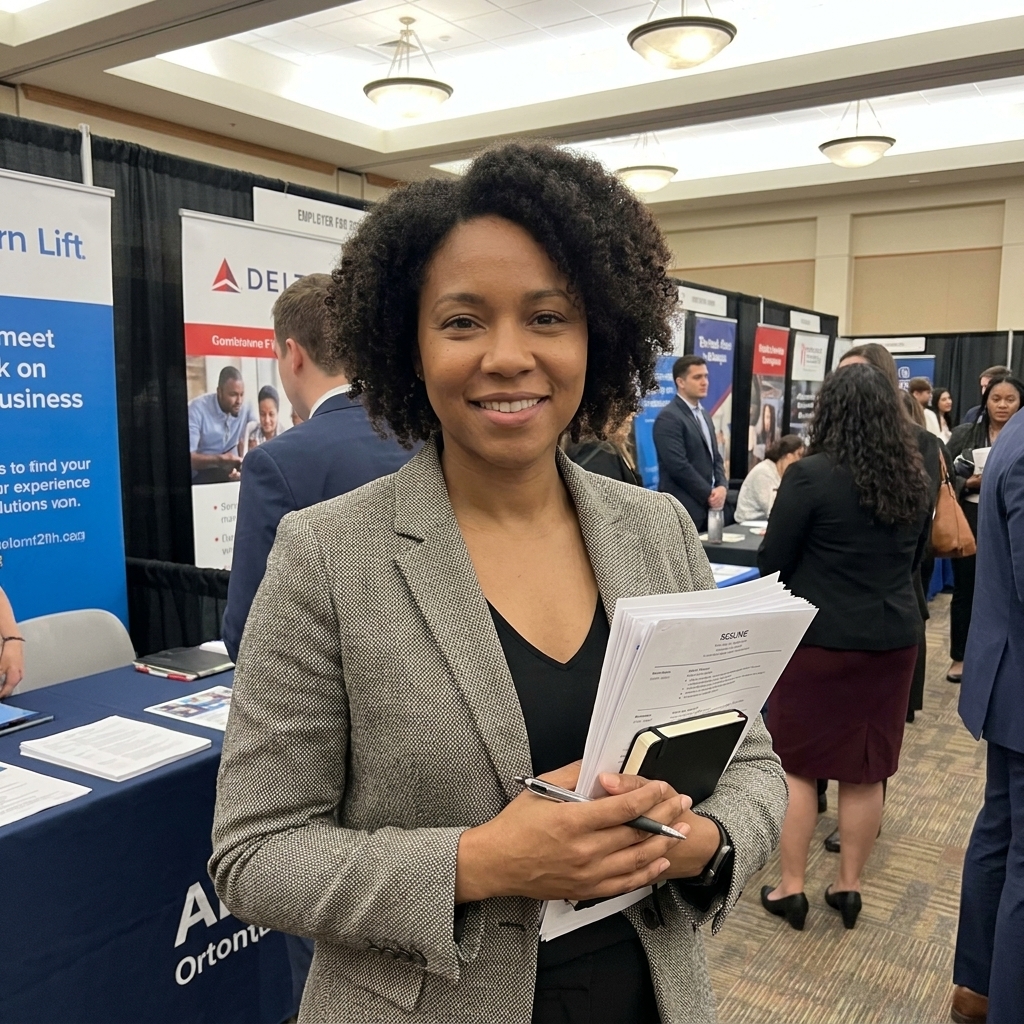
5) Work the room
If you walk into your top-choice booth first, nerves can steal your best first impression. Start with a warm-up booth that is interesting but not your top priority.
A simple approach that works
- Warm-up: 1 to 2 booths to settle in and practice your pitch.
- Targets: Your top 5 to 8 employers when your energy is high.
- Stretch booths: 1 to 3 employers that are slightly above your current level, just to learn what gaps to close.
In virtual fairs, the equivalent is choosing a lower-stakes session first, then booking the 1:1 chats once you feel grounded.
6) Ask better questions
Many candidates ask, “What do you do here?” That is usually easy to find online. Use your limited time for questions that help you qualify the role and show that you think like a teammate.
High-impact questions to ask
- “What does success look like in the first 30 to 90 days?”
- “What are the top two problems this role will solve?”
- “What tools or systems would I use most days?”
- “How is performance measured on your team?”
- “What makes someone a great fit for your culture in practical terms?”
- “Where do candidates usually get stuck in the process, and how can I prepare?”
If you are exploring roles, ask: “Which entry-level titles should I search for on your careers page?” Recruiters love a candidate who is easy to guide.
7) Win the first minute
At a fair, recruiters are typically scanning for three things: clarity, professionalism, and fit. Here is what often helps immediately:
- Open with your name and a firm, friendly greeting.
- Offer your pitch without rushing.
- Match your energy to the situation. Confident, not chaotic.
- Mind your body language: shoulders back, phone away, eyes up.
- Confirm the mechanics: “Do you want candidates to apply online today, and is there a requisition ID I should use?”
- End with a next step: “What is the best way to apply for this role, and may I mention we spoke?”
How to exit politely
If the line grows or the conversation is looping, use a clean closing: “I don’t want to take too much of your time, but this was really helpful. What is the best next step, and who should I follow up with?”
In virtual fairs, do the same with camera and audio. Log in early, test your mic, and keep your background simple and uncluttered.
8) Take notes for follow-up
The follow-up is where most people drop the ball, not the conversation. Right after each interaction, write down:
- Recruiter name and title
- Company and role discussed
- One personal detail (example: “mentioned expanding the night shift team”)
- Application link or next step
- Requisition ID or job posting number (if available)
- Any keyword they used that you should mirror
If you do not catch a name, ask politely: “Could you remind me of your name and the best email for follow-up?” That is normal and professional.
9) Follow up fast (when appropriate)
A good follow-up is short, personal, and action-oriented. If they provided an email, invited follow-up, or you had a strong conversation, send a note within 24 hours. If they told you to apply through the ATS only, follow their process and consider a LinkedIn connection request instead.
Email template you can copy
Subject: Great meeting you at the [Event Name] career fair
Hi [Name],
Thank you for speaking with me at [event] today. I enjoyed learning about [specific team detail or role detail]. Based on our conversation, I applied for the [exact role title] role. Requisition ID (if applicable): [ID].
Quick snapshot of fit: [1 sentence tying your experience to their need].
If it helps, I am available for a screening call [give 2 time windows] and I can adjust to your schedule.
Thank you again,
[Your name]
[Phone] | [LinkedIn]
What to attach and what to link
- Attach: resume PDF (and portfolio PDF if relevant).
- Link: LinkedIn, portfolio site, GitHub, or credential verification if appropriate.
If you are following up after a virtual fair chat, reference the session title or time block so they can place you quickly.
10) Turn it into a plan
The job fair is the spark. Your momentum in the next two weeks is what turns conversations into interviews.
Your 2-week post-fair checklist
- Day 0 to 1: Apply to discussed roles (most employers still require the online application) and send follow-ups when you were invited to do so.
- Day 2 to 3: Connect on LinkedIn with a short note referencing the fair.
- Day 4 to 7: Tailor your resume for each application using the role keywords you heard.
- Day 7 to 10: Send one polite nudge if you were invited to apply or follow up and have heard nothing.
- Day 10 to 14: Prepare for screens with 6 to 8 stories using the STAR method.
Even if you do not land an interview immediately, you are building relationships. I have seen candidates get calls months later because they were one of the few people who followed up with clarity and professionalism.

Quick prep checklist
- 2 to 3 sentence elevator pitch
- Target employer list with notes
- Resume tailored to your target role family
- Questions you will ask at every booth
- Comfortable professional outfit (and comfortable shoes for in-person)
- Notebook or notes app dedicated to recruiter details
- Follow-up email draft ready to customize
Virtual fair tips
- Chat etiquette: Lead with your name, target role, and one proof point. Keep messages short and specific.
- Camera norms: If video is on, look at the camera and keep your lighting simple. If video is off, be extra clear and concise in chat.
- Platform tools: Use the built-in resume upload if offered, and save confirmation screens or application IDs.
Accessibility and comfort
If crowds, noise, or sensory overload are a concern, you can still do well at job fairs.
- Ask the event host about accommodations or quieter meeting options.
- Take short breaks outside the room to reset and review notes.
- Prioritize scheduled 1:1 chats (virtual or in-person) when available.
FAQ
What should I wear?
Match the industry, then go one step more polished. For most corporate and healthcare roles: business casual is safe (slacks or skirt, blouse or button-down, closed-toe shoes). For tech and startups, clean business casual still works. Avoid anything that distracts you from your message.
How many resumes should I bring?
For a medium-sized in-person fair, 10 to 20 is usually enough if you are targeting specific employers. If you are exploring broadly, bring 25. In virtual fairs, have a resume PDF ready to upload and a shareable link to LinkedIn or your portfolio.
What if I do not have much experience?
Lead with relevant projects, coursework, clinical rotations, volunteer work, or military experience translated into civilian terms. Focus on outcomes, reliability, and willingness to learn. A clear target role plus a strong attitude can beat a vague pitch with more experience.
Is it okay to ask about pay?
Yes, if you ask professionally and at the right time. After you have established fit, try: “Can you share the pay range budgeted for this role and whether it varies by shift or location?” In some settings (campus events, public sector booths, or early-stage conversations), the recruiter may not be able to discuss pay on-site. If so, ask what factors influence the range and when compensation is typically covered in the process.
Final mindset
You do not need to “win” every conversation. You need to be memorable to the right employers. Show up prepared, be specific about what you want, and make the next step easy. That is how job fairs stop feeling overwhelming and start producing interviews.