
Resume gaps feel scarier than they usually are. In recruiting, I saw this over and over: strong candidates would spiral about a few months or a year off work, while hiring managers were mainly trying to answer one simple question: Can you do the job now, and are you reliable moving forward?
This guide will help you explain an employment gap clearly and confidently, without oversharing and without sounding defensive. You will also find sample answers you can practice for common scenarios like layoffs, caregiving, school, health, and intentional career breaks.

What interviewers want to know
Many interviewers are not looking to judge you for having a gap. They are trying to reduce risk. A gap becomes a conversation topic when it raises questions like:
- Are your skills current enough for this role?
- Was the gap connected to performance issues or conflict?
- Are there ongoing constraints that would affect attendance, schedule, or travel?
- Can you explain the timeline in a straightforward way?
Your job is to answer those questions calmly, then steer the conversation back to your fit for the role.
One recruiting reality: I have seen candidates with long gaps get hired quickly when they explained the gap cleanly and then proved they were ready on day one.
The best framework: past, bridge, present
Here is the simplest structure I teach clients because it works in almost every situation and keeps your answer tight.
1) Past: one sentence on what happened
Keep it factual. Avoid long backstories.
2) Bridge: what you did during the gap
Show that you stayed active in a way that makes sense for your situation. That can include caregiving, school, certifications, freelance projects, volunteer work, relocation logistics, or targeted upskilling.
3) Present: why you are ready now
End with a confident pivot: why you are excited about this role and how your skills match what they need.
Template you can memorize:
“After I left [company/role], I [brief reason for gap]. During that time, I [bridge activity]. At this point I am ready to commit to my next role, and I am targeting positions like this because [why this job].”
What to say and what to avoid
Do
- Match the level of detail to the question. Aim for a brief, clear explanation (often around 30 seconds), then move on.
- Use neutral language. “Laid off,” “role eliminated,” “restructured,” and “contract ended” are all clear and non-inflammatory.
- Bring proof when it helps. Evidence of recent work can be certifications, a portfolio, a GitHub link, recent CE credits, references from volunteer leadership, or a recent project you can discuss.
- Practice until it sounds normal. Not scripted, just calm and familiar.
Avoid
- Over-apologizing. A gap is a fact, not a confession.
- Trashing a past employer. Even if you are right, it reads as risky.
- Sharing private medical details. You can keep it high-level.
- Rambling timelines. If you catch yourself listing months and emotions, reset with “In short…” and pivot back to the role.

Sample answers you can use
Below are ready-to-say examples. Adjust the specifics to match your situation and the role you are pursuing.
1) Layoff or restructuring
Sample answer:
“My position was eliminated during a restructuring, along with several roles on our team. Since then I have been focused on finding the right next fit, and I have kept my skills current by [course/certification/projects]. I am excited about this role because it needs [key skill], which is where I have done my strongest work.”
If they ask: “Were you laid off for performance?”
“No. It was a broader reduction. My performance reviews were strong, and I can share references who can speak to my work.”
2) Family caregiving
Sample answer:
“I took time away from paid work to handle caregiving responsibilities in my family. That situation is stable now, and I am able to meet a full-time schedule. During the gap I stayed current by [keeping up with the field, taking a class, volunteering, part-time projects]. What drew me to this role is [specific match].”
If you need to address availability:
“My schedule is covered, and I can meet the hours and reliability expectations for this position.”
Quick boundary if they probe for personal details:
“I prefer to keep family details private, but I can confirm I am fully able to meet the requirements of the role.”
3) School or training
Sample answer:
“I stepped away to complete [degree/program]. I focused on [relevant coursework, clinicals, capstone, projects], and I am ready to apply it in a hands-on role. This position stood out because [specific match to job description].”
4) Health or medical leave
Sample answer:
“I took a health-related leave for a period of time. I am able to perform the essential functions of the role, and I am ready to return to work. During that time, I did what I could to stay connected professionally, and I am looking forward to contributing fully.”
Note: You are not required to share a diagnosis. If they push for details, redirect: “I prefer to keep the specifics private, but I can confirm I can meet the requirements of the job, with or without reasonable accommodation.”
5) Burnout or planned break
Sample answer:
“I took a planned career break to reset and to be intentional about my next move. During that time, I clarified what I do best and built skills in [tools/industry knowledge]. At this point I am focused on roles like this because [clear reason tied to the job].”
6) Job search longer than expected
Sample answer:
“After leaving my last role, I was selective because I wanted my next position to be a strong long-term match. While searching, I stayed active through [temp work, freelancing, volunteer work, courses, portfolio projects]. This role feels like a good fit because it lines up with my experience in [skills] and the direction I want to grow.”
7) Military transition gap
Sample answer:
“After separating from the military, I took time to complete my transition and translate my experience into the civilian workforce. During that time I completed [certification, training, networking program] and aligned my resume with roles like this. I am ready to step into a civilian role now, and I am drawn to this position because it uses my strengths in [leadership, operations, troubleshooting, teamwork].”
8) Multiple short gaps or job hopping
Sample answer:
“Over the last [timeframe], I had a couple of shorter transitions due to [contract work ending, a relocation, a role mismatch]. In between, I stayed active by [freelance work, training, projects]. What I am focused on now is finding a stable, long-term fit, and this role appeals to me because [why this role supports stability and growth].”
9) Relocation, immigration, or administrative delays
Sample answer:
“I had a gap due to relocation and administrative timing. That is fully resolved now, and I am authorized and ready to work. During that time I [networked, trained, built projects, volunteered]. I am especially interested in this role because [job-specific reason].”
10) Sensitive situations (keep it high-level)
Some situations are personal or complicated. You can keep your explanation simple and truthful, then pivot to readiness. Example: “I had a personal matter to address, it is resolved, and I am ready to work consistently now. During that time I [one bridge item].”
How to explain a gap on your resume
You may be asked about a gap before the interview, especially in online applications. You have a few options, depending on your comfort level and what happened.
Option 1: Use years instead of months (with care)
If your gaps are short, using years can reduce visual emphasis. Example: “2021 to 2023” rather than “May 2021 to January 2023.”
Caution: Only do this if it stays accurate and does not create confusion. Some recruiters and ATS screens prefer month and year. If a gap is substantial, it is usually better to address it directly than to make it look hidden.
Option 2: Add a simple line for the gap
This can be helpful for longer gaps or when you did something relevant.
- Career Break | 2024 to 2025
Full-time family caregiving; completed Google Data Analytics Certificate and built two portfolio projects - Professional Development | 2023 to 2024
Completed CompTIA A+; completed 150+ hours of hands-on labs; supported small businesses with basic IT setup
Option 3: Use a functional or hybrid resume format (with caution)
Skills-based formats can help if your experience is non-linear, but recruiters often prefer a clear timeline. If you use a functional format, include a straightforward work history section with dates so it does not look like you are hiding something.
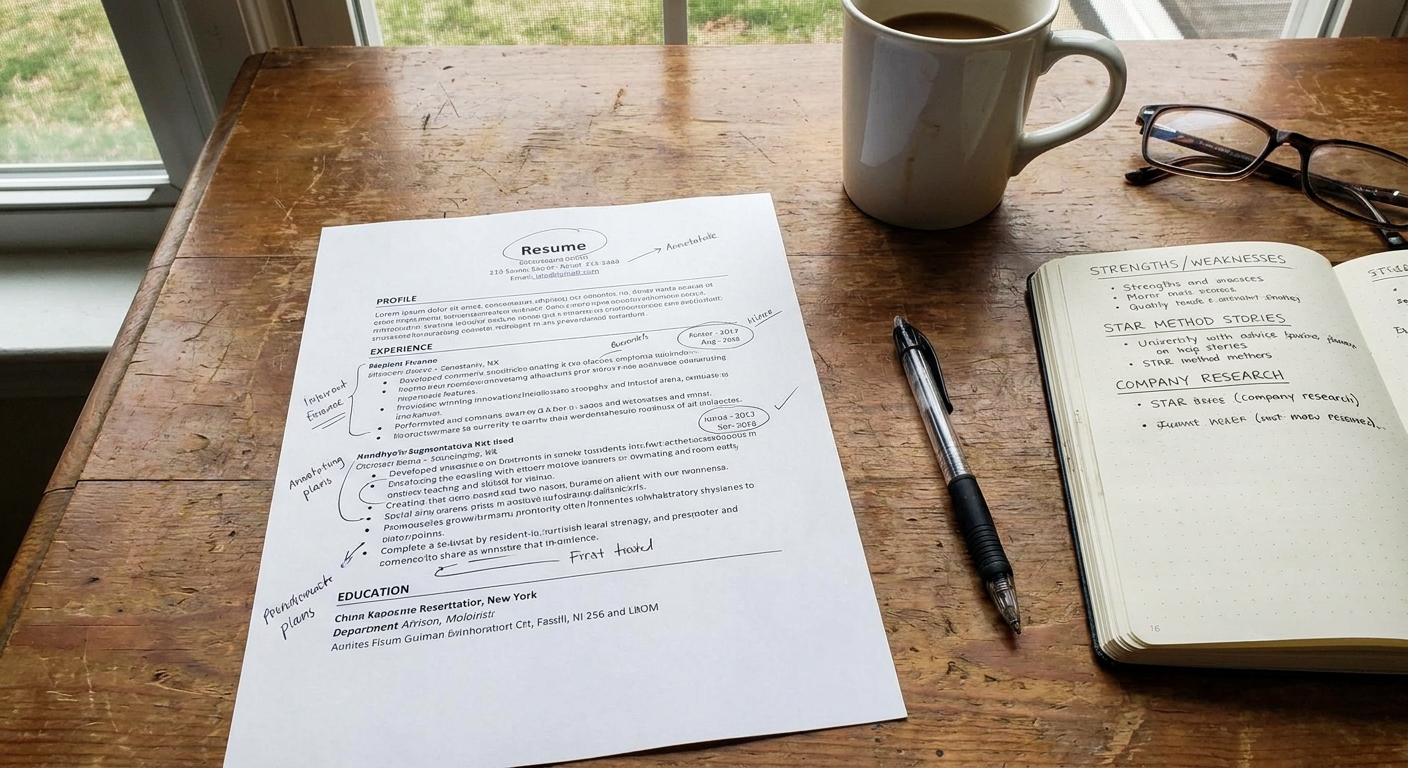
Handling follow-up questions
Some interviewers dig deeper. That is not always a bad sign. It can mean they are trying to understand your situation so they can advocate for you.
“Why did you leave your last job?”
Keep it future-focused. Even if the past was messy, your goal is to sound stable.
Example: “The role changed after a reorganization, and I realized I wanted to focus on [direction]. That is why I am interested in this position.”
“What were you doing during that time?”
Answer clearly and then bridge to the role.
Example: “I was caregiving full-time. I also kept my skills sharp by [one relevant action]. Now I am ready to commit fully to a role like this.”
“How do we know this will not happen again?”
This is really about reliability. Respond with what is now different.
Example: “The situation that required my time is stable and has support in place. I am able to meet the schedule expectations consistently.”
“Do you have any references from that period?”
If you worked, volunteered, studied, or freelanced, you likely do. Supervisors, professors, clients, or volunteer coordinators can all be relevant.
If they ask something inappropriate
Sometimes an interviewer drifts into questions they should not be asking, especially about health, family status, or personal details. Keep it calm and bring it back to the job.
Redirect line: “I prefer to keep that private, but I can confirm I can meet the essential requirements of the role.”
Practice plan: 15 minutes
- Write your 3-part answer (past, bridge, present) in 3 to 5 sentences.
- Cut it down until it lands clearly when spoken.
- Record yourself once and listen for apologies, rambling, or negativity.
- Make a one-line pivot back to the job: “What I am excited about here is…”
- Practice two versions: a quick version and a longer version.
If you do this ahead of time, you will walk into interviews calmer because you will know you can handle the question without freezing.
Quick FAQ
How long of a gap is a red flag?
There is no universal number. A few months is common and rarely a deal-breaker. Longer gaps can raise more questions, but they are explainable if you show readiness and a clear reason you are returning now.
Should I disclose a mental health break?
You are not required to share medical details. A simple “health-related leave” or “personal leave” is enough, followed by confirmation that you are ready to meet the job requirements.
What if my gap was due to being fired?
Keep it brief and forward-looking. Focus on what you learned and what you have done since to improve. If the situation was not a fit, say that without blaming others, then pivot to why this role is a better match.
What if I did nothing during my gap?
First, be kind to yourself. Life happens. Second, choose one or two truthful bridges you can point to, even if they are small: self-study, helping family, applying consistently, or getting your routine ready to return to work. Then emphasize your readiness now.
Close strong
A resume gap does not erase your skills. The goal is not to justify your entire life. The goal is to answer the question, show that you are prepared, and move the conversation back to what you can do for the employer.
If you want to make this even easier, print the job description, highlight the top 5 requirements, and make sure your gap explanation ends by connecting to at least one of them. That is the difference between a gap that feels awkward and a gap that feels handled.