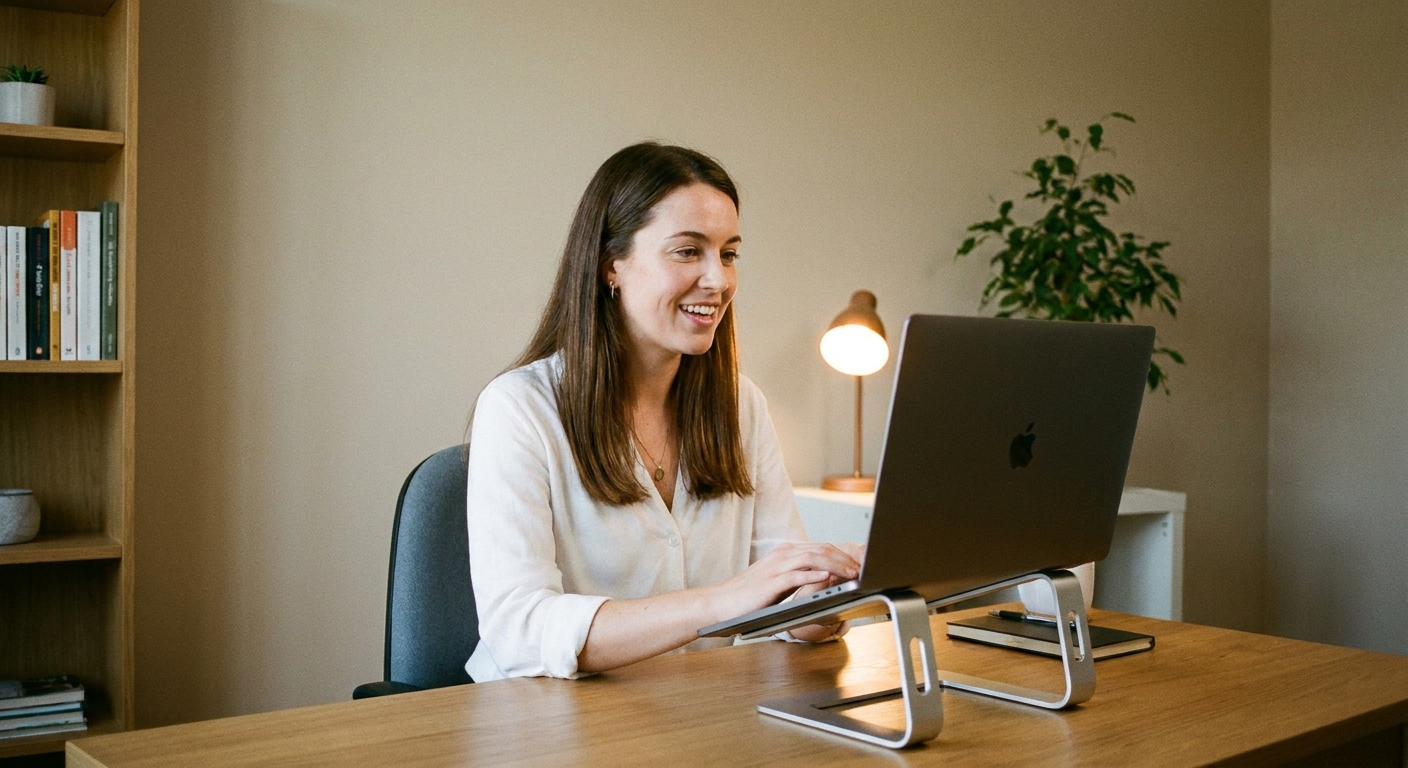
Panel interviews used to intimidate me, and not because I did not know my stuff. It was the feeling of being evaluated from three to five people at once, with questions coming from different directions and facial expressions that were hard to read. In admissions and later in corporate recruiting, I sat on a lot of panels for nursing and remote tech roles, and I can tell you this: many candidates do not struggle in panels because they are unqualified. They struggle because they treat it like a rapid-fire quiz instead of a group conversation.
This guide is about sitting a live panel confidently: where to look, how to bring quieter interviewers in, and how to handle follow-ups from several people without getting flustered.
What a panel interview measures
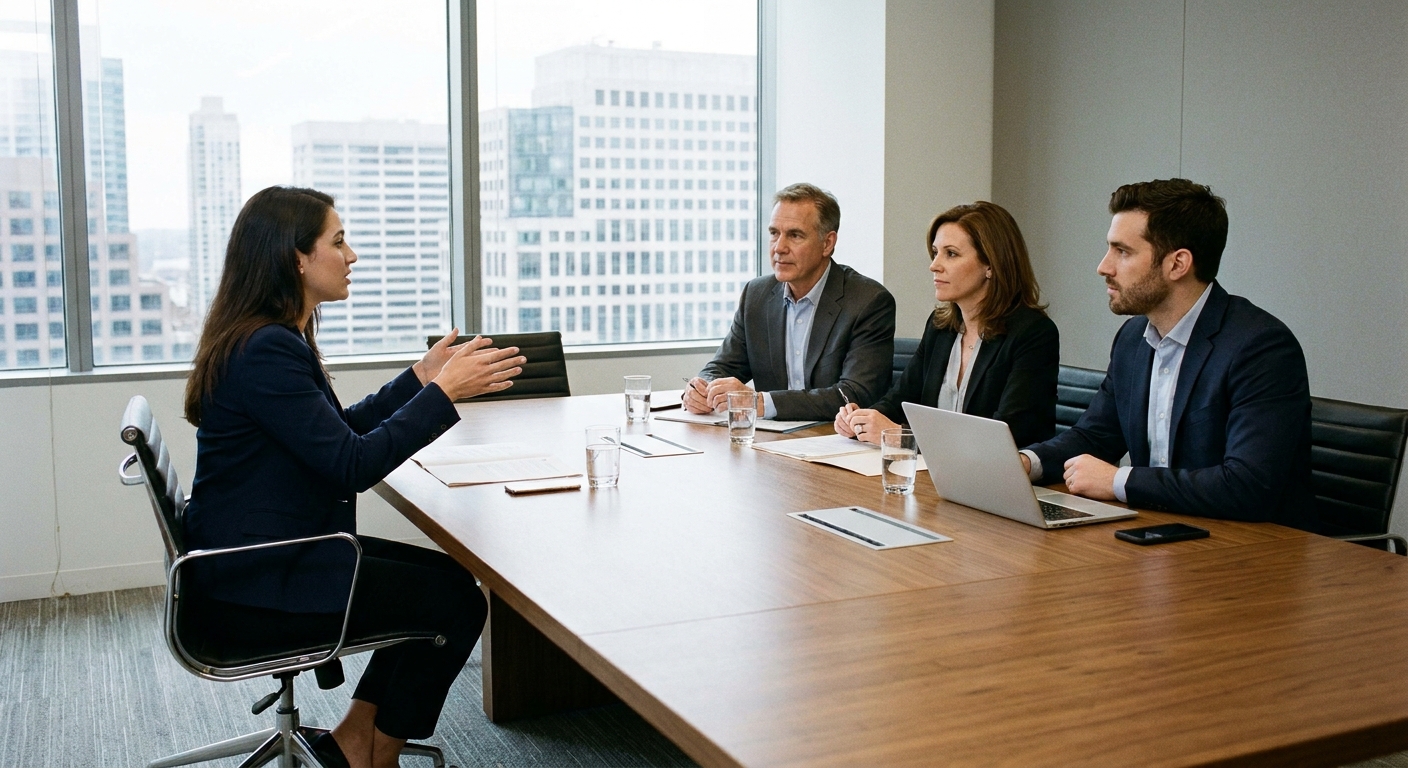
A panel interview is rarely just about getting more opinions at once. It is usually designed to test how you communicate in a group, how you handle competing priorities, and whether you can build rapport with different stakeholders.
- Consistency: Do your examples and values stay steady across multiple questioners?
- Clarity under pressure: Can you answer cleanly when the pace picks up?
- Collaboration: Do you treat the panel like teammates, not adversaries?
- Stakeholder awareness: Can you speak to what each person likely cares about?
If you go in expecting a conversation, you will usually do better than if you go in bracing for an interrogation.
Before the interview
Confirm the format and names
If your scheduling email does not list who will be on the panel, it is appropriate to ask. A simple request like, “Could you share the names and roles of the interview panel so I can prepare?” is normal and professional.
Once you have names and titles, spend a few minutes on each person, or about 5 to 10 minutes if it is a smaller panel:
- Scan their LinkedIn for team focus and tenure.
- Note anything that signals their priorities (quality and compliance, patient experience, engineering velocity, customer retention, etc.).
- Prepare one relevant example you can aim toward each priority.
Bring a panel-friendly notebook setup
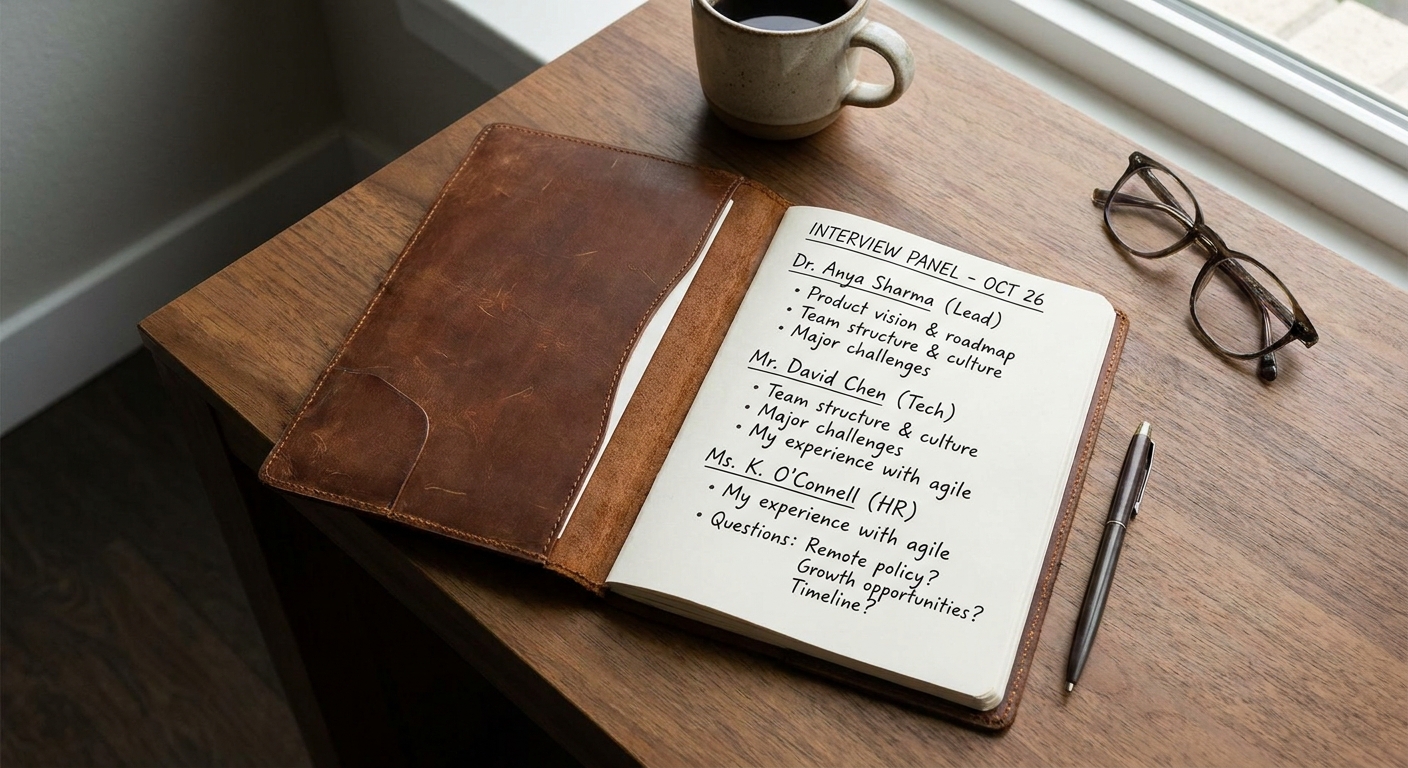
I am exceptionally organized for a reason: in multi-interviewer situations, your brain will drop details. A simple page layout helps.
- Write panelists’ names across the top with a few blank lines under each.
- Leave a section called “My stories” with 3 to 5 bullet reminders of the examples you plan to use.
- Leave a section called “Questions I want to ask” so you are not scrambling at the end.
This is not about reading notes. It is about freeing up mental bandwidth.
Practice answering with steady eye contact
A basic rehearsal that works: ask a friend to sit in front of you and place two sticky notes on either side of your screen or mirror to represent other panelists. Practice starting your answer toward the person who asked, then intentionally shifting your gaze to the other “panelists” as you explain your example and outcome.
Open strong
Greet everyone and confirm names
At the beginning, treat it like meeting a small team, not facing a firing squad. If introductions move fast, it is okay to confirm pronunciation once so you are not avoiding names the whole time.
- “Hi everyone, it is great to meet you. Before we start, I want to make sure I am saying names correctly.”
Give a 20 to 30 second overview
You do not need a full speech, just a clean anchor that makes your background easy to score. I like a simple three-part setup: what you do, where you have done it, and what you are looking for next.
- “I am a registered nurse with experience in acute care and outpatient settings. Most of my work has focused on patient education and coordinating care across teams. I am excited about this role because it looks like a chance to improve the patient experience while still working in a fast-paced environment.”
Where to look in a panel
This is one of the biggest differentiators between candidates who feel steady and candidates who feel scattered.
Use the asker-first rule
- Start with the person who asked the question. Give your first sentence or two to them. It signals respect and directness.
- Then include everyone. As you move through the example, look briefly at each panelist for a beat or two.
- Close back to the asker. When you finish your point, land on the person who asked. It helps everyone track the structure.
Do not ping-pong your eyes
Fast darting eye contact reads as anxiety. Instead, treat it like a calm scan. Think: one thought equals one gaze shift.
If it is video, anchor near the camera
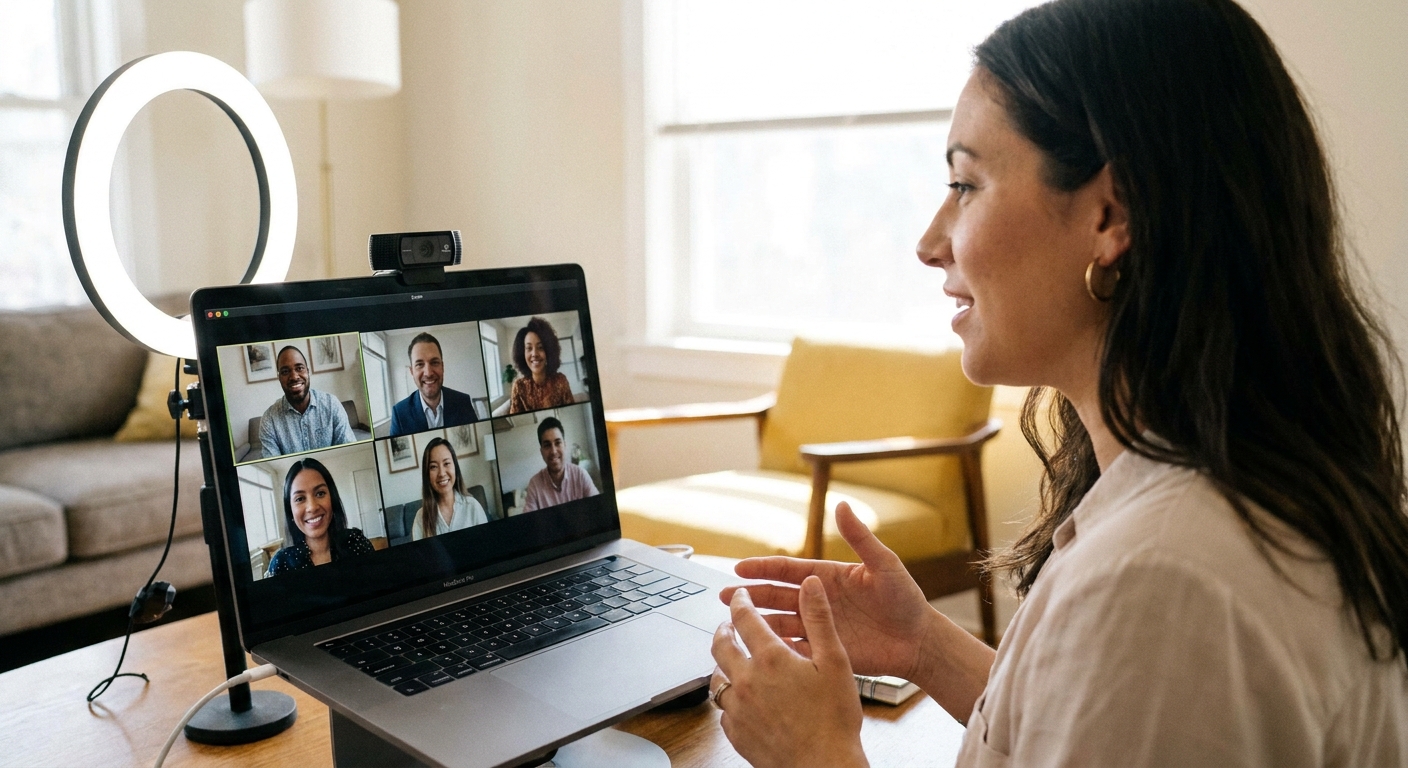
On video, you will feel pulled toward whoever is speaking on screen. When you are talking, aim your eyes near the camera most of the time, then glance to faces periodically. If the panel is large, this keeps you from looking like you are speaking only to one person’s tile.
Include quieter panelists
Panels often have one or two people who ask most questions and one person who is quiet, taking notes. Quiet does not mean unimportant. It can be the hiring manager, a key cross-functional partner, or the person you will work with most closely.
Include them with eye contact
When you do your “include everyone” pass, pause on quieter panelists slightly longer. If they nod or react, acknowledge it naturally by continuing your explanation while still including them visually.
Invite follow-ups
If you are asked something broad, you can finish your answer and then open the floor gently:
- “That is the approach I have used. I am happy to go deeper on any part of it.”
- “Would it be helpful if I shared a second example from a different setting?”
Use a role-based bridge
If you know someone’s function, connect your answer to what they likely care about. Keep it light, not performative:
- “From a compliance standpoint, I documented the steps and closed the loop in the chart the same day.”
- “From an engineering perspective, the key for us was defining the acceptance criteria before we touched the code.”
This signals cross-functional awareness, and it gives quieter panelists a natural way in.
Hybrid panel tips
Hybrid panels are common now: two people in a room, one person on video, or one panelist calling in from another location. The risk is accidentally treating the remote person like a spectator.
- Acknowledge them early: “Hi, it is great to meet you as well. Can you hear me clearly?”
- When you answer, include them in your scan: In-person, deliberately look toward the screen when you are making your key points.
- If audio cuts out, pause: “I think I missed the last part. Could you repeat it?” is always better than guessing.
Handle rapid follow-ups
Rapid follow-ups can feel like you are losing control, but they are not automatically bad. Sometimes it is a great sign that your answer sparked interest. Other times it means they are confused, trying to stay on time, or testing how you organize information. The trick is managing pace and keeping your thread.
Pause before you answer
A one-second pause is not awkward. It reads as thoughtful. It also prevents you from answering the wrong version of the question when two people speak back-to-back.
Sequence the questions
When follow-ups stack, you can politely organize them:
- “Great questions. Let me start with the timeline, then I will come back to how we measured results.”
- “I heard two things there. I will take the handoff process first, then address the escalation piece.”
This is a leadership move. Most panels appreciate it.
Use signposting
In a panel, people miss pieces because they are writing notes. Make your structure obvious:
- “There are three factors that drove that decision.”
- “The short version is X. The longer context is Y.”
- “What I learned was Z, and how I apply it now is…”
Ask for a repeat
If a follow-up comes quickly and you did not catch it fully, ask. It is better than guessing.
- “Could you repeat the last part of that question?”
- “When you say ‘ownership,’ are you asking about decision-making authority or execution responsibility?”
Reclaim your thread
Panels sometimes interrupt unintentionally, especially if they are trying to stay on time. If you were mid-answer, it is okay to return to it after responding.
- “Yes, and to finish the earlier point about outcomes, we reduced errors by…”
- “That connects to what I was saying about stakeholder alignment. The way we handled it was…”
Common panel dynamics
Friendly and skeptical energy
You may get one person who smiles and another who stays stone-faced. Do not over-interpret. Some people are focused on notes or simply have a neutral expression.
- Keep your tone steady.
- Stick to clear structure and concrete examples.
- Answer the content, not the vibe.
Two panelists disagree
Occasionally you will see conflicting viewpoints, especially in cross-functional panels. Your job is not to referee. Your job is to stay curious and professional.
- Acknowledge both perspectives: “That makes sense from both angles.”
- Ask what success looks like: “In this position, what would you like the person to optimize for first?”
- Offer a balancing approach: “In similar situations, I have used X to protect quality while still moving quickly.”
One person dominates
If one panelist does all the talking, keep answering them well while still including the others with your gaze and your framing. You cannot force balance, but you can prevent the conversation from becoming a one-on-one.
Make answers land
A panel is not the place for wandering stories. You want answers that are easy to score and easy to remember.
Lead with the headline
Start with the conclusion, then support it. This helps panelists who are note-taking and may miss your setup.
Timebox your answers
A practical target for many questions is 60 to 90 seconds. If you sense you could go longer, offer two lanes:
- “I can give you the short version, or I can walk through the full timeline. Which would you prefer?”
Choose examples with clear roles and outcomes
Panels are listening for what you did. Use “I” when appropriate, and be specific about results, constraints, and who you partnered with.
Translate across functions
This is especially important if you are changing industries, moving from military to civilian work, or pivoting roles. Define any acronym quickly and tie it to a business outcome.
- Instead of: “I handled triage and escalation.”
- Try: “I prioritized issues based on urgency and impact, then coordinated the right team to resolve them within our service targets.”
Day-of checklist
In-person
- Arrive 10 to 15 minutes early.
- Bring extra copies of your resume, plus a pen and a small notebook.
- When you enter, greet each panelist by name if possible.
- Place your notes neatly, not sprawled across the table.
Video
- Test camera, audio, and connection 30 minutes before.
- Frame yourself with shoulders visible and eyes near camera level.
- Close extra tabs and silence notifications.
- Keep water nearby and notes at eye level so you are not looking down constantly.
Common mistakes
- Answering only to the loudest person: Include the whole panel with your gaze and your framing.
- Talking faster as more questions come in: Slow down. Clarity matters more than speed.
- Forgetting names: It happens. If you forget, do not panic. Continue professionally without overusing names.
- Trying to impress each person differently: Stay consistent in your values and story. Adapt emphasis, not identity.
- Not asking for clarification: Panels move quickly. Clarify and sequence questions when needed.
After the interview
Close clearly
When they ask if you have questions, use at least one that ties the room together:
- “Based on what we discussed today, what would you want the person in this role to accomplish in the first 60 to 90 days?”
- “What would make someone successful with your team, specifically?”
Follow up the right way
Unless you are given everyone’s emails directly, send your thank-you note to the recruiter or the hiring manager and ask them to pass it along. In the note, reference one or two themes that came up across the panel, and keep it brief and specific.
FAQ
Should I bring notes into a panel interview?
Yes, a small notebook is usually appropriate for in-person and video panels. Keep it tidy, use it as a prompt, and do not read full answers.
What if I do not know who to look at while answering?
Start with the person who asked, then briefly include the others as you explain, then finish back with the asker. That simple pattern covers most situations.
What if multiple panelists ask questions at once?
Pause, then sequence: “Let me take the first part, then I will come back to the second.” Panels generally appreciate the organization.
Is it okay to ask who is on the panel ahead of time?
Yes. It helps you prepare, and it signals professionalism.
One mindset shift
Instead of thinking “I am being judged by a group,” think “I am meeting the team I may join.” Your goal is not to win over one person at a time. Your goal is to communicate clearly to a room and make it easy for them to picture working with you.
If you can do that, the panel format stops feeling like a trap and starts feeling like an opportunity to build trust quickly.