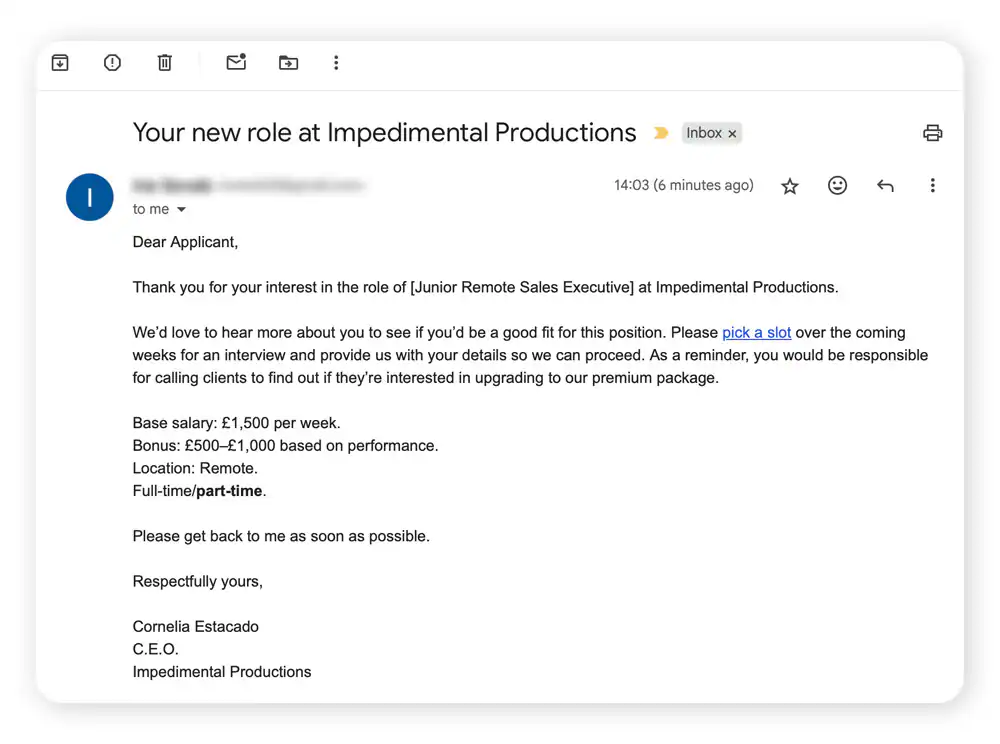
Remote work can be life-changing. It can also be a magnet for scammers who know job seekers are stressed, hopeful, and moving fast. The good news is that a lot of fake remote listings follow the same playbook. Once you know the patterns, you can spot trouble early and protect your time, money, and identity.
This guide will walk you through the biggest remote job scam red flags, simple ways to confirm a company and recruiter, and what a legitimate remote hiring process typically looks like.

Remote job scams: the core goal
Many remote job scams fall into a few familiar buckets:
- Money extraction: They try to get you to pay for training, equipment, a background check, “activation fees,” gift cards, or cryptocurrency.
- Identity theft: They collect personal data like your Social Security number, driver’s license, bank details, or full date of birth.
- Free labor or account takeover: They get you to do unpaid “tests” that are actually real work, or they trick you into handing over login codes and access to accounts.
Keep that in mind as you read. If a step in the process seems designed to get your money or sensitive info quickly, that is often the point.
Fast red flags in the job listing
When I worked in recruiting, legitimate postings were specific because they had to match real team needs. Scams are often vague, overly broad, and designed to hook as many people as possible.
1) The pay is unusually high for entry-level work
Be cautious when you see big pay numbers attached to simple tasks like data entry, “virtual assistant,” package processing, or chat support, especially if no experience is required. High-paying remote roles exist, but they come with clear skill requirements and a real hiring process.
2) The job description is generic or copied
Watch for listings that read like a motivational poster: “Work from home! Flexible schedule! Unlimited growth!” without naming the tools, team, or responsibilities.
3) The company name is missing, misspelled, or looks impersonated
Scammers often use a real company’s name with small changes, like an extra word, a different domain, or a slightly altered logo. If the post says “We are a global leader” but never identifies who “we” are, pause.
Micro-example: a scammer might use a domain like careers-company.com or companyjobs.org and hope you do not notice it is not company.com.
4) They want you to move off-platform immediately
If a job board message quickly turns into “Text this number on WhatsApp/Telegram,” treat it as a warning. Some real recruiters do use WhatsApp or text as a supplement, especially globally. The issue is when it is the only channel and they will not use a company email, ATS, or scheduled call you can confirm.
5) There is pressure to act right now
Lines like “Positions filling today,” “Immediate start,” or “Reply within 30 minutes” are meant to keep you from confirming details.
Recruiter red flags you should never ignore
A real recruiter can be fast and informal, but they should still be professional, verifiable, and consistent.
1) Email addresses that do not match the company domain
A huge one. If the recruiter claims to represent a company but emails you from Gmail, Outlook, Yahoo, or a domain that is slightly “off” (for example, companycareers-online.com instead of company.com), treat it as suspicious.
Tip: Scammers also use lookalike letters, like swapping an “l” for an “i.” Also, do not trust the display name alone. Scammers can spoof names and even caller ID, so verify using domains and official contact channels.
2) Poor grammar plus odd urgency
Everyone makes typos. The pattern to watch for is repeated errors, awkward phrasing, and high-pressure language combined.
3) They avoid live conversation
It is not unusual for a first screen to be a phone call or video call. If they refuse to speak live, refuse to answer basic questions, or keep everything in chat only, that is a common scam pattern.
4) Their online footprint does not exist
Legitimate recruiters usually have a LinkedIn presence that makes sense: a work history, connections, and activity. A brand-new profile with few connections, no photo, or mismatched job titles is a caution sign.

Scam interview patterns to watch for
Some fake “interviews” are designed to feel official but skip the steps that protect both you and the employer.
1) Instant job offer after minimal contact
If you are offered a role without a real interview, references, or a skills discussion, it is not a good sign. Many legitimate teams move quickly, but they still evaluate you.
2) Text-only “interviews” that are just a questionnaire
Some companies use written screening questions. The difference is that legitimate employers still identify themselves clearly, use company email or an applicant tracking system, and follow up with a live screen or structured process. Scam questionnaires often feel generic and lead directly to a job offer.
3) They ask for sensitive personal info too early
Before you have an official written offer and you have confirmed the company independently, do not share:
- Social Security number
- Photos of your driver’s license or passport
- Bank account or routing numbers
- Full date of birth
- Login codes or verification codes sent to your phone
Legitimate employers usually collect sensitive information after you accept an offer and complete official onboarding through secure systems. There are exceptions in some jurisdictions and regulated roles, where limited details may be requested for pre-employment screening. Even then, you should be able to confirm the employer, the vendor, and the secure process before sharing anything.
4) They send a check and tell you to buy equipment
This is one of the most common remote job scams: they email you a “company check,” ask you to deposit it, then instruct you to buy equipment from a specific vendor. The check later bounces, and you are out the money you spent.
Micro-example: they may say you need to buy a laptop today, deposit the check now, then send a receipt or pay a “supplier.” Your bank can make funds look available before the check truly clears.
Many real companies provide equipment directly, or they use a reputable reimbursement process after you start, not a rushed check deposit.
5) They insist on unusual payment methods
Be extremely cautious if the conversation involves gift cards, crypto, wire transfers, or payment apps as part of hiring or onboarding. Wages are typically paid via payroll (direct deposit) after you are employed, not during recruiting.
Common scam roles to avoid
1) Reshipping and package mule jobs
Listings for “package processing,” “quality control,” or “shipping inspector” can be a front for reshipping stolen goods. You receive packages at home and forward them elsewhere. Besides being a scam, it can put you at legal risk.
Red flag language to watch for: “receive and re-label,” “forward parcels,” “use your home as a distribution point,” or “we will send you packages to inspect.”
2) Task and optimization scams
These often claim you can earn money by clicking through tasks, rating products, “optimizing” listings, or completing app-based work. Early payouts may be used to build trust, then you are asked to deposit money to “unlock” higher earnings or withdraw funds. A real job does not require you to pay to get paid.
Verification steps: how to confirm a remote job is real
When you are excited about a role, confirmation can feel like you are “slowing things down.” In reality, these steps take minutes and can save you months of cleanup.
1) Start with the company’s official website
- Find the company site through your own search, not a link they send.
- Check the Careers page. Is the job posted there?
- Look for a physical address and phone number you can cross-check, not just a form. If you can, confirm the address is a real office and not only a mailbox service.
2) Confirm the recruiter works there
- Search their name on LinkedIn.
- Check whether their email domain matches the company website domain.
- If you are unsure, call the company’s main phone line (from the official site) and ask to confirm the recruiter’s employment. Do not rely on a number they provide.
3) Cross-check the job posting details
- Does the role exist on the company’s LinkedIn or careers page?
- Do the responsibilities match the company’s business model?
- Is the pay range aligned with market norms for that role and experience level?
4) Use a safe “call back” method
If you receive a message from “HR,” do not reply with sensitive information. Instead:
- Find the company’s publicly listed HR or recruiting contact method.
- Ask if the person contacting you is part of their recruiting team.
- Ask whether the job is active and where you should apply officially.
5) Trust the application flow
Most legitimate employers use an applicant tracking system (ATS) and a company domain email. Some smaller companies may be less formal, but they should still be able to verify who they are, what the job is, and how they handle pay and onboarding.

What a legitimate remote hiring process usually looks like
Every employer is a little different, but a real remote hiring process typically includes most of the following:
- A clear job posting that matches a role on the company website or official channels.
- An application submitted through an ATS or a clearly verified company email.
- At least one live conversation (phone or video) with a recruiter, hiring manager, or both.
- Role-specific questions about your experience, availability, tools, and work samples.
- A written offer that includes job title, pay, start date, and employment terms.
- Onboarding paperwork handled through secure systems after you accept the offer.
- Normal payroll setup through direct deposit forms inside an HR portal or established payroll provider.
Also, legitimate employers can explain how they support remote work: communication tools, schedule expectations, training, equipment policies, and who you report to.
Common scam scripts, translated
Here are a few lines I see job seekers receive, plus what they often mean.
- “We found your resume and you are shortlisted.” Translation: They are blasting messages to many people.
- “Interview will be conducted via Telegram.” Translation: They are avoiding traceable, official channels.
- “We will send a check to purchase equipment.” Translation: Classic fake check scam risk.
- “Kindly provide your full name, address, and SSN to proceed.” Translation: Identity theft attempt.
- “You must pay for training to start.” Translation: They are selling you something, not hiring you.
If you think you found a scam: what to do next
1) Stop communicating and do not send anything else
If you have not sent sensitive info yet, great. Freeze the conversation. If you already sent documents or banking info, move to the next steps immediately.
2) Save evidence
- Take screenshots of messages, the job post, and email headers.
- Save phone numbers, usernames, and any payment requests.
3) Notify the platform
Report the listing to the job board or social platform where you saw it. This helps protect other job seekers.
4) Protect your identity if you shared sensitive information
- If you shared bank details, contact your bank right away and ask about safeguarding your account.
- If you shared your Social Security number or other identity information, consider placing a fraud alert or security freeze with the credit bureaus.
- If you shared login verification codes, change passwords immediately and enable multi-factor authentication on your accounts.
5) Consider reporting
If money was lost or identity theft is involved, you can file a report with your local law enforcement and relevant consumer protection or fraud reporting resources in your country. In the U.S., people often report these scams through the FTC and the Internet Crime Complaint Center (IC3).
Safe habits for remote job searching
A few routines make you much harder to scam, even when you are applying to lots of jobs.
- Use a dedicated job-search email so suspicious messages do not mix with personal accounts.
- Never pay to get hired. Application fees are not standard for jobs. In most legitimate employee roles, background checks are employer-paid, though some contractor platforms and certain countries handle this differently.
- Be cautious with personal documents. Share them only after an offer, and only through verified systems.
- Confirm before you get excited. A two-minute check can prevent a two-year mess.
- Keep a simple application tracker. Note where you applied, the exact company URL, and the recruiter’s verified contact info.
FAQ
Is it normal for a remote job to do the first interview by chat?
It can happen for early screening, especially for high-volume roles. The red flag is when everything is chat-only, there is no verifiable company email or ATS, and the process quickly moves to money requests or sensitive info.
How can I tell if a recruiter email is fake?
Check the domain against the company’s official website, watch for subtle misspellings, and confirm the recruiter through LinkedIn or by calling the company’s main number listed on the official site. Also remember that display names and caller ID can be spoofed, so verification should rely on official channels.
What if the company is small and does not have a big online presence?
Small companies can still verify who they are. Look for a legitimate business registration footprint, a working phone number, consistent branding, and a professional email domain. If they cannot confirm basic details or they pressure you to move fast, step away.
Are remote job equipment stipends ever real?
Yes. Many employers provide equipment or offer a stipend. The scam pattern is a rushed check deposit and instructions to buy from a specific vendor. Legit stipends are documented in an offer letter and handled through payroll or a standard reimbursement process.
A final gut-check
If something feels off, you do not need to prove it is a scam before you protect yourself. Slow down, confirm the company independently, and remember this: a legitimate employer will respect reasonable questions about identity, process, and pay.
If you want, paste a job listing or recruiter message you are unsure about into your own notes and run it against the red flags above. That simple pause is often what saves people.