If you are a registered nurse who feels burned out, overstimulated, physically worn down, or simply ready for a new pace, you are not alone. Wanting to step away from bedside care does not mean you are “not cut out” for nursing. It usually means you have learned what you need to stay healthy and keep growing.
The good news is that your RN license, clinical judgment, and patient communication skills translate into a wide range of roles that still make a difference, often with more predictable hours and less physical strain.
Below are eight non-bedside career paths for nurses, including what the job really looks like, who it tends to fit best, and a simple next step you can take this week.
1) Telehealth Nurse
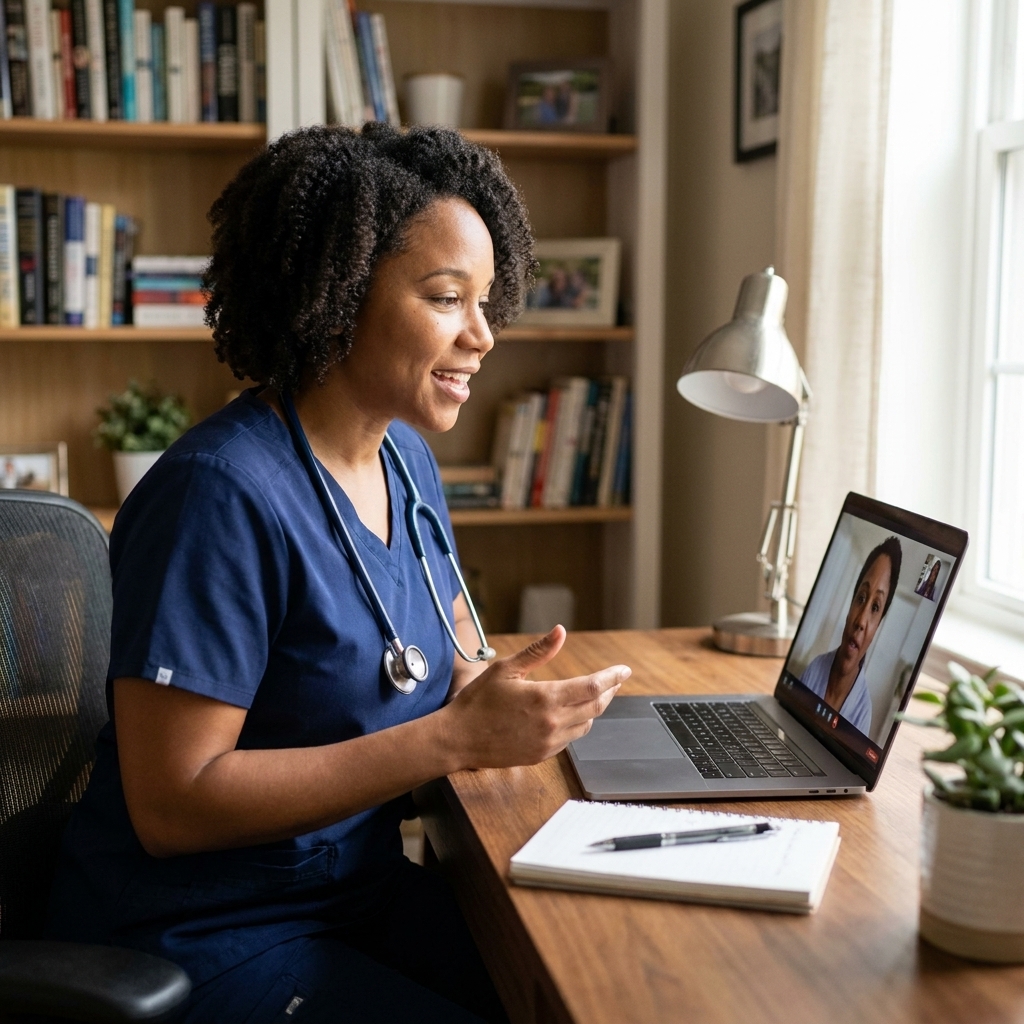
Telehealth nursing is one of the most direct pivots from bedside to remote or hybrid work. You use your assessment skills to triage symptoms, provide education, review medications, and help patients decide what level of care they need next.
Reality check: Many roles come with strict documentation standards, productivity metrics, and protocol-based decision-making. Requirements can vary by employer and state, and some positions require you to be licensed in the patient’s state (or be eligible through the Nurse Licensure Compact).
What you might do day to day
- Conduct video or phone assessments and symptom triage
- Provide chronic disease coaching and medication education
- Document encounters and escalate urgent cases
- Coordinate follow-up appointments and referrals
Great fit if you want
- Remote or hybrid work options
- Less physical demand and fewer lifting injuries
- High-volume patient interaction without bedside tasks
Helpful credentials
- Strong experience in ED, med-surg, pediatrics, OB, or triage-heavy units
- Comfort with documentation, protocols, and call flow
- Some employers prefer prior call center or triage experience, but many train
Try this next: Update your resume bullets to emphasize triage, patient education, and escalation decisions rather than tasks like “administered meds.” Telehealth hiring managers want to see judgment.
2) Nurse Informatics
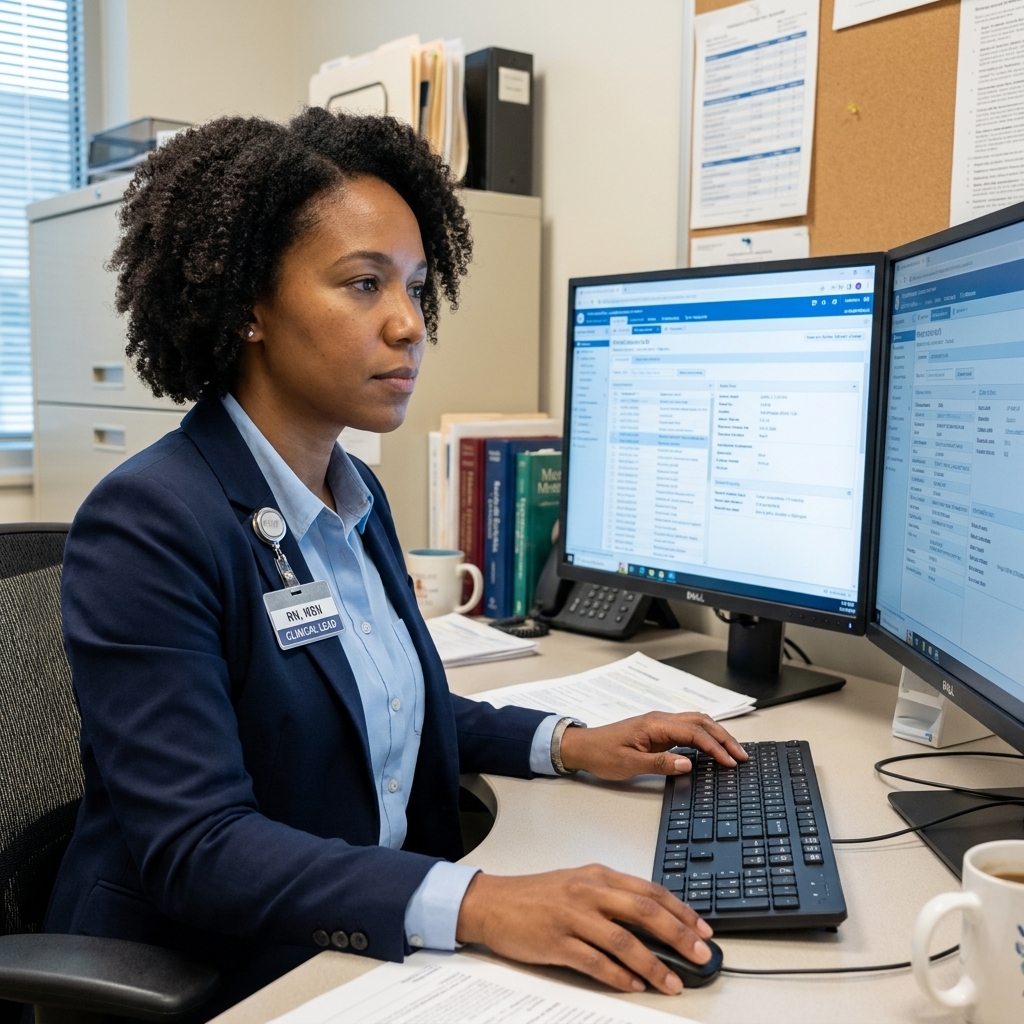
If you are the nurse everyone calls when the EHR “won’t do the thing,” informatics might be your lane. Nurse informaticists bridge clinical workflows and technology. You help design, optimize, and roll out systems that make patient care safer and documentation more efficient.
Reality check: This work can be meeting-heavy and change-management heavy. You may spend a lot of time translating between clinical staff and IT, and you will not always get quick wins.
What you might do day to day
- Test EHR updates and troubleshoot workflow issues
- Train staff on new documentation processes
- Build templates, order sets, and clinical decision support tools
- Analyze data for quality and safety improvements
Great fit if you want
- Project-based work and fewer shifts
- A role that rewards organization and systems thinking
- A long-term path into IT, analytics, or leadership
Helpful credentials
- Familiarity with Epic, Cerner, or your facility’s EHR
- Basic data literacy (Excel, reporting dashboards)
- Later on: ANCC Informatics Nursing Certification (RN-BC) can be valuable
Try this next: Volunteer for a super-user role, go-live support, or a documentation committee at your current employer. Those projects are often the “experience” requirement in disguise.
3) Case Manager
Case management is still deeply patient-centered, but the focus shifts from hands-on care to coordination and outcomes. You help patients move through the system safely, whether that means discharge planning in a hospital or ongoing support through an insurance provider.
Reality check: Many hospital case manager roles include rotating weekends, holiday coverage, or on-call expectations. In payer settings, you may deal with productivity targets and a lot of phone time.
What you might do day to day
- Assess patient needs and barriers (transportation, housing, follow-up care)
- Coordinate post-acute services like home health, DME, or rehab
- Communicate with families, providers, and community resources
- Document progress, authorizations, and care plans
Great fit if you want
- More standard business hours (common, but varies by employer)
- Work that blends clinical knowledge with problem-solving
- A role that rewards communication and advocacy
Helpful credentials
- Experience with complex patients (med-surg, ICU stepdown, oncology, geriatrics)
- Familiarity with insurance and discharge processes
- Optional: CCM (Certified Case Manager) or ACM (Accredited Case Manager) over time
Try this next: Ask to shadow a case manager for half a shift. It gives you accurate language for interviews and helps you decide if you like the pace.
4) UR or CDI
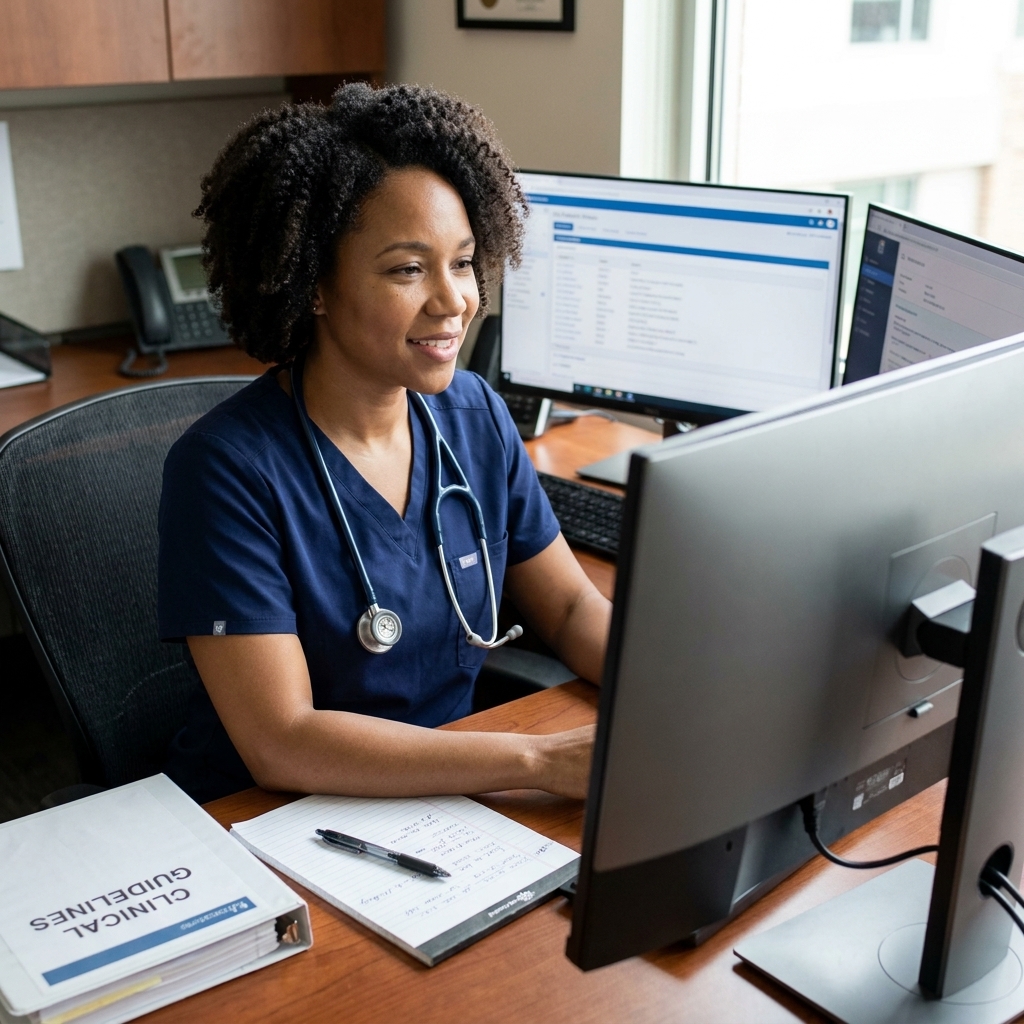
Utilization review (UR) and clinical documentation improvement (CDI) are behind-the-scenes roles that protect patients and organizations by ensuring documentation supports the care provided and aligns with payer requirements. For detail-oriented nurses, these roles are a common and realistic off-the-floor transition.
Reality check: This work is less physically demanding, but it can be mentally intense. You will need to stay calm during provider queries and denial conversations, and you will live inside documentation all day.
What you might do day to day
- Review charts for medical necessity and level of care
- Collaborate with providers to clarify documentation
- Use payer criteria and clinical guidelines to support authorizations
- Track denials, appeals, and trends
Great fit if you want
- Focused, independent work
- Less sensory overload and fewer physical tasks than the floor
- Clear metrics and measurable impact
Helpful credentials
- Strong chart review skills and comfort using criteria sets
- Experience with high-acuity patients helps
- Optional: CDIP, CCDS (for CDI), or UR-focused training depending on role
Try this next: Practice describing your clinical reasoning in documentation terms: “patient met criteria because…” That is the core of UR and CDI interviews.
5) Quality and Safety
Quality improvement (QI) and patient safety nurses work on what most bedside nurses wish they had more time to fix: processes. These roles look at patterns, adverse events, readmissions, falls, pressure injuries, infections, and more to reduce harm and improve outcomes.
Reality check: Progress can be slow. You may spend weeks building buy-in, validating data, and revising workflows before you see results. If you like influencing without “being the boss,” it can be a great fit.
What you might do day to day
- Investigate safety events and help run root cause analyses
- Audit charts and track quality metrics
- Develop and implement practice changes with unit leaders
- Educate staff on new standards and workflows
Great fit if you want
- Work that improves care for entire populations of patients
- A role that blends clinical knowledge, communication, and data
- A pathway into leadership and administration
Helpful credentials
- Experience with committees (falls, infection prevention, shared governance)
- Comfort reading basic reports and trends
- Optional: CPHQ (Certified Professional in Healthcare Quality)
Try this next: On your resume, quantify outcomes you influenced: “Reduced CLABSI by X,” “Led monthly audits,” or “Created a new patient education tool adopted by the unit.” Numbers matter in QI.
6) Nurse Educator
If you love teaching, precepting, or building confidence in newer nurses, education can be an energizing shift. Nurse educators work in hospitals (clinical education, onboarding, competency programs) or in colleges and universities.
Reality check: “Off the floor” does not always mean “done at 3 p.m.” Academic roles can include early mornings for clinicals, evening skills labs, and a lot of grading outside scheduled hours. Clinical educator roles vary widely by facility.
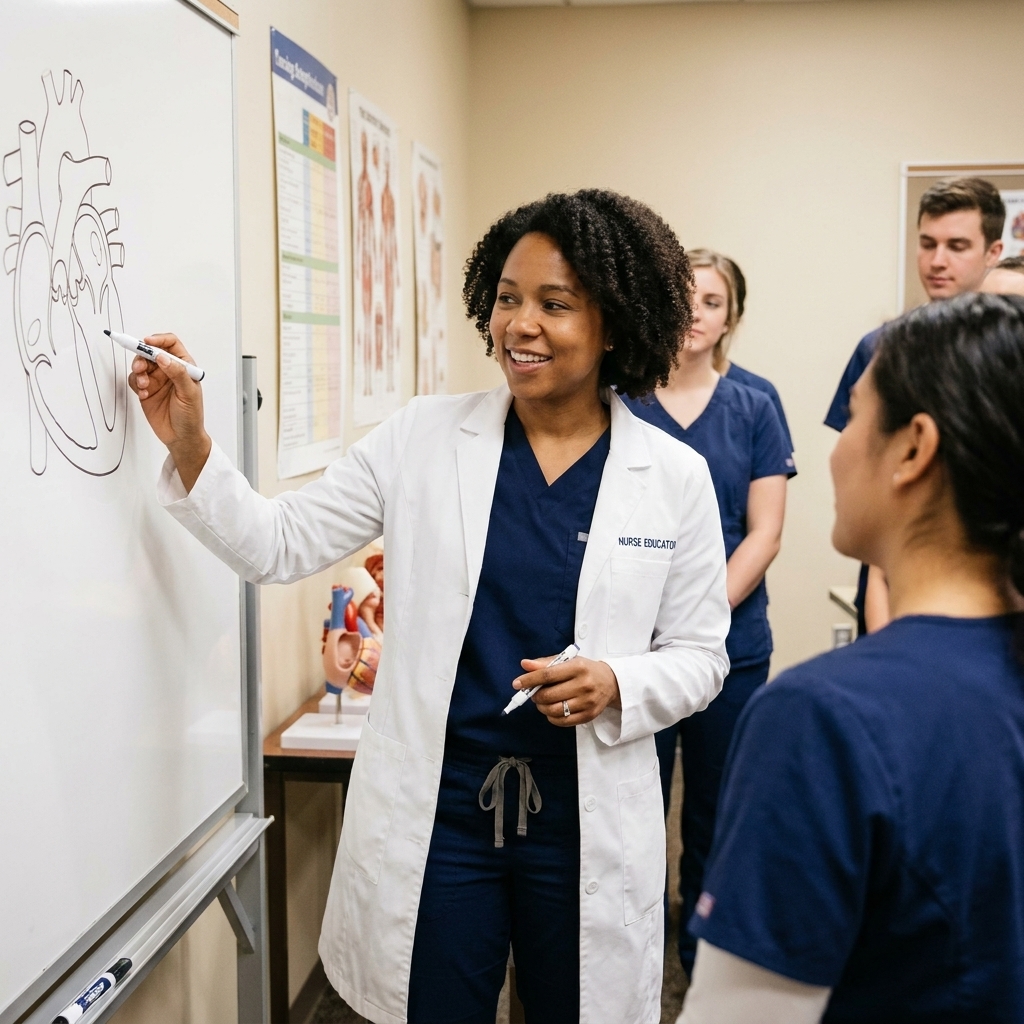
What you might do day to day
- Develop training programs, competencies, and orientation plans
- Teach classes, skills labs, or simulation sessions
- Coach staff on evidence-based practice and clinical judgment
- Assess performance and support remediation
Great fit if you want
- A mentoring-focused role
- More predictable scheduling than bedside in many settings
- Work that shapes the next generation of nurses
Helpful credentials
- Strong clinical foundation in a specialty
- Teaching and presentation skills
- Some academic roles require an MSN; clinical educator roles vary
Try this next: Start collecting “proof” of teaching: preceptor roles, in-services you led, tip sheets you created, or committee education initiatives. That portfolio helps you stand out.
7) Admin and Leadership
Not every nurse manager position is “less stress,” but leadership can be a better-fit stress if you enjoy coordinating people and systems more than direct care. Administration roles include nurse manager, supervisor, director-level pathways, and operations roles in clinics or health systems.
Reality check: You may trade physical exhaustion for emotional load. Staffing gaps, conflict, and accountability are real. The upside is that you get influence over the problems that burn nurses out.
What you might do day to day
- Staffing, scheduling, and workforce planning
- Policy development and compliance
- Budget input and resource allocation
- Performance coaching and culture-building
Great fit if you want
- More influence over how care is delivered
- A career ladder with increasing scope and pay
- Work that blends strategy, communication, and accountability
Helpful credentials
- Charge nurse or committee leadership experience
- Conflict resolution and coaching skills
- Optional: MSN, MHA, MBA, or leadership certificates depending on goals
Try this next: If you are nervous about jumping straight into management, consider interim charge, assistant manager, or clinic lead roles first. It is a smoother ramp and still counts as leadership experience.
8) Medical Writer
This is the “hidden” non-bedside path many nurses do not realize is possible. Medical writers and clinical content specialists create patient education materials, continuing education content, healthcare training, policy documents, and evidence-based articles. Some roles are fully remote.
Reality check: Deadlines and revisions are part of the job, and you will need thick skin about edits. Also, some writing roles prefer an RN, while others do not require it at all. Your clinical background is still a major advantage.
What you might do day to day
- Translate clinical evidence into clear, accurate content
- Develop training modules for staff or patients
- Collaborate with clinicians, editors, and compliance teams
- Cite sources and ensure content meets regulatory standards
Great fit if you want
- Remote work with deep focus time
- Work that uses your clinical knowledge without shift work
- A flexible path for nurses managing family or health needs
Helpful credentials
- Strong writing skills and comfort with research
- A portfolio, even if it starts small
- Optional: AMWA training or certificate programs can help, but are not always required
Try this next: Build a simple portfolio: rewrite a patient handout in plain language, draft a one-page clinical tip sheet, or publish a LinkedIn post explaining a common condition. Consistency beats perfection.
How to choose a path
When you are exhausted, it is tempting to apply to everything and hope something sticks. A little structure saves a lot of time.
Use these three filters
- Energy: What drains you most at bedside (physical strain, constant alarms, high conflict, rotating shifts) and what would feel sustainable?
- Strengths: Are you more of a teacher, a systems fixer, a relationship builder, or a detail-driven reviewer?
- Logistics: Do you need remote work, set hours, less weekend work, or benefits that support your family?
My coach-style reminder: You do not have to pick the “forever” job next. Pick a job that gives you breathing room and keeps doors open.
Transition checklist
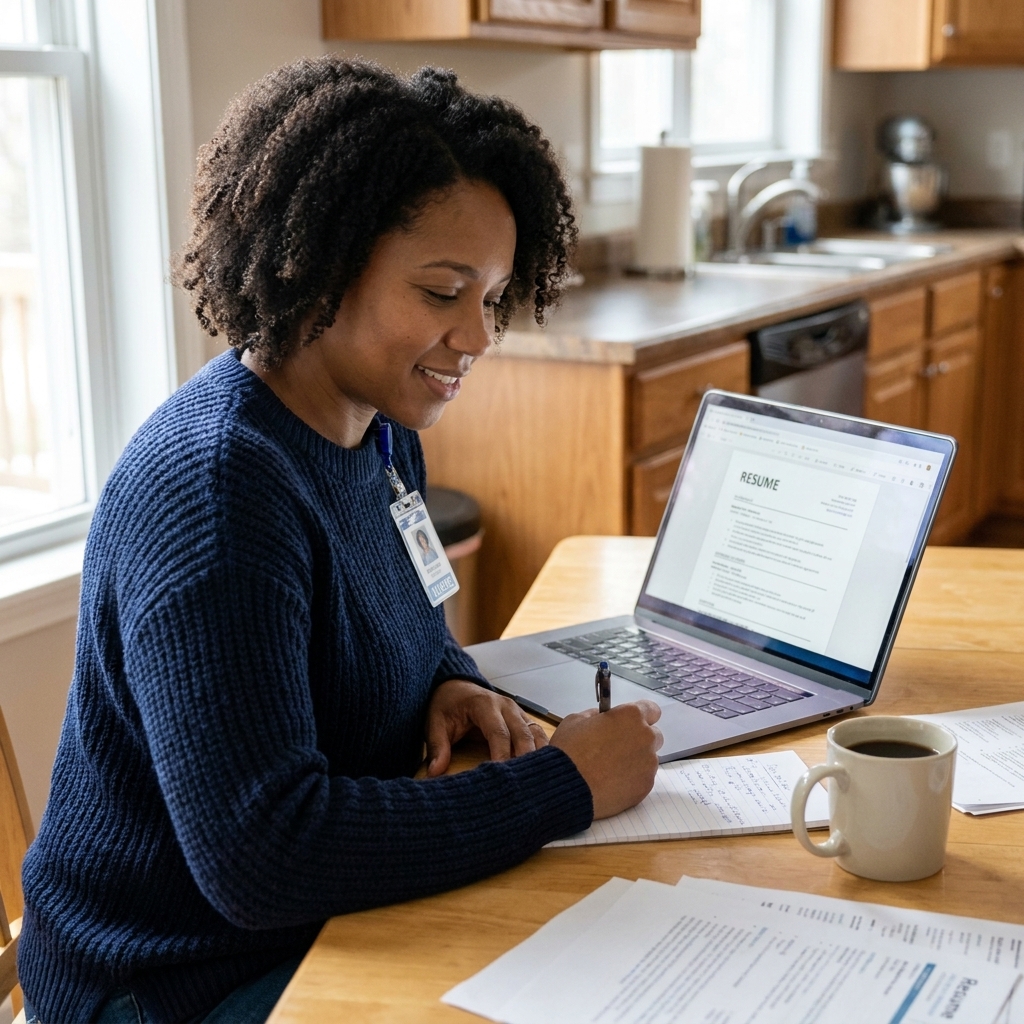
- Rewrite your resume for the target role. Non-bedside hiring managers want evidence of analysis, coordination, documentation quality, education, tech comfort, or process improvement.
- Translate bedside language. Swap task lists for outcomes and judgment. Example: “Triaged symptoms using protocols and escalated high-risk cases.”
- Collect two strong stories. One about a complex patient situation you managed and one about a system issue you improved. These fit almost every interview.
- Shadow or do an informational interview if possible. Even a 20-minute conversation gives you the real vocabulary of the job.
- Target employers strategically. Health systems, payers, EHR vendors, home health, public health departments, and education companies all hire RNs off the floor.
FAQ
Should I let my RN license lapse if I leave bedside?
Usually, no. Keeping your license active protects your options, and many non-bedside roles require or strongly prefer an active RN. Also, some state boards have practice-hour requirements for renewal. The good news is that many non-bedside nursing roles still count toward those hours, but the rules vary. Check your state board’s renewal requirements and confirm whether your specific role qualifies.
What non-bedside nursing jobs pay well?
Pay varies by location and employer, but informatics, UR/CDI, and leadership tracks often offer strong compensation, especially as you gain specialized experience. Case management can also pay well, particularly in payer settings.
Can I get a non-bedside job with only 1 to 2 years of experience?
Yes, it is possible, especially for telehealth, some case management roles, and education support roles. You may need to lean harder on transferable skills, committee work, and any project experience you can get at your current job.
What if I feel guilty about leaving?
Guilt is common, especially for nurses who carry a strong sense of responsibility. But you are not abandoning patients by choosing a sustainable career. Many non-bedside roles improve care at scale by strengthening systems, education, and access.
Closing thought
Your nursing experience did not “only” teach you how to work a shift. It taught you how to assess, prioritize, educate, de-escalate, document, and advocate under pressure. Those are career skills, not bedside-only skills.
If you are reading this on a blog, use it like a mini self-assessment: pick two roles that match your energy and logistics, then take one “Try this next” step for each. If you want personalized help, drop your preferred schedule (remote, hybrid, weekdays only, no holidays) and your hard limits (lifting, nights, high-acuity) in the comments or contact form, and I can help you narrow the list.