A crisp fold and a fresh perspective.
If a background check doesn’t go your way, it can feel like the decision already happened and you’re just finding out last. In many U.S. hiring situations, that is not how it’s supposed to work. There’s usually a specific sequence employers should follow before they make a final “no” based on a background report, and you may have the right to see the report and dispute items that are actually wrong.
Let’s unfold what “not passing” can mean, what an adverse decision looks like, and what you can do next without trying to dodge your history.

What “not passing” means
First, a useful reframe: many employers do not have a universal pass or fail standard. What happens is more like this:
- A report returns information (or flags missing information).
- The employer compares it to their hiring criteria for the specific role.
- They decide whether the information changes the hiring decision.
So “I didn’t pass” often means the employer saw something in the report that didn’t meet their internal policy or their comfort level for the position. It can also mean the report contains an error or mixed file (information that belongs to someone else), which is exactly why the notice and dispute steps matter.
The usual timeline
When an employer uses a third-party consumer reporting agency (CRA) to run a pre-employment background check, certain rules can apply under the Fair Credit Reporting Act (FCRA). In plain language, that often means: if a consumer report might play a part in denying you, the employer generally needs to warn you first and give you a chance to review what they saw.
If the employer screened you in-house, or relied on information that is not an FCRA-covered consumer report, the pre-adverse and adverse action sequence may not apply in the same way. Even then, you can still ask what they relied on and correct any record at the source.
Also note that some roles and industries may have additional or different screening rules, such as certain government roles, DOT and FMCSA regulated driving positions, or licensed health care jobs. The basic ideas here still help, but the exact process can have extra layers.
Step 1: Pre-adverse action notice
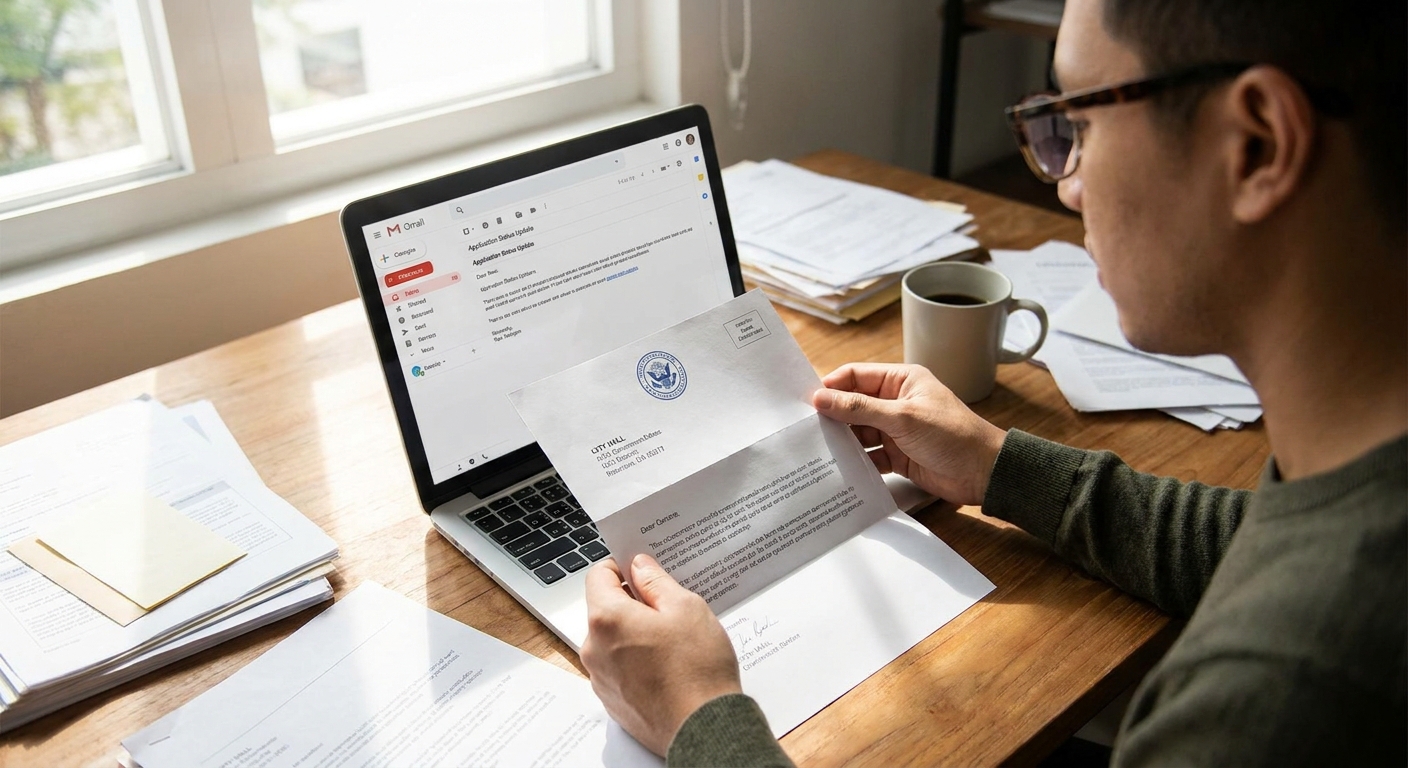
This is the notice that comes before the employer makes a final decision. It’s basically the employer saying: “We found something in the report that may affect your employment.”
Common signs you received a pre-adverse action notice:
- An email or letter that uses wording like “pre-adverse action” or “considering adverse action”
- A copy of the background check report attached or linked
- A summary of your rights included with it
Step 2: Time to review
After the pre-adverse action notice, you should get a reasonable time to respond. The FCRA does not spell out a single federal minimum waiting period in the statute, but the intent is consistent: you get a chance to review the report and dispute inaccuracies before the employer makes a final call. In practice, many employers allow a few business days, but the amount of time varies by employer and situation.
Practical move in this window: save the notice, download the report, note any stated deadline, and respond in writing.
Step 3: Adverse action notice
If the employer decides not to hire you based in whole or in part on the consumer report, the employer must send an adverse action notice. This is the message that says the decision has been made.
Under the FCRA, an adverse action notice must include key details, including:
- The CRA’s name, address, and phone number
- A statement that the CRA did not make the employment decision and cannot explain why the decision was made
- Notice of your right to a free copy of the report from the CRA upon request within 60 days
- Notice of your right to dispute the accuracy or completeness of the report with the CRA
Also worth knowing: some states and cities have “fair chance” or “ban-the-box” rules that add extra steps or timing requirements on top of the FCRA, depending on where you live and the job you’re applying for.
There is also a category called an investigatory consumer report, which can involve interviews and more narrative reference-style information. Those reports can trigger additional disclosure requirements. You do not need to memorize the category names, but it is worth knowing there can be extra notices in certain types of screenings.
Your right to the report
If the employer used a third-party CRA, the pre-adverse action step generally includes a copy of the consumer report and a Summary of Rights. That’s the version of the report the employer is reacting to, and it matters for two reasons:
- You can confirm accuracy. Sometimes the issue is not what you think it is.
- You can be specific. If you dispute, you want to point to exact lines, dates, case numbers, or employer records.
If you did not receive a copy with a pre-adverse action notice, ask the employer what screening company they used and how to obtain the report. You can also contact the CRA directly for its process.
If the employer did the check in-house (not through a CRA), the FCRA adverse action steps may not apply in the same way. Even then, you can still request clarity about what information they relied on, and you can correct records at the source if something is wrong.
How disputes work
Disputing is not the same as explaining or defending accurate history. A dispute is for items that are factually incorrect or belong to someone else.
Errors worth disputing
- A criminal record that isn’t yours (similar name or wrong date of birth)
- A case that shows as open when it was dismissed
- A conviction listed with the wrong charge level or wrong disposition
- An employment verification that lists the wrong dates or employer
- A degree listed as incomplete when you graduated (or vice versa)
What to gather
If you believe the report is wrong, you’ll be in a stronger position with documents that match the error:
- Court disposition documents or expungement orders (if applicable)
- Pay stubs, W-2s, offer letters, or separation letters for work history
- Official school transcript or diploma verification
- A copy of your ID if there is an identity mix-up
Dispute the report and fix the source
Most disputes start with the CRA, using the instructions provided with the notice or on the CRA’s site. Keep your message short, factual, and attached to documentation.
But some issues also require correcting the original source record so the error does not keep reappearing. For example:
- Court records: contact the clerk or follow the court’s correction process
- DMV driving history: follow your state DMV’s dispute steps
- Education: ask the registrar to correct or re-verify
- Employment: contact the employer’s HR or payroll records contact
If you want a refresher on what a normal pre-employment background check includes and how the overall process works, start here: What to Expect From a Pre-Employment Background Check.
If you never got a notice
If you were rejected after a background check and never received a pre-adverse action notice with a copy of the report, do not assume you are out of options.
- Ask whether a third-party CRA was used. If yes, ask for the CRA’s name and the report.
- Ask what information drove the decision. Keep it calm and specific.
- Dispute errors with the CRA anyway. Even if that job is gone, a corrected file helps the next application.
- Consider a complaint if the process looks off. The CFPB accepts complaints about consumer reporting. Depending on the issue, the FTC or your state attorney general may also be an option.
You do not need to be combative. You do need to be organized.
If the record is accurate
Sometimes the report is correct, and the employer still chooses not to move forward. When that happens, the honest truth is simple: the employer gets to decide, and your search may need to continue.
This is where it helps to separate two things:
- Accuracy (Is the report right?)
- Fit (Does the employer’s policy allow them to hire with this history for this role?)
You can ask, politely, whether there is any additional context they will consider. But you should also be prepared that their answer is final.
One important note: do not try to hide history or “work around” the process by being deceptive. In many cases, inconsistencies between what you said and what’s verified become the deciding factor, even when the underlying issue might have been manageable with honesty.

Common reasons for a no
Every employer is different, but these are common triggers for a non-selection decision after a background check:
- Criminal history that conflicts with the role (for example, theft-related offenses for a cash-handling job)
- Driving record issues for roles that require driving
- Credential verification problems (degree, license, certification does not match job requirements)
- Employment history cannot be verified or appears inconsistent
- Policy-based exclusions tied to industry rules or client contracts
Even when something shows up, some employers weigh factors like how long ago it happened, whether it’s related to the job, and what you’ve done since. Others apply stricter rules. That variance is frustrating, but it’s real.
What to do next
When you’re in the “maybe” window (pre-adverse action stage), your goal is to protect yourself from errors and communicate clearly. When you’re in the “final no” stage, your goal is to reset quickly and keep momentum.
If you are in pre-adverse action
- Get the report and read it carefully.
- Check identifiers (name, middle name, date of birth, address history) for mix-ups.
- Circle the exact problem lines you plan to dispute or clarify.
- Gather proof (disposition, transcript, pay stubs, ID) that matches the error.
- Dispute factual errors with the CRA and keep copies of everything you submit.
- Correct the source if the underlying record is wrong.
- Respond promptly and follow any stated deadline.
If you got an adverse action notice
- Request another copy of the report for your records if needed. Under the FCRA, you generally have the right to a free copy of the report from the CRA upon request within 60 days of receiving the adverse action notice.
- Dispute inaccuracies anyway so the corrected record helps you moving forward.
- Adjust your target list toward employers and roles that align with your situation and experience.
- Prepare a truthful, brief explanation for interviews when the topic is likely to come up.
FAQ
Does “considering adverse action” mean I already failed?
Not necessarily. It usually means the employer saw something that could change the decision. It’s a sign to review the report immediately and dispute any factual mistakes.
How long do employers wait after a pre-adverse action notice?
There’s no single timeline across all employers, and the FCRA does not list a specific federal minimum waiting period in the statute. You should get a reasonable time to review and respond. Many employers use a few business days, but it varies, so treat it as urgent and respond as soon as you can.
Can I lose the job offer after a background check?
Yes. Many offers are conditional on completing screening. If the employer’s policy says the report is disqualifying for that role, they can rescind the offer.
Should I contact the employer or the screening company?
Often, you may need both: the employer for process and timing, and the CRA for report details and dispute steps. Keep your messages factual and organized.
If the report is correct, can I talk my way out of it?
Sometimes additional context helps, but sometimes it doesn’t. If the information is accurate and the employer’s policy is firm, the decision may be final and the best move is to keep your search moving.
A clean next fold
A background check that doesn’t go your way can feel personal, but the most practical path is usually straightforward: confirm what’s on the report, dispute what’s truly wrong, and if the record is accurate and the employer decides no, keep going with a clearer sense of what you’re dealing with.