
I grew up in a working-class family where everything felt like it had to go exactly right for opportunities to stick. So when I say this, I mean it: running late to an interview feels awful. Your stomach drops, your brain starts bargaining with traffic lights, and suddenly you are debating whether you should sprint into the building like a movie scene.
Take a breath. If you are still on the way and you can communicate clearly, you can often recover the situation. Your goal is simple: notify the right person fast, give a realistic arrival time, keep the reason brief, and show up professionally. This happens. Your job now is to be predictable and professional.
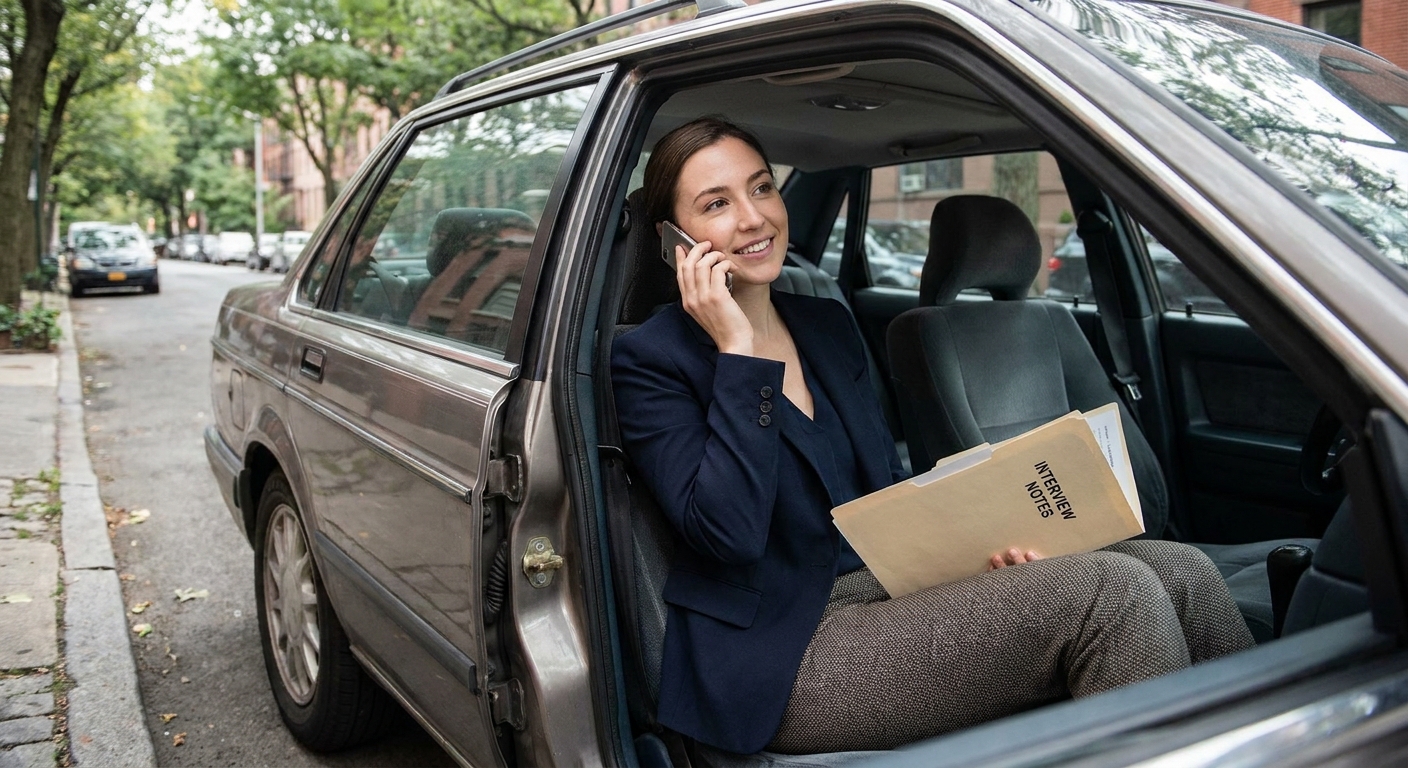
Do this as soon as you realize you will be late
In my experience working in admissions and recruiting, the biggest difference between “late and still viable” and “late and written off” is how quickly and clearly you communicate. Norms vary by industry and interviewer, but clarity and respect for time travel well everywhere.
- Check your real ETA (do not guess). Look at your map app and add a small buffer. If it says 8 minutes, tell them 10 to 12.
- Contact the right person. Use the most direct channel you have.
- Send a short message with your ETA. One to three sentences is usually perfect.
- Switch into interview mode. After you send it, stop typing. Put your phone on Do Not Disturb (or silence notifications), focus on arriving safely, then walk in composed.
Who to contact
Use this order of operations. You are trying to reach the person who can adjust the schedule in real time.
1) Recruiter or HR
If you have a recruiter, coordinator, or HR contact who scheduled the interview, message them first. They are typically the traffic controller and can notify the interviewer quickly.
2) The interviewer
If you already have a direct email thread with the interviewer or they gave you a direct number, it is okay to contact them. Keep it professional and brief.
3) Front desk or main line
If you do not have a recruiter contact, or you are not getting a response, call the company’s main number and ask for the person coordinating interviews or the hiring manager’s assistant. If you are interviewing on-site, reception can also alert the interviewer once you arrive.
Virtual interviews
If you are running late to a video interview, contact the scheduler or recruiter and also join the meeting as soon as you can. Some interviewers will stay in the room for a few minutes if they have warning, but do not count on it. Join as soon as you are able.
How much detail to give
Your message needs just enough context to show this is a real delay, not a lack of respect for their time.
- Good level of detail: “unexpected traffic,” “a transit delay,” “an accident on the highway,” “parking is taking longer than expected,” “my rideshare was rerouted.”
- Too much detail: a play-by-play of your morning, blaming others, or sharing personal information.
- Never: excuses that sound avoidable (“I overslept,” “I forgot,” “I lost track of time”). If that is the true reason, keep it simple and take ownership.
Rule of thumb: one reason phrase plus your ETA plus a quick apology.
Message examples
Choose the version that matches how you are contacting them. Match the formality of the channel. Texts can be slightly more conversational, emails should stay more formal.
Text message
Option A (most common):
Hi Sarah, this is Alex Chen. I’m on my way to the 10:00 AM interview and running about 10 minutes behind due to traffic. ETA 10:10. Sorry for the delay, and thank you for your patience.
Option B (parking delay):
Hi Priya, I’m at the building but parking is taking longer than expected. I should be in the lobby in about 5 minutes. Sorry for the delay, and thank you for your patience.
Subject: Running 10 Minutes Late for 10:00 AM Interview
Body:
Hi Jordan,
I wanted to let you know I am on my way and running about 10 minutes late due to a transit delay. My updated ETA is 10:10 AM. I apologize for the inconvenience and appreciate your flexibility.
Best,
Maya Patel
555-013-4827
Phone call script
If you are within 10 minutes of the interview start time, calling can be the fastest way to get a human response.
“Hi, this is Daniel Rivera. I have an interview with Morgan Lee at 2:30 PM. I am on my way but running about 8 minutes late due to an accident on the highway. Could you please let them know my ETA is 2:38 PM? I apologize for the inconvenience.”

When to message
Message the moment you know you will not arrive on time. In practice:
- 1 to 5 minutes late: still message, especially for roles with tight schedules.
- 5 to 10 minutes late: message immediately and include a clear ETA.
- 10 to 15 minutes late: message and call if possible. Be ready that they may shorten the interview to stay on schedule.
- More than 15 minutes late: still notify them if you are truly on the way, but know you are entering “may not be feasible” territory. Keep the tone accountable and polite.
One recruiting truth: interviewers can handle delays. What they struggle with is uncertainty. A calm, realistic ETA helps.
When you arrive
You do not need a dramatic apology tour. You need a clean, confident reset.
At check-in
- Introduce yourself and say you are there for an interview with the hiring team.
- Add: “I let the recruiter know I was running a few minutes behind.”
- Be kind to reception and security. They are part of the hiring ecosystem more often than candidates realize.
When you greet the interviewer
Use a brief apology, then move forward. Example:
Thank you for your patience, and I apologize for the delay. I appreciate you still meeting with me. I am glad to be here.
Then transition into the interview: “I am looking forward to learning more about the role and your team.”
Do not overexplain
Overexplaining keeps the focus on the lateness and can accidentally sound like you are trying to be excused. One sentence is enough, then let your preparation do the work.
Be flexible if they shorten it
If they say, “We only have 20 minutes now,” respond professionally:
Absolutely, I understand. I will be mindful of time and focus on the most important points.
If you cannot make it
If it becomes clear you cannot reasonably get there, it is usually better to be direct and ask to reschedule than to arrive extremely late and stressed. Own it, keep it short, and offer availability.
Text example
Hi Jordan, I’m so sorry, but I’m no longer going to make the 10:00 AM interview due to a major transit disruption. Could we reschedule for later today or this week? I’m available after 2 PM today and tomorrow morning. Thank you for your understanding.
Email example
Subject: Request to Reschedule Interview
Body:
Hi Jordan,
I apologize, but I am not going to be able to make our scheduled interview time due to an unexpected travel disruption. If possible, I would appreciate the chance to reschedule. I am available tomorrow between 9:00 AM and 12:00 PM, or Thursday after 1:00 PM.
Thank you for your time and understanding.
Best,
Maya Patel
555-013-4827
What not to do
- Do not lie about your location. A too-optimistic ETA can be obvious and creates mistrust fast.
- Do not blame other people. Even when it is true, blame can sound like a warning sign.
- Do not send multiple updates every two minutes. One message with a realistic ETA, then one update only if the ETA changes significantly.
- Do not arrive flustered and disorganized. Give yourself 30 seconds outside the door to breathe, silence notifications, and straighten up.
- Do not stroll in like nothing happened. Acknowledge it once, then move on.
In-person vs. virtual
If the interview is in-person
- Keep your safety first. Do not speed or drive aggressively.
- Aim to arrive at the building early. On large campuses, security and check-in can easily add 10 to 15 minutes even if you are “on time” to the address.
- Have a parking plan B. If the lot is full, know where the nearest garage is and go straight there.
- Bring what you need. Resume copies, notebook, and ID if security check-in is required.
If the interview is on Zoom, Teams, or Google Meet
- Join as soon as you can. Even if you are 4 minutes late, joining is better than waiting until you feel ready.
- Use the chat strategically. If you can message in the meeting: “Apologies, I am joining a few minutes late. Thank you for your patience.”
- Fix your audio fast. If tech issues caused the delay, do one quick reset (switch to phone audio, rejoin once) and then stop tinkering.

60-second checklist
- Check ETA and add a buffer.
- Message the recruiter or coordinator first.
- Include: apology + brief reason + ETA.
- Call if it is close to start time and you need a fast confirmation.
- Arrive, apologize once, then shift to the interview.
FAQ
Should I text or email?
Use whatever channel the recruiter has been using with you. If they have been texting, text. If everything has been via email, email. If you are very close to the start time, calling is often best.
Is it okay to say why I am late?
Yes, briefly. “Traffic,” “transit delay,” or “parking delays” are enough. The key is providing a reliable ETA and taking responsibility for the inconvenience.
How late is too late if I am still on the way?
There is no magic number, but once you are pushing beyond 15 minutes, the interviewer may not have enough time. Still notify them immediately and be prepared for a shortened meeting or a reschedule.
Should I apologize again at the end?
One more quick acknowledgment is fine, especially if they accommodated you, but keep it short: “Thank you again for your flexibility today.” Then close strong with interest in the role.