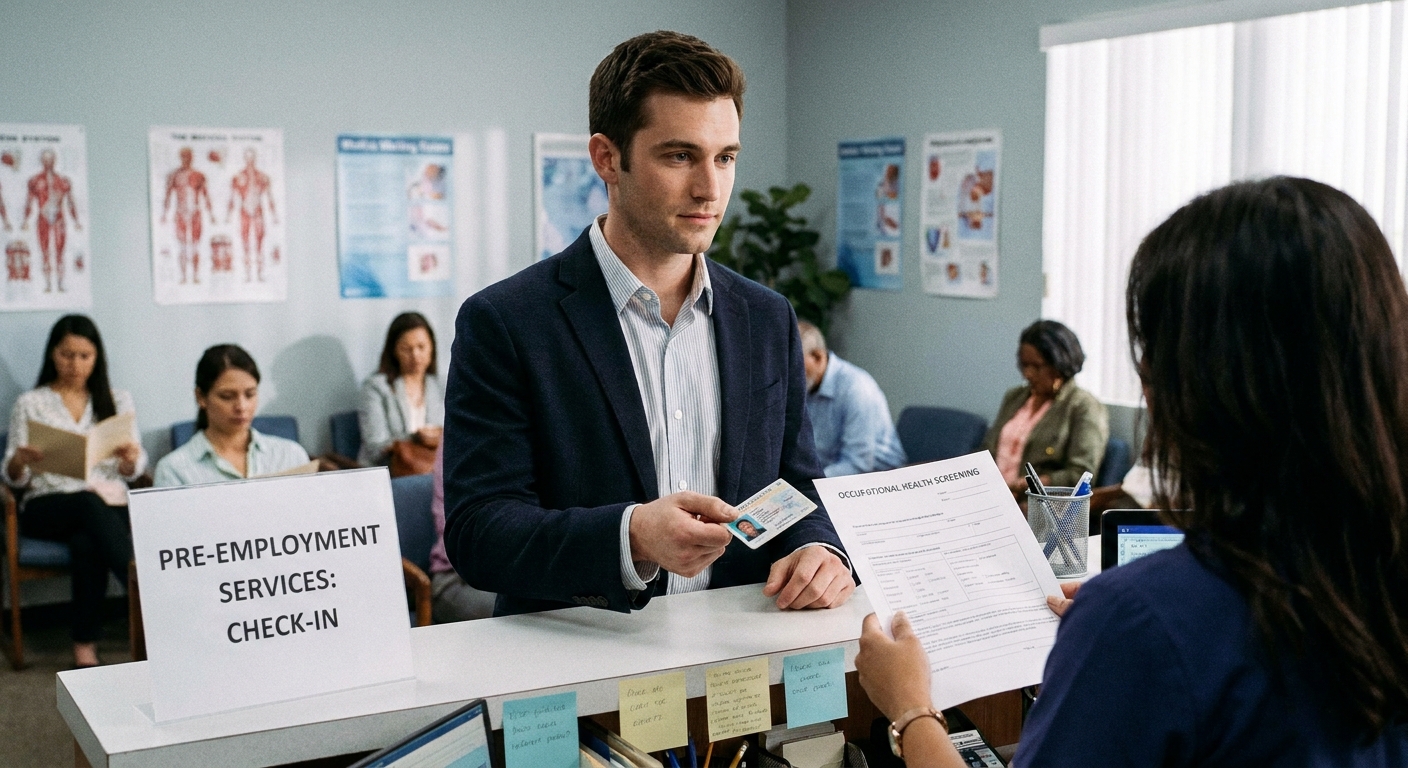
When you finally hear “We’d like to offer you the job,” it can feel like the stressful part is over. Then comes one more step for many roles, especially jobs involving safety, driving, healthcare, manufacturing, public service, or physically demanding work: a pre-employment physical.
I’ve seen candidates spiral at this stage, not because the appointment is usually complicated, but because no one explains what it will look like. One person I worked with was convinced they were walking into a full medical interrogation and nearly backed out of a great offer over it. In reality, most of these visits are pretty routine.
The goal of this visit is typically to confirm you can safely perform the essential functions of the job, with or without reasonable accommodation, and to establish baseline information if the role has physical demands. Policies and laws vary by location. What I’m describing here reflects common U.S. workplace practice, but your clinic and employer may handle details differently.
Here’s what to expect from a pre-employment physical, how it’s usually scheduled, what to bring, and the questions I’d encourage you to ask before you step into the clinic.

What it is and isn’t
A pre-employment physical is a job-related medical evaluation that happens after a conditional job offer in many workplaces. The exact components vary by employer and role.
In plain terms, the exam is usually designed to:
- Assess job-related abilities such as lifting, standing, or range of motion for certain roles.
- Confirm safety readiness for work that could put you or others at risk if certain capabilities are limited (for example, vision requirements for driving roles).
- Document a baseline for physically demanding jobs, which can help with workplace safety and injury prevention.
What it is not: a fishing expedition into your entire medical history for curiosity’s sake. Responsible employers focus on the tasks the job requires and use standardized forms and criteria. In the U.S., employers generally must apply post-offer medical exams consistently to all entering employees in the same job category. If you feel the process is overly broad or not tied to the job, it is appropriate to ask clarifying questions.
Note: Many employers handle drug testing as a separate step, sometimes at the same clinic visit. I’m keeping this article focused on the physical itself, since drug testing is its own process.
When it happens and scheduling
Most pre-employment physicals are scheduled after you accept a conditional offer. “Conditional” usually means your start date depends on completing required screenings, paperwork, and verification steps.
Common scheduling scenarios
- The employer schedules it for you. You receive an email or call with the date, time, clinic address, and instructions.
- You schedule it through a partner clinic. The employer provides an authorization form and a phone number or online portal.
- It’s bundled with other onboarding steps. For example, you may do a physical, vaccinations review, and job paperwork at the same occupational health clinic.
How long it takes
Plan for about 45 to 90 minutes as a general estimate unless you’ve been told it includes additional job-specific testing. The appointment itself may be quick, but waiting rooms are unpredictable, and some clinics serve multiple employers.
What happens after the visit
In many cases, the clinic sends the employer a simple result such as “cleared” or “cleared with restrictions” based on the job’s requirements. Typically, employers receive work-related clearance information, not a full medical report, but what gets shared can vary based on the forms you sign, clinic policy, and local law. You can ask the clinic what they share and what they do not share before you consent.
What to bring
Walking in prepared is the best way to keep this appointment smooth. These are the items I recommend having ready the night before:
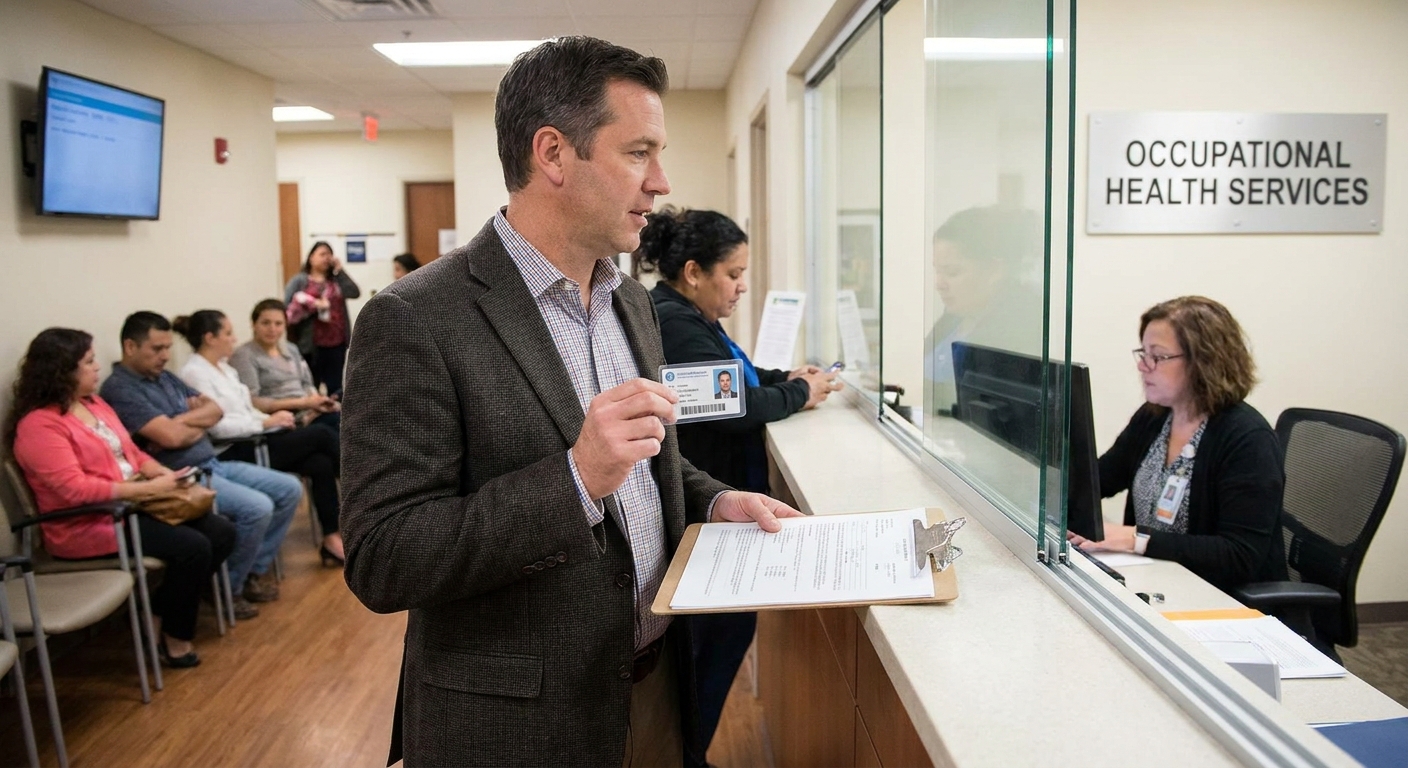
- Government-issued photo ID (driver’s license, state ID, passport).
- Insurance card if instructed. Many pre-employment physicals are billed to the employer, but clinics may still ask for insurance details depending on how the visit is set up.
- Employer paperwork such as the exam authorization form, job description, or “essential functions” checklist.
- Eyeglasses or contact lenses if you wear them, plus contact solution or backup glasses if possible.
- List of current medications with names and doses, if the clinic requests it. Keep it factual and complete.
- Any assistive devices you normally use (for example, hearing aids, braces, mobility aids).
Also wear something practical. Comfortable clothing can make movement checks or range-of-motion screens easier, and closed-toe shoes are a safe choice in most clinic settings.
What happens in the appointment
Every employer and clinic has its own protocol, but most pre-employment physicals include some combination of the sections below.
Check-in and consent forms
You’ll typically complete intake paperwork and sign forms allowing the clinic to perform the evaluation and share job-related clearance with the employer. If you do not understand what a form authorizes, ask before signing.
Health history questions
Many clinics use a standardized questionnaire that may cover past injuries, surgeries, chronic conditions, medications, and any work restrictions. Answer honestly and stick to what is asked. If you’re unsure why a question is relevant, you can ask how it relates to the job’s essential functions.
Vital signs and basic measurements
Common baseline checks include height, weight, blood pressure, pulse, and sometimes temperature.
Vision screening
Vision checks are especially common for driving roles, equipment operation, manufacturing, and some healthcare jobs. A typical screening may include near and distance vision, often using a letter chart, and, in some settings, color vision. If you wear corrective lenses, you’ll generally be tested with them.
Hearing screening
Some roles include a hearing check, particularly in noisy environments or safety-sensitive positions. This is often done with headphones and tones at different pitches and volumes. Some clinics use a small booth, others do it in a quieter exam room.
Physical exam and movement checks
A clinician may evaluate basic strength, flexibility, balance, posture, range of motion, and general musculoskeletal function. They may look for limitations that could affect safe performance of the job tasks.
Job-specific capability testing
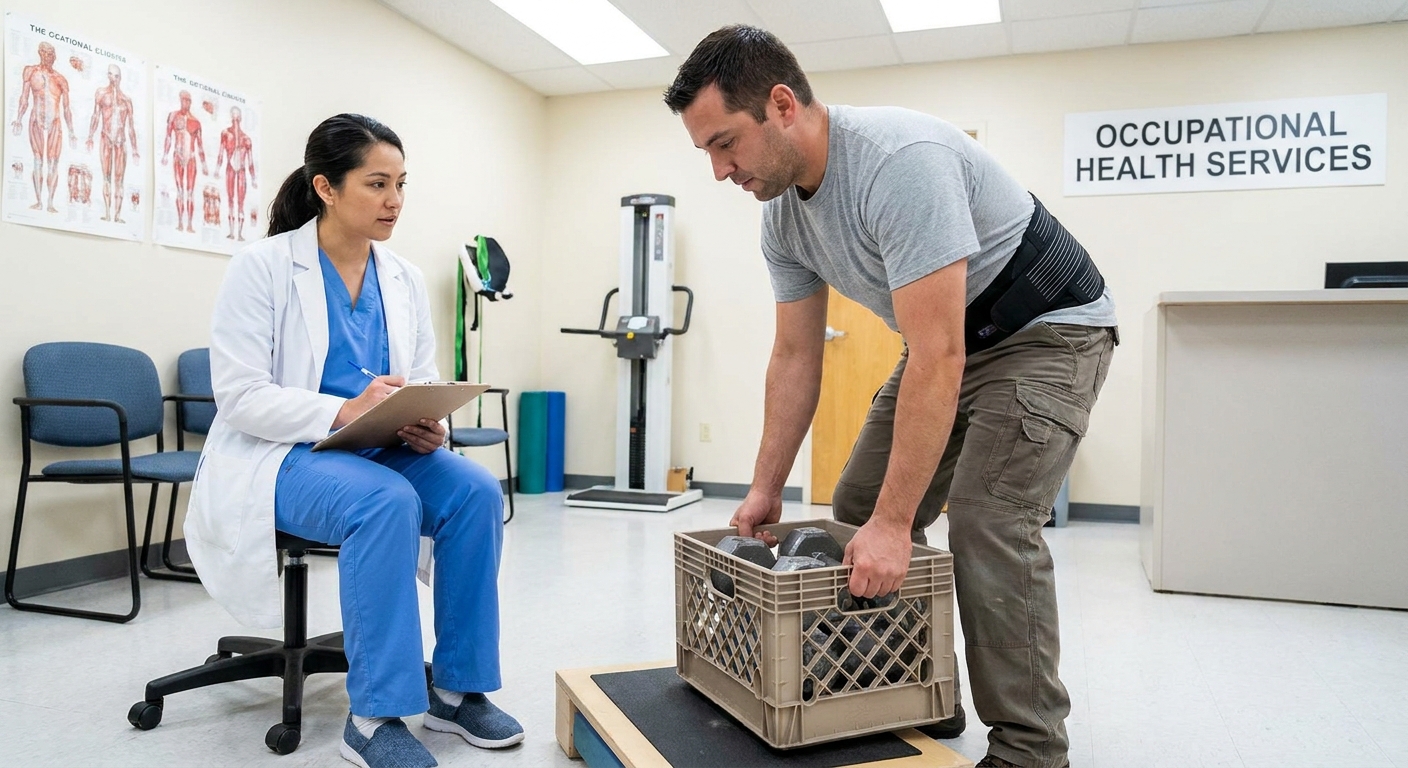
For physically demanding jobs, you might be asked to complete a functional test tied to the role, such as:
- lifting a weighted object using proper form
- carrying items a set distance
- pushing or pulling resistance
- climbing steps or a ladder simulation
- squatting, kneeling, or repetitive motion tasks
Some clinics call this a job function test or physical ability test. A more formal, comprehensive version is sometimes referred to as a Functional Capacity Evaluation (FCE). Either way, it should reflect the actual job demands, not arbitrary challenges.
Lifting requirements
Lifting expectations are one of the biggest unknowns for candidates, especially when the job posting includes language like “must lift 50 pounds.” In practice, the evaluation may focus on whether you can lift and handle weight safely and consistently using job-appropriate technique.
What you might see
- Progressive lifting where weight increases gradually while your form and comfort are monitored.
- Floor-to-waist or waist-to-shoulder lifts based on the role’s actual tasks.
- Carry tests (lifting plus walking).
Questions to ask about lifting standards
- “What lifting amount and lift type are you testing, and how does it match the job’s essential duties?”
- “Is this an occasional lift or frequent lift standard?”
- “If the job uses team lifts or mechanical assistance, is the test designed to reflect that?”
- “What happens if I need to stop due to pain or dizziness?”
You are not expected to push through an unsafe situation. If something feels wrong, speak up and follow the clinic’s instructions.
Vision requirements
Vision requirements can feel intimidating, but most screenings are straightforward.
Common vision elements
- Visual acuity (how clearly you see at distance and near).
- Peripheral awareness (more common for driving and equipment operation).
- Color discrimination (sometimes used when color-coded safety systems are part of the job).
Questions to ask if you wear glasses or contacts
- “Will the standard be measured with corrective lenses?”
- “Should I bring both glasses and contacts?”
- “If my prescription is outdated, will the clinic note that I’m cleared with corrective lenses?”
If you are concerned about meeting a requirement, the right move is to ask for the standard in writing and discuss it with the clinic during the visit. Avoid guessing or assuming what the employer expects.
DOT driver physicals
If you’re applying for a job that involves operating a commercial motor vehicle, you may be scheduled for a DOT medical exam instead of, or in addition to, a standard pre-employment physical. That exam is more regulated and uses specific medical standards and documentation. If your offer mentions “DOT,” “CDL,” or “FMCSA,” confirm which exam you’re being sent for so you can prepare for the right process.
Medical records and privacy
Usually, you will not need to hand over your full medical records. In most pre-employment physical setups, the employer is paying for a job-related clearance process, not requesting your entire medical chart.
That said, you may be asked:
- to complete a health history form
- to discuss prior injuries or conditions that could affect safe job performance
- to provide limited documentation if the clinic needs clarification to determine whether you can do the job safely
If you are asked for broad records and it feels unrelated to the job, you can ask:
- “Which specific information do you need to make a job-related determination?”
- “Can you explain how this request relates to the essential functions provided by the employer?”
If you need an accommodation
If you anticipate needing an accommodation for the appointment itself, it’s reasonable to raise it early, ideally when the visit is scheduled. This might include extra time, an interpreter, a mobility-accessible exam room, permission to use your assistive device during a job function test, or an alternate way to demonstrate a task if the standard setup doesn’t reflect how the job is actually performed.
My practical advice is to keep the request tied to function: what you need in order to complete the evaluation safely and accurately. If you’re not sure who to ask, start with the employer contact who sent the scheduling instructions or the clinic’s front desk.
What the results mean
Most outcomes fall into a few buckets:
- Cleared: You meet the job-related requirements.
- Cleared with restrictions: You can work, but certain limitations are noted (for example, temporary lifting limits).
- Further evaluation requested: The clinic needs additional information before making a determination.
If restrictions are listed, it does not automatically mean you “failed.” In many workplaces, the next step is an interactive conversation about whether reasonable accommodations are available and whether you can perform the essential job functions safely.
If you disagree with the outcome
If you’re not cleared, or if restrictions seem off, don’t panic and don’t guess. Do three things in order:
- Ask for clarification on what specifically triggered the restriction or non-clearance and whether it was tied to a particular job requirement.
- Request a copy of your paperwork or the clinic’s summary for your records, if available.
- Ask what follow-up is allowed, such as providing documentation from your treating clinician or repeating a portion of the test if something was measured incorrectly.
Then contact the employer or HR and ask what the next step is on their side. Sometimes it’s as simple as providing additional information. Sometimes they will review whether an accommodation is feasible.
Questions to ask
If you want to feel calm and in control, this is the best strategy: ask a few practical questions upfront. Here are the ones I’d prioritize.
About the appointment
- “How long should I plan to be there?”
- “Is this only a physical, or are there other screenings scheduled the same day?”
- “What paperwork do I need from the employer to be seen?”
About what will be tested
- “Which job functions are being evaluated today?”
- “Will there be a lifting or job function test? If so, what does it include?”
- “Will vision be checked, and should I bring corrective lenses?”
About results and privacy
- “What information will be shared with my employer?”
- “When will the employer receive the clearance result?”
- “If something needs follow-up, who contacts me and what is the timeline?”
How to prep the day before
This is not medical advice, just practical planning that helps most people have a smoother experience:
- Confirm the location and parking details so you are not rushing.
- Review the job description so you understand the essential functions you may be asked about.
- Gather documents and set them by your keys.
- Dress for movement in comfortable, professional, clinic-appropriate clothing.
If you have a concern about a specific task, write down your questions and bring the list. Anxiety loves to erase your memory the moment you hit the waiting room.
For veterans
I’ve supported a lot of veterans through post-service job searches, including my own brother, and pre-employment medical steps can bring extra stress if you have service-connected conditions.
Two grounded tips that tend to help:
- Ask for the essential functions list if you have not seen it. It keeps the conversation tied to the job.
- Keep your focus on capability and safety. The question is typically whether you can perform the role safely, not whether you have a history.
If you anticipate needing an accommodation, it’s reasonable to ask the employer who handles accommodation requests and what the process looks like. You do not have to figure it out alone.
FAQ
Do you have to pass to start the job?
If the offer is conditional on completing the physical and meeting job-related requirements, then yes, clearance is usually required before you start. Ask HR what the specific contingency is and whether there’s flexibility on the start date if scheduling delays happen.
Can you be disqualified for a disability or medical condition?
Employers generally should focus on whether you can perform the essential job functions, with or without reasonable accommodation, and whether there is a legitimate safety concern. Rules vary by location. If you have questions about how the process applies in your situation, consider discussing it with HR and, if needed, an appropriate professional resource.
What if the clinic notes restrictions?
Restrictions often trigger a follow-up conversation. Sometimes it’s temporary. Sometimes the employer explores accommodations. Your next step is to ask what the restriction is, how it was determined, and who will contact you about the employer’s decision.
Should you bring a doctor’s note?
Only bring documentation if your employer or the clinic specifically requests it. If you think documentation might be needed, you can call ahead and ask what they require so you do not bring unnecessary personal records.
How soon will you hear back?
Some clinics submit clearance the same day. Others take a few business days, especially if more information is needed. Ask at check-out when results are sent and whether you will receive a copy.
Final checklist
If you want a quick, confidence-building recap, here it is:
- Confirm the appointment time, location, and what’s included.
- Bring ID, employer forms, and corrective lenses if you use them.
- Expect basic vitals, a health history questionnaire, and job-related capability checks.
- Ask how lifting, vision, and any movement tests map to the job’s essential functions.
- Ask what the clinic shares with your employer and when.
If you’re feeling nervous, that’s normal. Pre-employment physicals are often routine, and preparation goes a long way. Your goal is not to be perfect. Your goal is to show up informed, communicate clearly, and understand the next step in the hiring process.