A crisp fold and a fresh perspective.
You walk out of the interview, your brain replays every answer, and then the real question shows up in a papercut of doubt: Do I mail a handwritten thank-you note, or just send an email?
Both can be thoughtful. One usually lands faster. The best choice depends on speed, culture, and how hiring decisions are actually made. Let’s unfold it.
The simple rule
If you remember nothing else, remember this timing trade-off:
- Email is for speed and reliability. It helps when decisions move fast or interview panels meet soon.
- A handwritten card is for warmth and memorability. It helps when culture values polish, tradition, or extra personal touches.
In many situations, the strongest move is not either-or. It is a same-day email plus a short card when the logistics make sense and the company actually receives mail.
When a handwritten note helps
A card can be a genuine advantage when it matches the pace and personality of the organization.
When the hiring pace is slower
If the process includes multiple rounds, weeks of scheduling, or a formal HR cadence, a card has time to arrive and still feel relevant.
In traditional, relationship-driven fields
Some environments place a premium on personal professionalism and social cues. Examples include certain roles in finance, law, real estate, government offices, education administration, and client-facing positions where relationships are the work.
When you want to stand out quietly
Most candidates send an email. Far fewer send a physical note. If your card arrives while decisions are still in motion, it can be a subtle reminder of you after a long day of interviews.
After an especially personal conversation
If you bonded over a shared value, a mission story, a community initiative, or something meaningful about the role, a handwritten line can feel more human than a perfectly formatted email.
When a handwritten note may not help
A handwritten note is unlikely to be the deciding factor either way, but it can create friction in a few common scenarios.
Hiring is moving fast
If the team is making an offer within a few days, a card may arrive after the decision. That is not fatal, but it does limit the value of the gesture.
The company is remote-first
Mailing to a headquarters that the hiring manager never visits can mean your note lands in a mailroom, gets scanned, or may not reach the right person quickly.
Security slows delivery
Hospitals, government facilities, large corporate campuses, and some tech offices can have strict mail handling. A card can be delayed by days.
The culture is extremely casual
Some teams communicate almost entirely through Slack and short emails. A card can feel slightly out of step, like you are leaning into formality instead of the way they work.
You are tempted to overshare
Because handwritten notes feel personal, candidates sometimes add too much. If a card drifts into apology territory, desperation, or overly familiar language, it can work against the calm professionalism you want.
Email first, card if it fits
If you want the warmth of a handwritten note without risking the timing, use a two-step approach.
Step 1: Send a thank-you email
Aim for the same day, ideally within 24 hours of the interview. If travel, time zones, or back-to-back interviews get in the way, 48 hours can still be perfectly acceptable. This locks in your professionalism while the conversation is still fresh. (It is still worth double-checking the email address and your spam filters, especially if you are emailing a group alias.)
Step 2: Mail a brief card
If you are going to do it, send it quickly. Dropping it in the mail within a day or so keeps the note connected to the conversation. If you interviewed across the country or across borders and delivery will be slow, default to email.
How to avoid looking redundant: Use the email to confirm interest and summarize fit. Use the card to add one specific, human line of appreciation that is not a copy-paste of the email.
Good pairing idea: Use the email for clarity. Use the card for warmth.
What to write
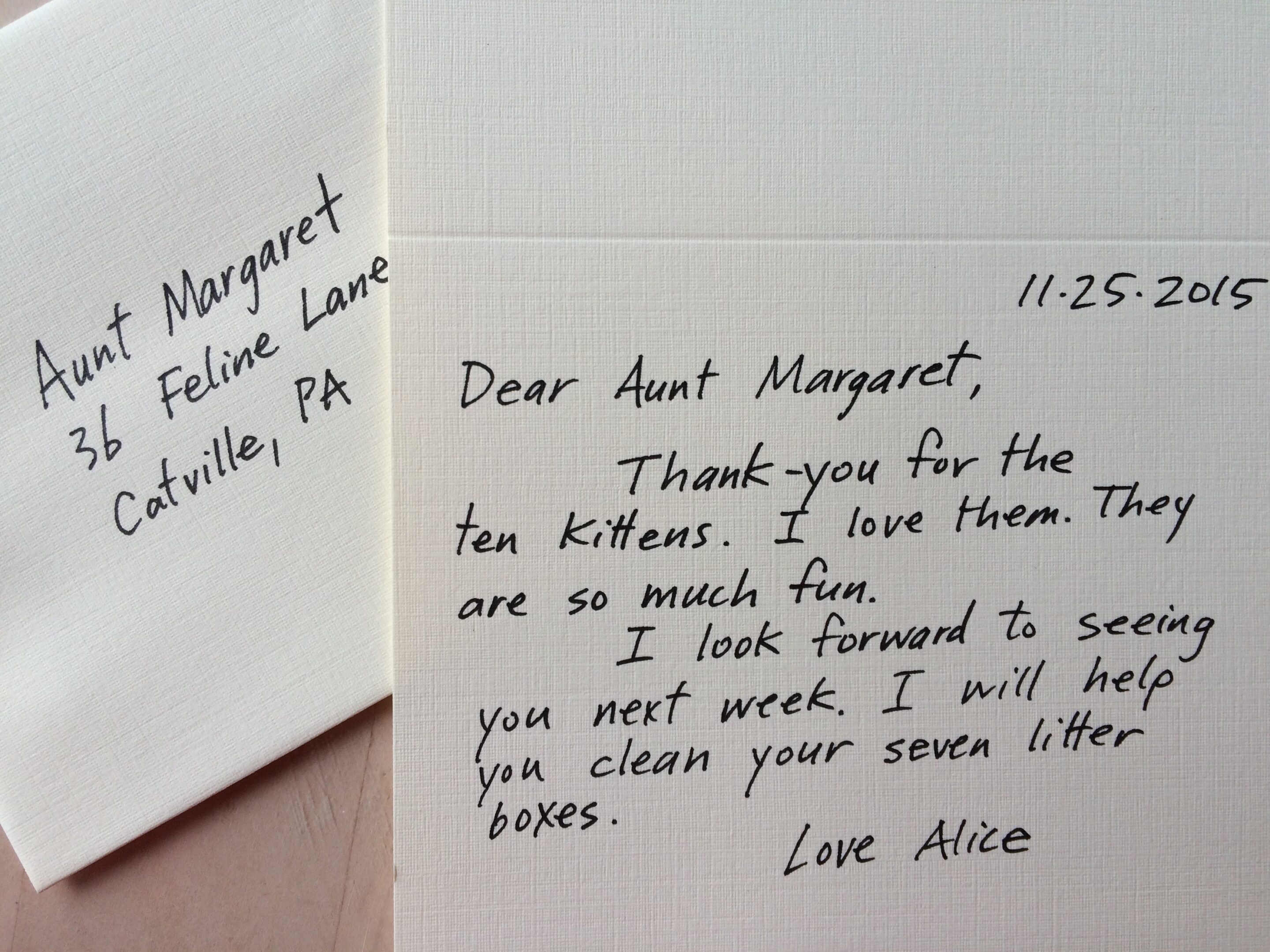
A good handwritten note is not a mini cover letter. Think: 4 to 6 sentences, legible handwriting, and one clear point about fit.
A simple structure
- Thank you for their time.
- Reference something specific you discussed.
- Reaffirm interest in the role.
- One sentence on fit that connects your strength to their need.
- Close warmly with your name.
Example note (adapt it)
Dear Ms. Rivera,
Thank you for taking the time to meet with me yesterday about the Project Coordinator role. I appreciated hearing how your team is improving cross-functional handoffs during the product launch cycle. Our conversation reinforced my excitement about the position, especially because I enjoy building simple systems that keep projects moving and stakeholders informed. Thank you again for the opportunity.
Sincerely,
Jordan Lee
When names or titles are unclear
If you are not sure about a title, it is fine to keep it simple. Use “Dear Taylor Rivera,” or “Hello Taylor,” instead of guessing Mr., Ms., or Dr. If you only have a first name, use it and keep the tone professional. If you are truly unsure who will receive it, open with a neutral greeting like “Hello,” and get specific in the first sentence about the interview and role.
Make it clean
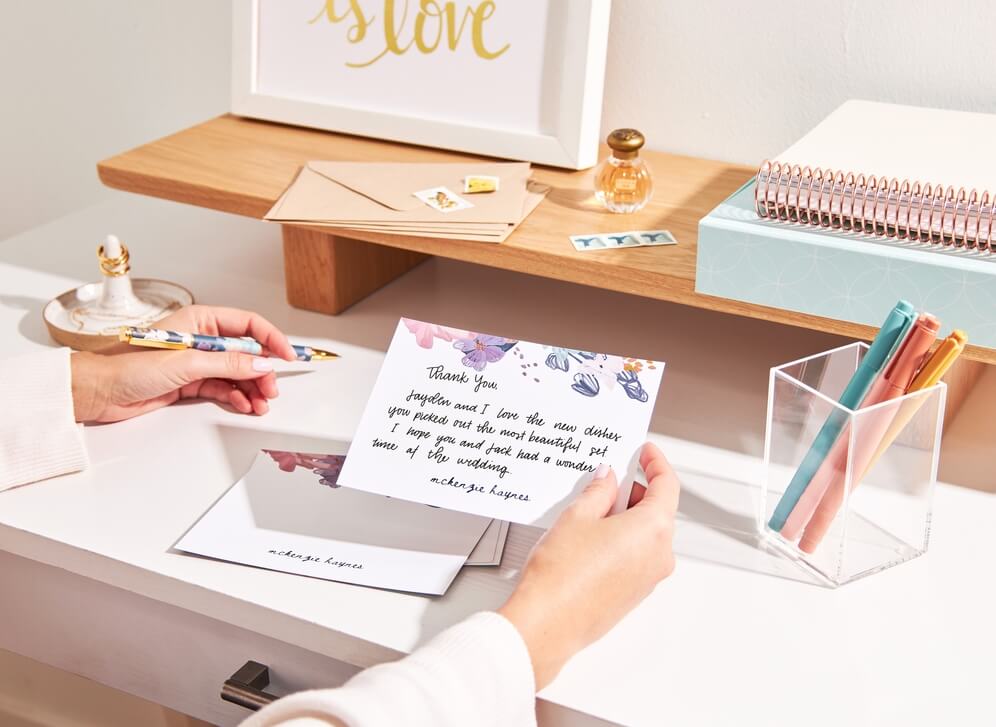
- Use a plain, professional card. Avoid glitter, scented paper, or novelty themes.
- Use blue or black ink.
- Proofread names, titles, and the company name. One misspelling can undo the polish.
- Skip jokes, pet names, and anything that could be misread.
- If handwriting is difficult, a neatly printed note in a simple card is better than something unreadable.
Where to send it
This is the logistical part people worry about, and it is worth getting right.
Best option: the company address
Address it to the interviewer at the company’s main office, using their full name and title if you know it. Include your return address on the envelope.
If you interviewed at a specific site
If the interview took place at a local office or campus and you know your interviewer works there, that location often gets the fastest internal routing.
If you do not have an address
Reply to the scheduling contact and ask for the best mailing address. Keep it simple and normal.
Example: “Thank you again for coordinating my interview. If I wanted to mail a brief thank-you note, what is the best address to use?”
Check mail policies
Some companies discourage or limit unsolicited physical mail for privacy or security reasons. If you are unsure, asking the coordinator is fine. If the answer is unclear, stick with email.
Avoid home addresses
Even if you found an address online, do not mail to someone’s home. It can feel intrusive.
What about sending it to HR?
If HR is your only point of contact, you can mail the card to HR and address the envelope to the interviewer, with an attention line so it routes correctly.
For example: “Attn: Ms. Rivera (Hiring Manager)”
Panel interviews
If you met multiple people, separate thank-you emails are often ideal. Make each one slightly specific to that person’s conversation. That said, some processes are recruiter-led or run through a hiring manager who prefers to keep communication in one thread. If you are told to reply to the recruiter, or if you only have one contact, one well-written message asking them to pass along your thanks is a reasonable, professional move.
For handwritten notes, you have options:
- If you can mail easily and the organization is the kind that appreciates it, sending separate cards is a thoughtful extra.
- If that is unrealistic, one short card to the hiring manager is acceptable, especially if your emails thanked everyone individually.
One more etiquette note
Keep it to a message, not a gift. Small gifts, gift cards, or anything with monetary value can trigger policy issues in many workplaces. If you want an extra touch, make it a stronger note, not a bigger gesture.
Handwritten note checklist
- Email sent: same day, ideally within 24 hours (48 can be fine if needed)
- Card sent (if you send one): as soon as practical, ideally within a day
- Length: 4 to 6 sentences
- Includes: one specific detail from the interview
- Tone: warm, professional, calm
- Address: company location, not home
- Basics: names and titles checked, handwriting readable, return address included
Quick FAQ
Is a handwritten thank-you note outdated?
Not necessarily. It is just slower. In the right context, it reads as thoughtful and intentional. In the wrong context, it reads as out of sync with how the team works.
Can a handwritten note hurt me?
It is uncommon, but it can if it arrives very late, goes to the wrong place, conflicts with company policies, or includes overly personal content. The safest baseline is always a strong email.
Should I send a card after a virtual interview?
Usually, email is enough. Consider a card only if you have a reliable office mailing address and the process is not moving quickly.
What if I interviewed internationally?
Mail timelines vary widely across borders. If delivery is uncertain, choose email. If you are local and mail is reliable, a card can work if the company culture fits.
What if I forgot to send any thank-you message?
Send an email as soon as you realize. Keep it simple: thank them, reference something specific, reaffirm interest. Do not over-apologize.
The folded conclusion
If you are deciding between a handwritten note and an email, choose the move that respects time and matches culture.
For most interviews: send the email. For the right situations, a handwritten card can be the extra touch that feels memorable rather than delayed. Keep it short, send it quickly, and let it add a human line to an already strong candidacy.