Take-home interview assignments can feel like a pop quiz you have to write, design, code, analyze, and present, all alone, with the clock ticking in the background. I get it. When I was working in university admissions, I watched brilliant students freeze up over “simple” application essays because the instructions were vague and the stakes felt huge. Later, in corporate recruiting (especially for nursing and remote tech roles), I saw the same thing happen to job seekers with take-home projects.
The good news: these assignments are usually less about perfection and more about how you think, how you prioritize, and how you communicate. Below is the exact process I coach clients to use so they can turn in strong work without overworking, underselling themselves, or guessing wrong.

What it is (and is not)
A take-home interview assignment is a new task the employer asks you to complete on your own time and send back. It might be a mini case study, a writing exercise, a design mockup, a small coding project, a lesson plan, a patient scenario, a spreadsheet analysis, or a short presentation deck.
It is different from sending existing work samples or a portfolio link. With a take-home, you are creating something fresh based on their prompt.
Why employers use take-homes
- Role simulation: Can you do the actual work?
- Communication check: Do you ask smart questions and explain decisions?
- Judgment and prioritization: Can you identify what matters most?
- Quality bar: Is your output specific, accurate, and usable?
Before you start: confirm basics
If the instructions are even slightly unclear, pause and ask. One thoughtful clarification message can save you hours and prevent a mismatch.
Clarify the deadline (and timezone)
Get a concrete due date and time. “End of day Friday” means different things if you are in different timezones or if they work a nontraditional schedule.
- Ask: “Can you confirm the deadline and timezone you are using?”
- If you need an extension, ask early and offer a specific alternative: “Would Monday at 12:00 PM ET work?”
Confirm the scope: what done looks like
Take-homes often fail because the candidate builds the wrong thing. Confirm:
- Deliverable format: PDF, Google Doc, PowerPoint, GitHub repo, Figma link, video recording?
- Length expectations: One page or ten slides? 500 words or 2,000?
- Audience: Are you writing for a customer, an executive, a hiring manager, or a technical peer?
- Evaluation criteria: Are they grading accuracy, creativity, speed, polish, or decision-making?
Ask how long they expect you to spend
This is one of the most important questions for protecting your time and aligning expectations.
Use plain language: “What time investment do you expect for this assignment?”
If they say “2 to 3 hours,” that is your time box. If they say “as long as it takes,” that can be a yellow flag, especially when the scope and evaluation criteria are vague or the work looks client-ready. In some roles, depth is the point, so treat it as a prompt to clarify expectations rather than an automatic dealbreaker.

Set a time box
Many candidates accidentally turn a take-home into a weekend-long project. That usually does not increase your score. It just increases burnout and resentment.
A simple time box model
- 25% planning: understanding the prompt, outlining, identifying assumptions
- 60% execution: building the deliverable
- 15% polish: editing, QA, formatting, final checks
Example: if you commit to 4 hours total, that is roughly 1 hour planning, 2.5 hours work, 30 minutes polish.
If you go over
Stop and choose one of these options:
- Submit with a note explaining what you would do next with more time.
- Trim scope and deliver a smaller, complete version.
- Ask for guidance only if the prompt is truly missing required information.
Plan before you build
The strongest submissions feel intentional. Even if you are doing a design or coding task, the “thinking layer” matters.
Create a quick brief for yourself
- Goal: What problem are you solving?
- User or audience: Who is this for?
- Constraints: Time, tools, data limitations, brand rules
- Success criteria: What would make this a win?
Write down assumptions and questions
Take-homes are often intentionally incomplete. Instead of silently guessing, list assumptions like a professional.
Examples:
- “Assumption: The target customer is a small business with 10 to 50 employees.”
- “Assumption: We are optimizing for reducing time-to-response, not cost.”
- “Assumption: Patient is stable and this is an outpatient scenario.”
Then either (a) ask 1 to 3 key questions, or (b) proceed with stated assumptions if the deadline is close.
If data is missing or unclear
For case prompts, analytics tasks, and anything data-driven, missing inputs are normal. Handle it directly:
- State limitations: “The prompt does not include conversion by channel, so I’m using overall conversion as a proxy.”
- Show what you would request: “If this were live, I would ask for cohort retention by signup month and paid versus organic splits.”
- Offer a reasonable fallback: use ranges, sensitivity checks, or two scenarios (best case and conservative case) instead of pretending you have exact numbers.
Execute like you are on the job
I used to hire for remote roles where the take-home was basically a preview of day-to-day work: unclear inputs, competing priorities, and a need to communicate decisions. Treat it the same way.
Prioritize specific and scannable
- Use plain headings and logical structure.
- Explain your choices briefly.
- Make it easy to skim.
- Define acronyms once.
Show your work, not a ramble
Hiring teams want to see reasoning, but they do not want an unstructured stream of notes.
Good ways to show thinking:
- A short “Approach” section at the top
- A “Key assumptions” box
- A “Trade-offs considered” section
- A “If I had more time” closing note
Use professional file hygiene
- Name files clearly: Caldwell_Maya_ProductWriter_TakeHome.pdf
- Export to stable formats when possible (PDF for docs, MP4 for recordings, etc.)
- Make links accessible (sharing permissions set correctly)
- Include a short README if you are submitting a repo or multi-file project
Quick quality check
Content checks
- Did you answer every part of the prompt?
- Are your assumptions stated?
- Are recommendations supported by evidence or logic?
- Did you choose one clear direction rather than five half-directions?
Readability checks
- Would a busy hiring manager understand this in two minutes?
- Are sections labeled and easy to navigate?
- Did you remove filler and repetition?
Technical checks (role dependent)
- Writing: spelling, grammar, consistent voice
- Data: formulas correct, sources cited, units consistent
- Design: alignment, spacing, readable font sizes, consistent components
- Code: runs cleanly, instructions included, no secrets in the repo
IP and confidentiality basics
This is not legal advice, but there are a few simple practices that protect you and signal maturity:
- Do not use proprietary data: avoid copying anything from a current or past employer (customer lists, internal metrics, screenshots, code).
- Do not share the prompt publicly: even if it feels harmless, treat it as confidential unless they explicitly say otherwise.
- Anonymize examples: if you reference prior work, remove names and identifying details.
- If they ask for something sensitive: it is okay to push back and offer a sanitized alternative (mock data, pseudocode, high-level approach).
What to say when you send it back
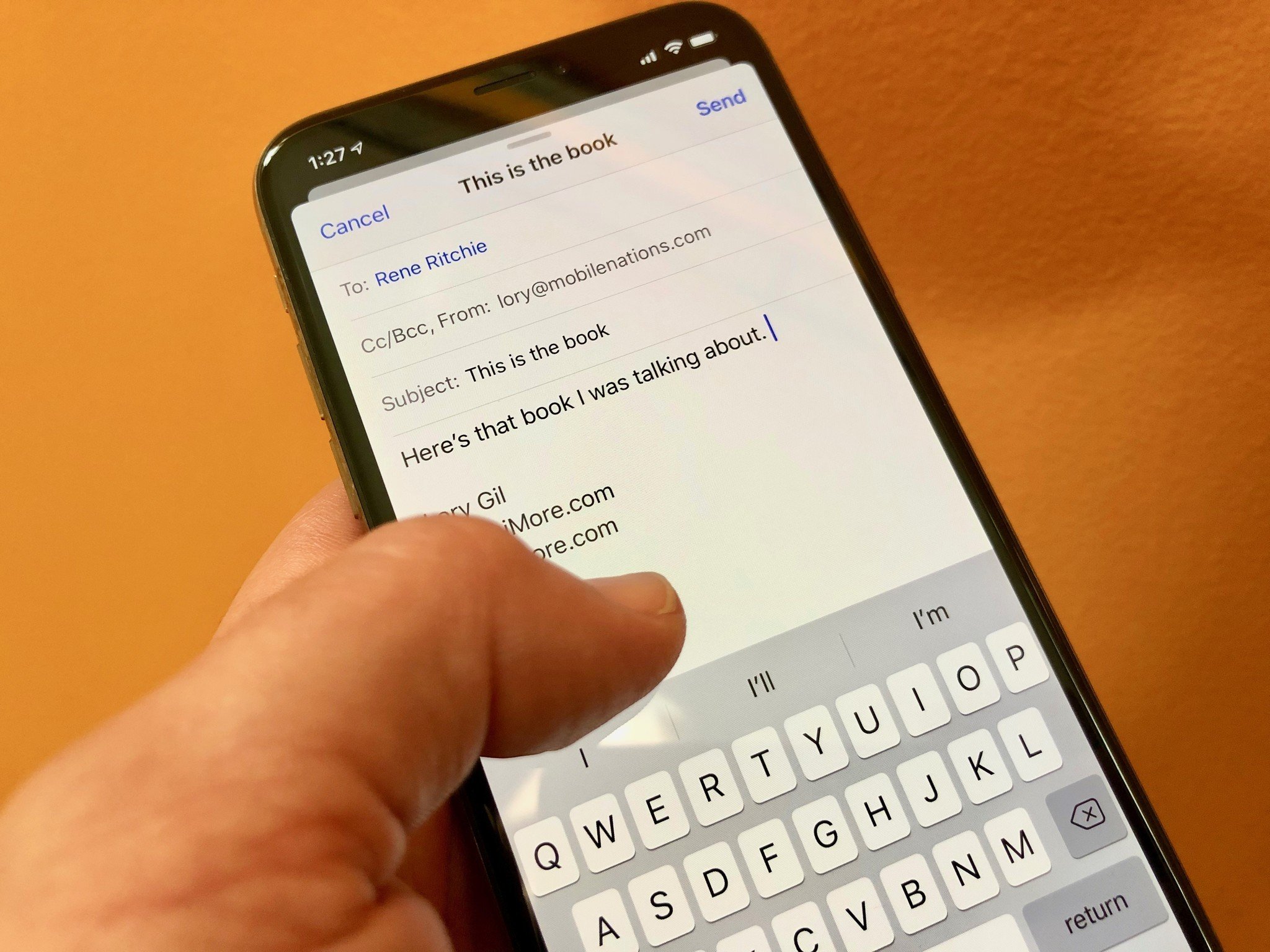
Your return message matters more than most candidates realize. A strong note does three things: it confirms what you are submitting, highlights your approach, and makes the reviewer’s job easy.
Include these elements
- A clear subject line: “Take-Home Assignment Submission: Product Writer”
- What is attached or linked: filenames and links
- Time spent (if appropriate): especially if they gave a time expectation
- Assumptions: 2 to 5 bullets, max
- How to review: “Start with the page 1 summary,” or “Run the notebook cells top to bottom”
- What you would do next: 2 to 3 bullets showing prioritization
- Invite questions: a simple, confident close
A fully written example email
Subject: Take-Home Assignment Submission: Product Writer
Hi Sarah,
Thank you for the opportunity to complete the take-home assignment for the Product Writer role. Attached is Caldwell_Maya_ProductWriter_TakeHome.pdf. I have also shared a supporting Google Doc with sources and notes (view access enabled for anyone with the link).
Quick notes on my approach:
- Time spent: 3 hours, per the time range you shared.
- Key assumptions: The primary reader is a busy hiring manager who wants a clear recommendation first, then supporting rationale. I also assumed the target user is a small business owner evaluating the product for a team of 10 to 50 employees.
- How to review: The one-page summary is on page 1, and the longer rationale starts on page 2.
If I had additional time, my next steps would be (1) run a quick sensitivity check on the two riskiest assumptions, (2) add two alternate headlines tailored to different user segments, and (3) tighten the conclusion into a single decision paragraph.
Thanks again, and I am happy to walk through my thinking or answer any questions.
Best,
Maya Caldwell
If you are submitting links
In the email, list links with what they are and whether access is restricted. Example: “Google Drive link (view access enabled for anyone with the link).” Then test it in an incognito window.
How long should you spend?
This varies a lot by role, company, and industry, but here are reasonable ranges I have seen across hiring processes:
- Entry level: 1 to 3 hours
- Mid-level: 3 to 6 hours
- Senior or specialized: 4 to 8 hours (sometimes split across two days)
There are outliers. If the task clearly requires 10 to 20+ hours, you are allowed to ask whether there is a smaller scoped option. Your time has value.
Red flags and responses
Red flag: Unpaid spec work
If the assignment looks like something they could hand directly to a client or publish as-is, that is worth pausing. You can respond professionally:
“I am happy to complete a scoped assessment. Can we confirm this is purely for evaluation and won’t be used externally?”
Red flag: No time expectation
Ask for both time expectation and deadline clarity. If they refuse, set your own time box and state it in your submission note.
Red flag: Excessive scope
Offer a smaller deliverable that demonstrates the same skills. Example: “I can provide a one-page strategy and two sample screens rather than a full redesign.”
When it is okay to decline
You can decline a take-home if it feels inequitable, overly time-consuming, or too close to free labor. You do not have to be dramatic. You can be direct and respectful:
“Thank you for the assignment. Based on the scope, I am not able to complete this as an unpaid project. If you are open to a shorter assessment (for example, a 60 to 90 minute exercise or a live working session), I would be glad to continue.”
Special situations
Accessibility or schedule constraints
You can request accommodations without oversharing. Keep it practical: “To submit my best work, can I have an additional 24 hours?”
Veterans transitioning to civilian work
Take-homes can feel similar to performance evaluations: you want to exceed the standard. Civilian hiring teams often prefer meeting the scope cleanly over exceeding it wildly. State assumptions, show prioritization, and keep your deliverable tight. That reads as strong judgment, not “doing less.”
If you suspect ghosting
Submit by the deadline anyway, then follow up once after 2 business days: “Wanted to confirm you received my submission and can access the files.”
FAQ
Should I use AI tools?
Only if the employer allows it and only in a way you can explain. If you use any tool for drafting, debugging, or brainstorming, you should still verify accuracy, tailor it to their prompt, and ensure it reflects your real skill level. If their instructions say “no AI,” follow that.
Should I include a cover page?
A simple header is enough: your name, role, date, and what the assignment is. Do not waste space on heavy formatting.
What if I do not finish everything?
Submit what you have with a clear “next steps” section. In hiring, a thoughtfully prioritized partial is often stronger than a rushed, messy “complete” submission.
Is it okay to ask questions?
Asking 1 to 3 focused questions looks professional. In my recruiting days, candidates who clarified scope usually performed better in the role.
A final word
Your job is not to read their mind. Your job is to deliver a scoped, specific, professional output and communicate how you got there. If you can do that, you are already demonstrating the exact skills most teams are hiring for: execution, judgment, and collaboration, even when you are working solo.