
A crisp fold and a fresh perspective.
If you have ever been asked to sign something that mentions a “consumer report” or “credit check,” you might wonder what an employer is actually allowed to see. The answer is: sometimes employers can review parts of your credit history for hiring, but only under specific rules, and it is more common in certain roles than others.
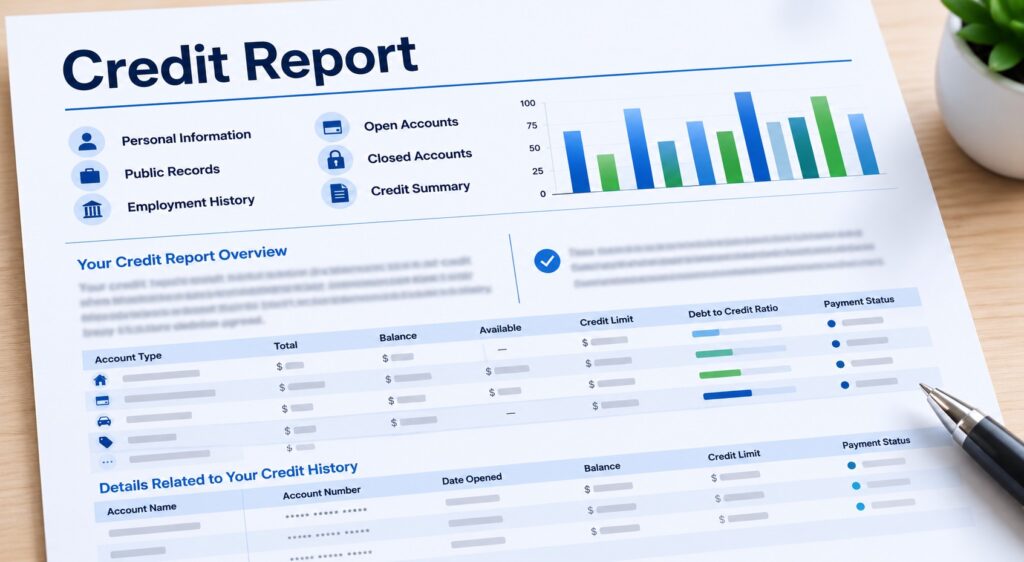
Yes, employers can check credit, but not for every job
In the United States, employers may request a version of your credit report as part of a pre-employment background check. Most of the time, this is done through a background screening company that qualifies as a consumer reporting agency.
Two practical limits matter most, one legal and one situational:
- Consent is usually required. When an employer uses a consumer reporting agency to obtain a credit report for employment purposes, they generally must give you a clear disclosure and get your written authorization first.
- Many employers do not do credit checks at all. Credit-based screening is far more common in industries where the job involves money handling, access to financial accounts, or sensitive information.
There are also situations where the process can look different, such as when you provide a copy of your own report voluntarily, or when the employer is not using a consumer reporting agency. But the typical “employment credit check” people encounter is the consumer report governed by the Fair Credit Reporting Act process described below.
Why employers use credit checks
Employers that use credit checks usually say they are looking for signals tied to trust, risk, or vulnerability, especially when a role involves high financial responsibility.
Common reasons include:
- Fraud prevention: Roles with access to company funds, customer accounts, or payment systems can carry higher fraud risk.
- Security and compliance: Some regulated industries have internal controls that encourage more screening for certain positions.
- Reduced risk in high-trust roles: Employers may be evaluating patterns like unresolved collections or repeated late payments as potential red flags.
Important context: credit history is not a measure of job performance. Medical bills, a layoff, a divorce, or identity theft can all damage a report. That is why the legal process matters, and why you have rights if a report is used against you.
Jobs where credit checks are more common
Credit checks are more likely when a job involves controlling money, authorizing payments, handling large assets, or accessing sensitive financial data.
More common
- Banking and financial services roles
- Accounting, bookkeeping, and payroll positions
- Roles with authority to sign checks or approve spending
- Investment, trading, and some insurance roles
- Some government positions and roles tied to security clearances
- Senior leadership roles with broad financial oversight
Less common
- Many hourly service jobs
- Most roles without access to money, customer financial data, or sensitive systems
- Many entry-level office roles (depending on the company)
Timing-wise, many employers run credit checks later in the process, often after a conditional offer, when they are doing the rest of the background screen. Some states and local jurisdictions also push screenings to later stages.

What employers can see (and what they cannot)
For employment screening, employers typically receive an employment-purpose credit report. In general, it focuses on what is in your credit file. It often does not include a credit score, although some screening products may include a score or score-like risk indicator depending on the vendor and applicable law.
Usually included
- Account history (open and closed accounts)
- Payment patterns (for example, on-time vs. late payments)
- Collections and charge-offs
- Public record items that still appear in modern credit files (availability varies)
- Inquiry history (often shown as an employment-related or soft inquiry record)
Often not included
- Your credit score. Many employment reports are scoreless, but this is not universal.
- Your full account numbers (they are generally masked)
A note on public records: reporting standards have changed over time. Many civil judgments and tax liens no longer appear on the major bureaus’ reports in most cases, while bankruptcies can still appear.
Bottom line: an employer is usually seeing patterns in the file, not just a three-digit number.
Your rights under the FCRA
Most third-party employment credit checks fall under the Fair Credit Reporting Act (FCRA). The FCRA sets rules for employers and background check companies (consumer reporting agencies).
1) Clear disclosure
Before an employer gets a consumer report for employment purposes, they generally must provide a clear, written disclosure that a report may be obtained.
2) Written authorization
You generally must give written permission before the employer pulls the report.
3) If the report may cost you the job
If an employer might use the report to deny employment (or take another negative step like rescinding an offer), they generally must give you:
- A pre-adverse action notice
- A copy of the report they relied on
- A summary of your rights under the FCRA
This matters because it gives you a chance to review the information and dispute mistakes.
4) Final adverse action notice
If they decide to move forward with denial or another negative decision, they generally must send an adverse action notice with details like the consumer reporting agency’s contact information and a reminder that the agency did not make the hiring decision.
State and local limits
Beyond the FCRA, many states have their own rules that restrict when an employer can request or use credit history in hiring. Some cities and counties have limits too. These laws often allow credit checks only for certain roles, such as jobs with significant financial authority, access to sensitive personal data, or positions required by law to be screened. In some places, the standard is that the information must be job-related.
Because these rules change and the details vary, the safest approach is to:
- Ask the employer why a credit check is needed for the role.
- Check your state labor department website and, where relevant, your city or county guidance. If you believe a credit check was requested unlawfully, consider consulting an employment attorney.
If you are applying nationally, it is also worth noting that multi-state employers sometimes apply one consistent policy, while others tailor screening by location.

What to do if your report has mistakes
If an employer is checking your credit, accuracy becomes everything. Errors happen, and they can be surprisingly ordinary: a mixed file with someone else’s account, an incorrect balance, a debt that should have been marked paid, or an account opened through identity theft.
Step 1: Get your reports from all three bureaus
You can get your credit reports from Equifax, Experian, and TransUnion at AnnualCreditReport.com. Do not assume they match. An item may appear on one and not the others.
Step 2: Dispute errors with documentation
Each bureau has a dispute process. Provide clear documentation when you can, such as a paid-in-full letter, identity theft report, or correspondence showing an account does not belong to you.
Step 3: Dispute with the furnisher too
In addition to disputing with the bureau, consider disputing directly with the company that reported the information (the lender, collector, or other furnisher).
Step 4: Tell the employer you are disputing
If you receive a pre-adverse action notice, respond promptly and professionally. You can say you are disputing specific items and provide proof that the dispute has been filed.
Step 5: Add a short statement if you need context
Some bureaus allow you to add a brief statement to your file explaining a situation. It will not erase negative items, but it can add context in limited circumstances. Keep it factual and brief.
If you are worried, prepare early
- Check your credit early if you are job searching in finance, leadership, or regulated industries.
- Be ready for the timing since many checks happen late stage, sometimes after a conditional offer.
- Make a one-page explanation for any major issues that have a reasonable story (medical debt, temporary unemployment, identity theft). Stick to facts and what you have done to resolve it.
- Show resolution where you can: payment plan confirmations, settlement terms, payoff letters, or an FTC identity theft report if applicable.
- Gather documentation that supports your timeline: payment plans, payoff letters, dispute confirmations.
- Do not ignore paperwork from the employer. A consent form or a pre-adverse action notice has real deadlines attached in practice, even if the law does not set a single universal timeframe.
This article is general information, not legal advice. If you have a specific situation, consider speaking with a qualified employment attorney in your state.
FAQ
Can an employer run a credit check without telling me?
If an employer uses a consumer reporting agency to obtain a credit report for employment purposes, they generally must provide a clear disclosure and get your written authorization first.
Will a credit check hurt my credit score?
Employment credit checks are typically soft inquiries. They generally should not affect your credit scores the way a lender’s hard inquiry might, although reporting can vary by product and bureau.
Can I be denied a job because of bad credit?
It is possible. If a credit report plays a role in a negative decision, the employer generally must follow the FCRA adverse action process, including giving you a copy of the report and a chance to respond to errors.
Do employers see my credit score?
Often, no. Many employment screenings do not include a credit score, but some may include a score or score-like indicator depending on the screening product and applicable law.
What should I do if an employer says my credit report is the reason?
Ask for the pre-adverse action paperwork, review the report carefully, and dispute any inaccuracies right away. If the information is accurate but needs context, provide a concise explanation and documentation showing what you have done to resolve it.