A crisp fold and a fresh perspective.
If your background check shows an arrest, but you were never charged, it can feel like your past got misfiled into your future. The good news is that “arrest with no charges filed” is its own category, and you can respond to it clearly and accurately.
This guide walks through what that entry usually means, how it differs from a pending case and from a dismissal, how to answer if asked, and how to dispute it if it does not belong to you.

What it means when an arrest shows but no charges were filed
An arrest record generally means you were taken into custody or processed as an arrest by law enforcement and an official record was created. In some situations, the case stops there. A prosecutor may decide not to file charges, or the arrest may not lead to a formal court case at all.
One helpful clarification: not every police contact is an arrest. Some stops or detentions do not create arrest records, and many non-custodial citations create an incident or citation record rather than an arrest record. Record types and labels vary by jurisdiction and data source.
On a background check, this can appear in a few ways, depending on the data source:
- Arrest record only (often from local law enforcement or booking data)
- Arrest with a note like “no charges filed,” “no complaint,” “released,” or “declined prosecution”
- Citation or incident record without any matching court case information
Important wording tip: if charges were never filed, do not call it a conviction. Also do not call it a dismissal if there was never a court case to dismiss.
Why charges might not be filed
There are plenty of ordinary, non-dramatic reasons an arrest does not turn into a court case. Common possibilities include:
- Insufficient evidence to prove the charge beyond a reasonable doubt
- Witness or reporting issues that make prosecution unrealistic
- Mistaken identity or wrong information at the time of arrest
- Prosecutor discretion (priorities, resources, or a decision that filing is not in the public interest)
- Referral to an alternative process in some places (for example, a non-criminal intervention), depending on local rules
If an employer asks, you do not need to speculate about the “why.” The clean, accurate point is simply: arrested, no charges were filed at that time, no conviction.
No charges vs. pending vs. dismissed
Background checks often mix law enforcement data and court data. That is why “arrest” can show up even when there is no case in court.
Quick vocabulary note: a disposition is the outcome or current status a system shows for an event or case (for example, pending, dismissed, declined, or convicted).
1) Arrest with no charges filed
- What happened: You were arrested, but a prosecutor did not file a charge in court (as of that time).
- What you might see: Arrest date, arresting agency, alleged offense, disposition listed as “no charges filed” or blank.
- Key point: There may be no court case number because no court case was opened.
2) Pending case
- What happened: Charges were filed and the case is still open.
- What you might see: A court docket, an arraignment date, next hearing, or “pending” status.
- Key point: Pending means the court process is active, even if the case is eventually dismissed or results in another outcome.
3) Dismissal
- What happened: Charges were filed in court, then the case was dismissed (dropped) by the court or prosecutor.
- What you might see: “Dismissed,” “nolle prosequi,” “dropped,” or similar language, usually tied to a court case number.
- Key point: A dismissal is a court case outcome. If there was no filed case, “dismissed” is not the right label.

Confirm what the report actually says
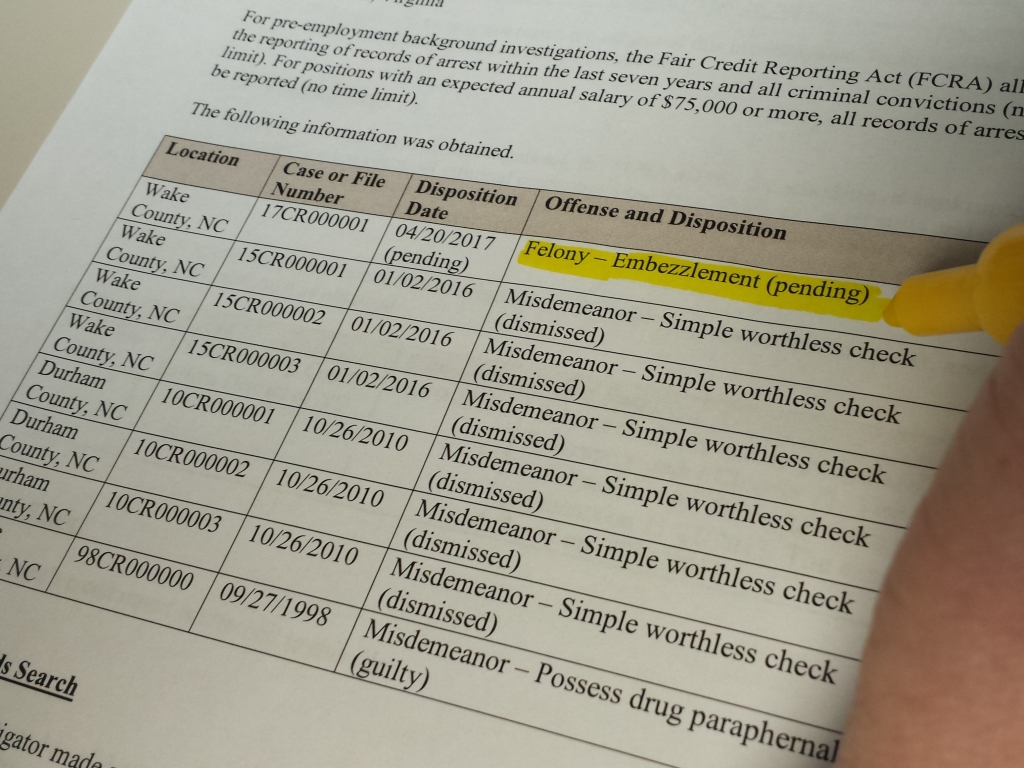
Two entries that look similar can mean very different things. Read the line items carefully and look for:
- Source: Is it a court record, a law enforcement record, or both?
- Status fields: “Pending,” “open,” “closed,” “disposed,” “declined,” or blank.
- Case number: A court case number often suggests something was filed, but the absence of a case number is not definitive. Some systems omit identifiers, use different tracking numbers, or show incomplete data.
- Dates: Arrest date vs. filing date vs. disposition date.
- Disposition: The outcome or status (for example, “dismissed,” “declined,” or “no charges filed”).
If you are not sure whether anything was filed, you can often check with the local court clerk’s office for a searchable docket or confirmation of whether a case exists. Keep notes of who you contacted and what you were told.
One more nuance worth keeping in mind: “no charges filed” can be time-sensitive. In some jurisdictions, charges can be filed later even after an initial decline. If your report is old, or if anything looks like it changed after the arrest date, it is worth confirming current status directly with the court or prosecutor’s office.
Documents you can try to get
Paperwork is not always available, and names vary by location, but these are common items people request when they need to show there was no filed case or no conviction:
- A court docket search result showing no case found under your name and date of birth (if the court offers this). Use it as supporting evidence, not absolute proof, because indexing errors, sealed records, or limited-access systems can affect what a public search shows.
- A letter or record from the prosecutor’s office indicating charges were declined or not filed (where provided)
- A certified court disposition for a case that was filed and resolved (if your situation was a dismissal, not “no charges”)
- A record from the arresting agency’s records unit reflecting the final status they have on file
Even one clear document can help you keep the conversation factual and calm if questions come up later.
If an employer asks, answer clearly
When the question comes up, your goal is clarity, not drama. If charges were never filed, you can say so plainly, using neutral wording.
A solid, simple phrasing
“A background check may show an arrest from several years ago. No charges were filed at the time, and there is no conviction.”
If they ask for more detail
“It did not become a court case. The prosecutor did not file charges.”
What not to call it
- Do not call it a conviction.
- Do not call it a dismissal if there was never a filed case.
- Do not guess at legal terms if you are unsure. Stick to what you can verify: arrested, not charged, no conviction.
If you have documentation (for example, a letter showing no charges were filed, or court confirmation there is no case), you can offer to provide it if the employer requests it.
If the arrest entry is not yours, dispute it
Mistakes happen, especially with similar names, birthdates, or outdated databases. If the record is not you, treat it as a factual error and dispute it quickly.
Step 1: Get the report and identify the company
Ask for a copy of the background check report and the name of the consumer reporting agency (CRA) that produced it.
If you are in the United States and the report is being used for employment, the Fair Credit Reporting Act (FCRA) generally requires the employer to provide a pre-adverse action notice that includes a copy of the report and a Summary of Your Rights before they make a final adverse decision. If the employer does make a final adverse decision, they generally must also send an adverse action notice with the CRA’s contact information. (Other situations and other countries can work differently.)
Step 2: Gather proof of mismatch
- Any identifiers in the record that do not match you (middle name, address, height, tattoos, etc.)
- Your identification documents as requested by the CRA’s dispute process
- If possible, documentation from the court or agency showing the correct person or showing no such record exists for you
Step 3: File a dispute with the CRA in writing
Follow the CRA’s dispute instructions and be specific about what is wrong. Example: “This arrest record does not belong to me. The listed date of birth and address do not match mine.” Keep copies of everything you send.
In the United States, CRA disputes are typically handled through a reinvestigation process that often has a set timeline under federal law. If you want jurisdiction-specific deadlines or strategy, local legal guidance can help.
Step 4: Also correct the source when appropriate
If the CRA says the data came from a particular court or law enforcement agency, you may need to contact that source directly to correct the underlying record. A corrected source record reduces the chance the error reappears later.

If it is yours, but the status is wrong
Sometimes the arrest is correctly attributed to you, but the report fails to show that no charges were filed. In that situation, you are disputing an incomplete or misleading record, not someone else’s identity.
What to look for
- The entry lists an alleged offense but shows no disposition at all.
- The entry incorrectly implies the matter is open or pending.
- The entry contains a case number that does not match any court record you can locate, or mixes details from different people.
How to dispute
- Request that the CRA reinvestigate and update the disposition to reflect the accurate outcome.
- Provide any documentation you have that supports “no charges filed” or “no case filed.”
- Ask the CRA to provide the source used for the record so you can correct it at the origin if needed.
If charges are filed later
Sometimes people only learn the “no charges filed” label was temporary, or they discover a case was filed under a slightly different name or identifier. If you find a current case number, a court date, or a docket that shows the matter is actually pending, shift from explaining to confirming.
- Get the current docket status from the court’s official system or the clerk’s office.
- Do not guess about what it means. Ask what the next date is and what documents you can obtain.
- Consider legal advice quickly if there is an active case, especially if you have upcoming employment deadlines.
How to handle criminal history questions
Application questions vary. Some ask about convictions only. Others ask about arrests. Some specify time frames or exclude certain outcomes. Read the question exactly as written.
- If the question asks about convictions only, an arrest with no charges is generally not a conviction.
- If the question asks about charges, be careful. If no charges were filed, the accurate answer may be “no.”
- If the question asks about arrests, you may need to answer “yes” and clarify: arrested, no charges filed, no conviction.
Rules and permitted questions can differ by location, job type, and industry. Some places restrict how arrests can be used in hiring decisions or require an individualized review. If you are unsure how to answer a specific application in your area, consider getting local legal guidance.
Quick script
If you want a ready-to-use response for a recruiter or HR screen, this borrows the same calm language as the section above:
“You may see an arrest on my record from several years ago. No charges were filed at the time, and there is no conviction. I’m happy to provide documentation if helpful.”
FAQ
Will an arrest without charges always show up?
Not always. It depends on the type of background check, the sources searched (courts vs. law enforcement), and what is reportable under applicable law and the employer’s screening policy.
Is “no charges filed” the same thing as “not guilty”?
No. “Not guilty” is a court verdict after a case is prosecuted. “No charges filed” usually means the prosecutor never filed a court case in the first place (at least as of that point in time).
Can I say it was dismissed?
If no charges were filed, do not call it a dismissal. A dismissal generally refers to a filed court case that was later dropped. Use: “arrested, no charges were filed.”
If I was released quickly, does that mean there was no arrest?
Release timing does not always determine whether an arrest record exists. If you were booked, fingerprinted, or otherwise processed as an arrest, there may still be an arrest record even if you were released the same day. A citation can create a record too, but it is not always an arrest record, especially when it is issued without a custodial arrest.
Could I be able to seal or expunge an arrest-only record?
Possibly. In some places, arrest-only records or non-conviction records can be sealed or expunged, but eligibility and waiting periods vary widely. If this entry is causing repeated problems, it can be worth checking your local rules or getting local legal guidance.
The neat fold: what to do next
- Read the entry closely and confirm whether it is an arrest-only record or tied to a court case.
- Use the right language: arrested, no charges filed at the time, no conviction.
- Dispute errors quickly if the record is not yours or is missing an accurate status.
- Keep it factual if asked in an interview. Clear beats complicated every time.