A crisp fold and a fresh perspective.
If you went through the work of sealing or expunging a record, it is completely reasonable to expect it to stay out of sight. Then a job application asks about convictions, a screening report comes back with an old case, and the big question appears: Do expunged or sealed records show up on a background check?
Sometimes they do, but usually for specific reasons like timing, incomplete updates, or the type of screening being run. Let’s unfold what “sealed” and “expunged” typically mean, why traces can linger, what an employer may be allowed to see, and what you can do if an old record pops up anyway.

Expunged vs sealed
The words get used interchangeably in everyday conversation, but legally they can work differently depending on your state.
Sealed records
When a record is sealed, it is typically hidden from public view. Many standard background checks pull from public records, so sealing often means the record should no longer appear on a routine search.
That said, “sealed” rarely means “gone for everyone.” In many states, sealed records can still be accessed by certain government agencies, courts, or for specific licensed jobs.
Expunged records
When a record is expunged, it is typically treated as erased or removed from public access. In some jurisdictions, certain records may be destroyed or deleted. In many others, the record is retained in a nonpublic or restricted file that is only available to certain entities.
Bottom line: both sealing and expungement are meant to reduce visibility, especially to the public. But the exact outcome depends on state law, the wording of your order, and whether every system that held the record actually updated.
Related terms people mix up
You may also see terms like vacated, set aside, or pardoned. Those can change how a case is labeled and considered, but they do not always remove it from the same databases the way sealing or expungement aims to. If your paperwork uses one of these terms, it is worth confirming what it does in your state.
Why it can still show up
If an expunged or sealed record shows up, it is usually because of one of these common scenarios.
1) Systems have not updated yet
Courts and repositories update on their own schedules. A background check run shortly after your order is granted may still pull the old status if databases have not synced.
2) A private database captured it earlier
Many background check companies and data brokers collect public records and store them. If they saved the record before it was sealed or expunged, their copy can be outdated even if the courthouse record is now restricted.
This is one of the biggest reasons “ghost records” happen: the public source changes, but a private copy lives on until it is corrected.
3) The check pulls multiple sources
A “background check” can mean several different searches bundled together. Some pull:
- County court records
- State repositories
- Federal courts
- Department of corrections or incarceration records
- Sex offender registries
- Commercial databases
Your order may affect some sources but not others, or the order may require additional steps to propagate to each location.
4) The role allows deeper access
Some positions are governed by laws that require deeper screening, especially in regulated industries. Depending on the state and the job, sealed or expunged records may still be visible to:
- Law enforcement and government agencies
- Courts and prosecutors
- Licensing boards (healthcare, finance, childcare, security, and more)
- Employers in roles involving vulnerable populations
This is very state and job specific. When in doubt, check the exact language in your expungement or sealing order and your state’s rules.
5) It is not even your record
Errors happen. If you have a common name, a similar date of birth, or a prior address overlap, a report can attach the wrong case to the wrong person. That can look like a sealed record “showing up” when it is actually a mismatch.
What employers can see
Two layers matter here: what information is visible and what information the employer is allowed to consider.
Visibility depends on the search
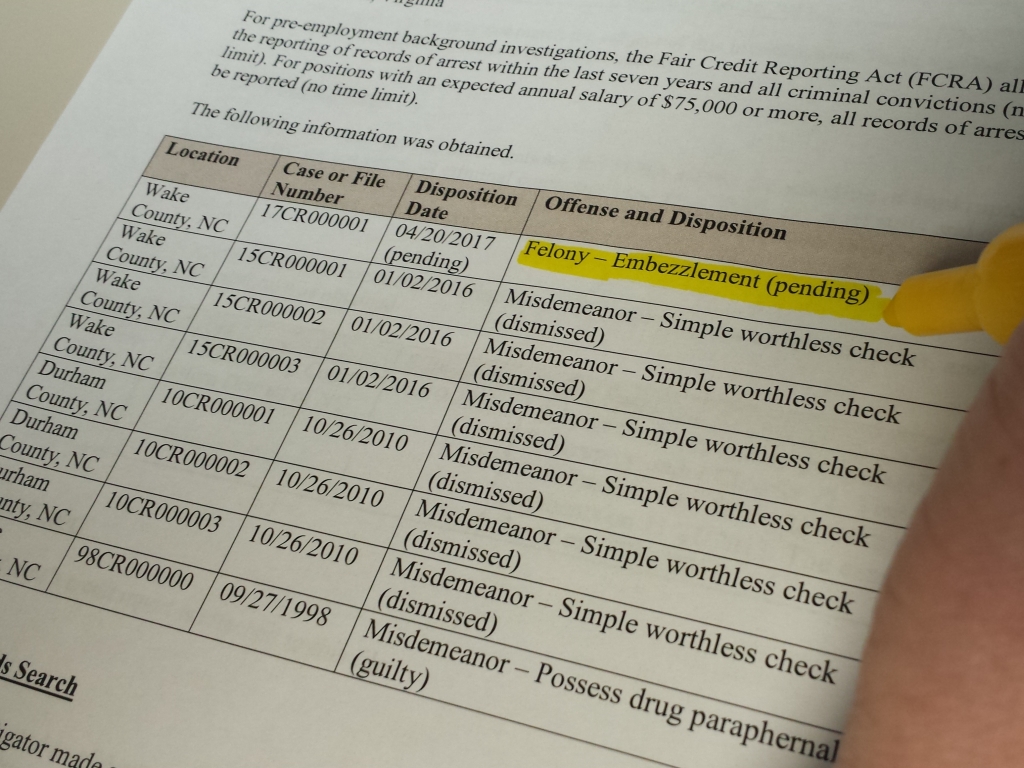
A basic pre-employment screening often includes identity verification and criminal history searches using public records and databases. Sealing and expungement are designed to limit what appears in those searches, but they cannot always control what a private company has already stored.
Use depends on law and the job
Even if something appears, employers may face legal limits on how they ask about it or how they use it in hiring. Rules vary by state and city and can include:
- Ban-the-box or fair chance hiring laws that restrict when an employer can ask about criminal history.
- Restrictions on considering certain nonconvictions (like dismissed cases), which can overlap with expungement issues.
- Industry rules for healthcare, childcare, education, finance, and government work that can require disclosure or deeper checks.
Because these rules are local and can change, consider checking your state labor department, your city or county fair chance office, or a legal aid resource for guidance on your exact situation.
How to answer applications
This is where the paper gets sharply folded. The “right” answer depends on the exact question, your state’s rules, and sometimes the type of role.
If the application asks about convictions
Some applications ask broad questions, and some narrow them. Two examples you might see:
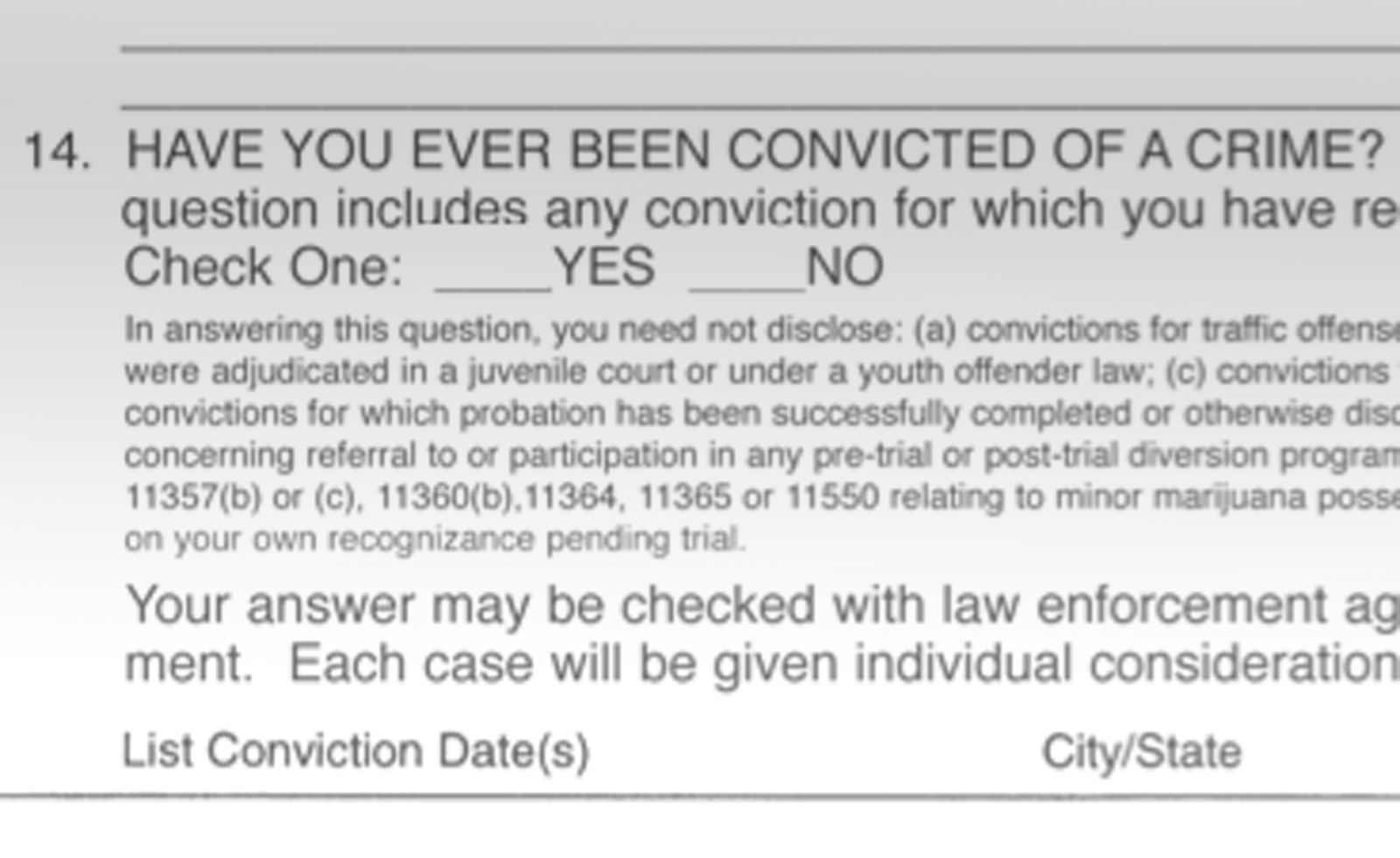
- “Have you ever been convicted of a crime? Do not include sealed or expunged records.”
- “Have you ever been convicted of a crime? Include all convictions, even if sealed or expunged.”
And plenty of applications fall somewhere in the middle.
- If the question explicitly excludes expunged or sealed records, you can usually answer based on what the question allows.
- If the question does not exclude them, your state law may still let you treat an expunged record as if it did not occur. In other states, or for certain licensed roles, you may still need to disclose.
When the wording is unclear, look for these clues:
- Does the job involve licensing, vulnerable populations, or government clearance?
- Does the application mention “even if sealed” or “even if expunged”?
- Does it ask about arrests, charges, or “ever had a case,” not just convictions?
If the application asks about arrests or charges
Questions about arrests, charges, and dismissed cases are trickier because they can pull in things that were never convictions. Some jurisdictions limit these questions. Some do not.
If you are unsure, consider getting local legal guidance. Misunderstanding a question can look like dishonesty later, even when you acted in good faith.
If you choose to explain
You do not always need to volunteer details. But if you expect the issue to surface in a regulated role, a calm, short explanation can help you stay in control of the narrative:
- State that the matter was legally sealed or expunged.
- Confirm you can provide documentation if required.
- Bring the focus back to the role and what you offer today.
If it shows up anyway
If it happens, treat it like a paperwork problem first. Most of the time, it is fixable.
Step 1: Get the report details
Ask which company prepared the report and request a copy. If the employer used a third-party consumer reporting agency for employment screening, the Fair Credit Reporting Act process matters. If the employer is considering taking adverse action based on the report, you must be provided a copy of the report and a summary of your rights before a final decision.
Step 2: Gather proof
Look for documentation such as:
- The court order granting expungement or sealing
- A docket entry showing the updated status
- Any letter from the court or repository confirming the change
If you cannot locate it, the court clerk’s office can usually tell you how to request certified copies. It can also help to keep more than one certified copy on hand, because these issues have a way of reappearing at the least convenient time.
Step 3: Dispute with the reporting company
Most employment screening consumer reporting agencies have a formal dispute process for inaccurate or outdated information. Keep your dispute focused:
- Identify the case number and jurisdiction.
- State that it has been sealed or expunged and list the effective date.
- Attach the court order or proof.
- Request that the report be corrected and that the vendor’s database be updated, as applicable.
Reinvestigations are often completed within about 30 days, although timing can vary.
Step 4: Verify the source record
If the screening company says their data came from a particular court or repository, verify the record status there too. Sometimes the problem is an incomplete update at the source level. Where your state has both a county court portal and a state repository, it can be worth checking both.
Step 5: Keep a paper trail
When something is corrected, keep a folder with:
- Your order
- Your dispute submission
- Confirmation emails or letters
- The corrected report, if provided
If the same outdated record appears again later, you will be ready to resolve it faster.

Getting databases updated
There are two categories of companies that may have old information: background check companies (consumer reporting agencies used for employment) and data brokers (companies that sell people search or public record profiles).
Background check companies
If a background check company produced an employment report, disputes usually go through their formal process. Provide documentation and ask them to:
- Reinvestigate and correct the record
- Stop reporting the record where legally required and applicable to the type of record and order
- Update their internal database so it does not reappear, if they maintain one
Data brokers and people-search sites
People-search sites are a separate problem from employment background checks, but they can still cause stress and confusion. Many data brokers have opt-out processes where you can request removal or suppression of your profile. Procedures vary widely, so be prepared to verify your identity.
If your goal is hiring, focus first on the company that created the employment report. That is the document employers rely on most directly.
When it is normal
Even with a cleared record, you may still encounter situations where something appears or is discoverable:
- Soon after an expungement or sealing order, while systems update.
- In regulated screenings where laws allow deeper access.
- When a case exists in multiple places and not all have been updated.
- When a database is stale and needs a dispute to correct it.
It is not always a sign that your expungement “did not work.” Often, it is a sign that the ecosystem around the record has not fully caught up.
FAQ
Will an expunged record show up on an FBI background check?
Sometimes it can. State expungement or sealing orders do not always automatically update federal repositories. If the record was reported into a federal system, you may need to make sure the agency or repository that supplied the data updates its submission. In some cases, that can involve a fingerprint-based record review or challenge process, plus providing certified court documentation.
Can an employer ask about expunged or sealed records?
Sometimes yes, sometimes no. It depends on your state, local rules, and the type of job. Some applications explicitly exclude expunged records, and some jurisdictions restrict what employers can ask.
If it is sealed, can I say “no” on job applications?
Often, yes, but not always. The safest approach is to read the exact wording of the question and check your state’s rules. For certain licensed or sensitive roles, you may still have disclosure obligations.
What if the report is wrong?
Dispute it quickly and in writing with the company that produced the report. Attach your court order and ask for correction and database updates, as applicable. Also confirm that the underlying court or repository record reflects the sealed or expunged status.
The folded takeaway
Sealing and expungement are powerful tools, but background checks live in a messy world of court systems, repositories, and private databases. If a cleared record appears, you are not stuck. Get the report, gather your paperwork, dispute outdated information, and push for updates so your next opportunity starts on cleaner paper.